Hover or tap a word to see its match.
Part 1
BOOK TWO.
ON FOOD.
WHILE gloomy winter scatters frosts upon the icy
lands,
Violets wither, and lilies perish in the meadows;
Scarcely does spring return and refresh the fields with sweet warmth,
When violets rise up, and lilies return to the meadows;
But once our breath has receded into the winds,
There is no hope of return; eternal night holds us wretched ones.
Yet this pale death, constantly pressing upon fearful mortals,
Hastens on, and we are ever perishing, and by the very
Motion by which life endures, the body is worn away.
It would collapse, were it not that kindly mother nature grants a friendly
Aid, and offers boundless nourishment,
Nourishment by which it can restore its broken vigor,
And mend the worn-out limbs with new parts.
Behold how many numerous herds of wild beasts occupy
The woods, from the highest peak of the leafy mountain
How many reach for the thickets suspended among the snows,
And how many joyful living creatures play in the midst of the plains;
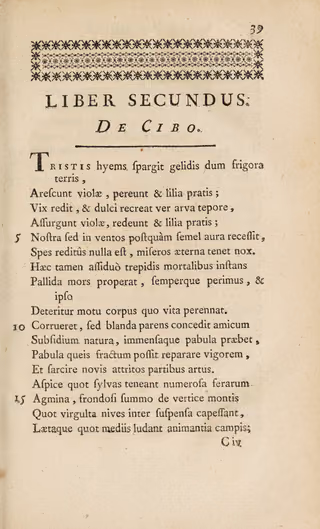
TRISTIS hyems ſpargit gelidis dum frigora
terris ,
Areſcunt violæ , pereunt & lilia pratis ;
Vix redit , & dulci recreat ver arva tepore ,
Aſſurgunt violæ, redeunt & lilia pratis ;
Noſtra ſed in ventos poſtquàm ſemel aura receſſit ,
Spes reditûs nulla eſt , miſeros æterna tenet nox.
Hæc tamen aſſiduò trepidis mortalibus inſtans
Pallida mors properat , ſemperque perimus , &
ipſo
Deteritur motu corpus quo vita perennat.
Corrueret , ſed blanda parens concedit amicum
Subſidium natura , immenſaque pabula præbet ,
Pabula queis fractum poſſit reparare vigorem ,
Et ſarcire novis attritos partibus artus.
Aſpice quot ſylvas teneant numeroſa ferarum
Agmina , frondoſi ſummo de vertice montis
Quot virgulta nives inter ſuſpenſa capeſſant ,
Lætaque quot mediis ludant animantia campis ;
Part 2
How dense a cloud of birds gathers in the
air,
How varied the fishes the seas hide in their vast abyss,
How many kinds of plants the fertile earth brings forth
From its kindly bosom, fragrant apples,
And fruits, the sweetest burdens on curved branches;
Nature, serving her king, pours forth so many
Gifts; heaven, earth, the sea, all things minister
to him:
And as master he rules widely over the whole world.
Happy amid such great wealth, if with a faithful scale
He prudently kept the due moderation of things,
And, never captivated by deceitful sweetness, did not
Ingest a flattering poison instead of the pure fountain of life.
Nature implanted these laws in our first parent,
The fathers kept them: then hunger alone, and no art,
Provided the seasonings of food, and compelled by a true
Stimulus the belly demanded frugal dishes,
Which it would not wish to force upon itself again when the stomach was full.
Not yet had foul gluttony learned to kindle thirst
With foaming drink, and amid the cups with copious
Bacchus to drown the strength of body and mind.
But water alone, leaping from an unmuddied spring, relieved
Thirst, water to be sought with no labors.
Thence the race of our fathers reached many years
More safely, and surpassed the ages in a long course.
Now the madness of the belly, and restrained by no bridle,
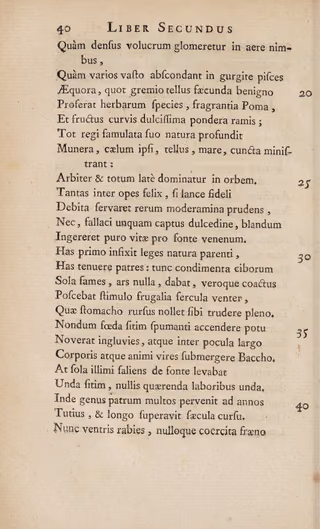
Quàm denſus volucrum glomeretur in aere nim-
bus ,
Quàm varios vaſto abſcondant in gurgite piſces
Æquora, quot gremio tellus fæcunda benigno
Proferat herbarum ſpecies , fragrantia Poma ,
Et fructus curvis dulciſſima pondera ramis ;
Tot regi famulata ſuo natura profundit
Munera , cælum ipſi , tellus , mare, cuncta miniſ-
trant :
Arbiter & totum latè dominatur in orbem.
Tantas inter opes felix , ſi lance fideli
Debita ſervaret rerum moderamina prudens ,
Nec , fallaci unquam captus dulcedine , blandum
Ingereret puro vitæ pro fonte venenum.
Has primo infixit leges natura parenti ,
Has tenuere patres : tunc condimenta ciborum
Sola fames , ars nulla , dabat , veroque coactus
Poſcebat ſtimulo frugalia fercula venter ,
Quæ ſtomacho rurſus nollet ſibi trudere pleno.
Nondum fœda ſitim ſpumanti accendere potu
Noverat ingluvies , atque inter pocula largo
Corporis atque animi vires ſubmergere Baccho.
At ſola illimi ſaliens de fonte levabat
Unda ſitim , nullis quærenda laboribus unda.
Inde genus patrum multos pervenit ad annos
Tutius , & longo ſuperavit ſæcula curſu.
Nunc ventris rabies , nulloque coercita fræno
Part 3
lust has effaced the innermost commands of nature;
There is no shame in bartering away the glory of life, and life itself,
For base compliance, and the shameful itch of the gullet.
Nor has simple nature any savor for a jaded palate;
Disguised banquets please, seasonings sought out with toil
Give pleasure, the belly is scorched with spice,
And dishes are demanded from the lands of the Hydaspes:
Is it so very necessary for wretched men to be slaves to the gullet?
Yet pain and diseases arise in a dense troop,
Enfeebled limbs languish in cruel torments,
And as youths, on the very threshold of sweet life,
With bent neck we pay the penalty of a headlong old age.
You who first taught how to turn the earth with the sunken
Plowshare, and enriched the fields with golden harvests,
Inspire my bold undertakings with full breaths,
Bountiful Ceres, and as I sing precepts not known before,
Unbar the pathless sanctuaries of the Castalian spring.
While you adorned the plains with your fruitful gift,
You wisely willed that the earth-born should at the same time unite the imposed labors
Of cultivation; these compacts of things,
And the precepts once given to the primal husbandmen,
May late-born descendants now be able to recall to their minds,
Captivated by the charming melody of Aonian song.
This will be your praise, bountiful mother, if by my song
Mortals learn what just abundance of food, what sure supply of liquids
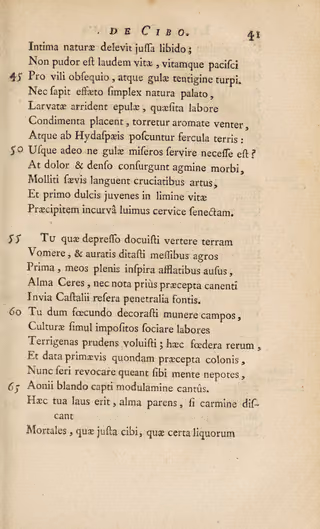
Intima naturæ delevit juſſa libido;
Non pudor eſt laudem vitæ , vitamque paciſci
Pro vili obſequio , atque gulæ tentigine turpi.
Nec ſapit effæto ſimplex natura palato ,
Larvatæ arrident epulæ , quæſita labore
Condimenta placent , torretur aromate venter ,
Atque ab Hydaſpæis poſcuntur fercula terris :
Uſque adeo ne gulæ miſeros ſervire neceſſe eſt?
At dolor & denſo conſurgunt agmine morbi,
Molliti ſævis languent cruciatibus artus ,
Et primo dulcis juvenes in limine vitæ
Præcipitem incurvâ luimus cervice ſenectam.
Tu quæ depreſſo docuiſti vertere terram
Vomere , & auratis ditaſti meſſibus agros
Prima , meos plenis inſpira afflatibus auſus ,
Alma Ceres , nec nota priùs præcepta canenti
Invia Caſtalii reſera penetralia fontis.
Tu dum fœcundo decoraſti munere campos ,
Culturæ ſimul impoſitos ſociare labores
Terrigenas prudens voluiſti ; hæc fœdera rerum ,
Et data primævis quondam præcepta colonis ,
Nunc ſeri revocare queant ſibi mente nepotes ,
Aonii blando capti modulamine cantûs.
Hæc tua laus erit , alma parens , ſi carmine diſ-
cant
Mortales , quæ juſta cibi, quæ certa liquorum
Part 4
supply can infuse vital dew into the limbs,
and restore lost vigor with its juice;
lest the viscera, overwhelmed by too great a mass, swell up,
or gradually perish, deprived of sweet liquid.
Nor is this enough: unfold the powers of drink, and the varied
potency of foods, what dishes benefit the belly,
what liquids, and what things, swollen with deadly juices,
ruin the pure blood with an admixed taint.
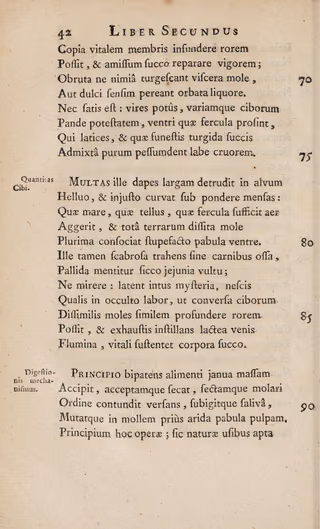
Copia vitalem membris infundere rorem
Poſſit, & amiſſum ſucco reparare vigorem;
Obruta ne nimiâ turgeſcant viſcera mole,
Aut dulci ſenſim pereant orbata liquore.
Nec ſatis eſt : vires potûs, variamque ciborum
Pande poteſtatem, ventri quæ fercula proſint,
Qui latices, & quæ funeſtis turgida ſuccis
Admixtâ purum peſſumdent labe cruorem.