Hover or tap a word to see its match.
Part 1
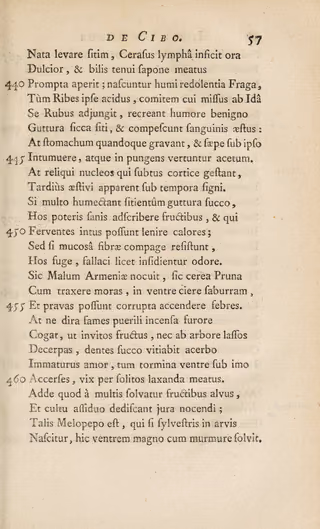
born to relieve thirst, the Cherry stains the mouth with a sweeter
lymph, and with its thin soap promptly opens
the passages of the bile; fragrant Strawberries grow upon the ground,
then the sour Currant itself, to which the Raspberry sent from Ida
joins itself as a companion, refresh with benign moisture
throats dry with thirst, and check the heats of the blood:
yet sometimes they burden the stomach, and often within it
they have swollen up, and are turned into pungent vinegar.
But the others which bear stones beneath their rind,
appear more slowly around the times of the summer constellation.
If they moisten the throats of the thirsty with abundant juice,
you will be able to reckon these among the wholesome fruits, and those which
can soothe the burning heats within;
but if the fibers resist with a mucous texture,
shun these, even though they lay snares with a deceptive odor.
Thus the Apricot has done harm, thus waxen Plums,
when they have lingered, can stir up saburra in the belly,
and, once corrupted, kindle malignant fevers.
But let not dire hunger inflamed by boyish madness
compel you to pluck unwilling fruits, not yet weary of the tree;
an untimely craving will spoil the teeth with bitter juice,
then you will bring on gripes deep in the belly,
scarcely to be relieved through the accustomed passages.
Add that the bowels are loosened by many fruits,
and by assiduous cultivation they unlearn the power of doing harm;
such is the Melon, which if it grows wild in the fields,
loosens the belly with a great rumbling.
Nata levare ſitim, Ceraſus lymphâ inficit ora
Dulcior, & bilis tenui ſapone meatus
Prompta aperit; naſcuntur humi redolentia Fraga,
Tùm Ribes ipſe acidus, comitem cui miſſus ab Idâ
Se Rubus adjungit, recreant humore benigno
Guttura ſicca ſiti, & compeſcunt ſanguinis æſtus:
At ſtomachum quandoque gravant, & ſæpe ſub ipſo
Intumuere, atque in pungens vertuntur acetum.
At reliqui nucleos qui ſubtus cortice geſtant,
Tardiùs æſtivi apparent ſub tempora ſigni.
Si multo humectant ſitientûm guttura ſucco,
Hos poteris ſanis adſcribere fructibus, & qui
Ferventes intus poſſunt lenire calores;
Sed ſi mucosâ fibræ compage reſiſtunt,
Hos fuge, fallaci licet inſidientur odore.
Sic Malum Armeniæ nocuit, ſic cerea Pruna
Cum traxere moras, in ventre ciere ſaburram,
Et pravas poſſunt corrupta accendere febres.
At ne dira fames puerili incenſa furore
Cogat, ut invitos fructus, nec ab arbore laſſos
Decerpas, dentes ſucco vitiabit acerbo
Immaturus amor, tum tormina ventre ſub imo
Accerſes, vix per ſolitos laxanda meatus.
Adde quod à multis ſolvatur fructibus alvus,
Et cultu aſſiduo dediſcant jura nocendi;
Talis Melopepo eſt, qui ſi ſylveſtris in arvis
Naſcitur, hic ventrem magno cum murmure ſolvit.
Part 2
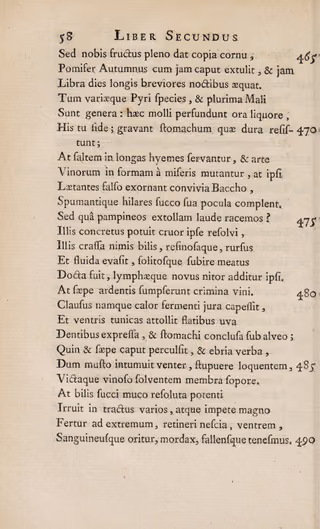
But Plenty gives us fruits from her full horn,
When apple-bearing Autumn has now raised his head, and now
Libra makes the shorter days equal to the long nights.
Then there are both various species of the pear, and very many kinds
Of the apple: those that bathe the mouth with a soft juice,
Trust in them; those that are hard and resistant weigh down
The stomach;
Yet at least they are kept for the long winters, and by art
Are changed into the form of wines by the poor, while they themselves,
Rejoicing, adorn their banquets with a false Bacchus,
And cheerful, fill their cups with the foaming juice.
But with what praise shall I extol the vine-leafed clusters?
By them even clotted blood itself has been able to be dissolved,
By them bile that is too thick and resinous has again
Become fluid, and been taught to enter its accustomed passages,
And a new brightness is added to the lymph itself.
Yet often they have taken on the faults of fiery wine.
For the enclosed heat assumes the powers of ferment,
And the grape, crushed by the teeth and shut within the cavity
Of the stomach, swells the coats of the belly with winds;
Indeed, it has often struck the head as well, and drunken words,
While the belly swelled with must, have stunned the speaker,
Relaxing his conquered limbs in a vinous stupor.
Moreover, the bile, dissolved by the potent mucus of the juice,
Rushes into various tracts, and with great force
Is carried, unable to be restrained, to the lowest belly,
And a bloody, biting, and deceitful tenesmus arises.
Sed nobis fructus pleno dat copia cornu ,
Pomifer Autumnus cum jam caput extulit , & jam
Libra dies longis breviores noctibus æquat.
Tum variæque Pyri ſpecies , & plurima Mali
Sunt genera : hæc molli perfundunt ora liquore ,
His tu fide ; gravant ſtomachum quæ dura reſiſ-
tunt ;
At ſaltem in longas hyemes ſervantur , & arte
Vinorum in formam à miſeris mutantur , at ipſi
Lætantes falſo exornant convivia Baccho ,
Spumantique hilares ſucco ſua pocula complent.
Sed quâ pampineos extollam laude racemos ?
Illis concretus potuit cruor ipſe reſolvi ,
Illis craſſa nimis bilis , reſinoſaque , rurſus
Et fluida evaſit , ſolitoſque ſubire meatus
Docta fuit , lymphæque novus nitor additur ipſi.
At ſæpe ardentis ſumpſerunt crimina vini.
Clauſus namque calor fermenti jura capeſſit ,
Et ventris tunicas attollit flatibus uva
Dentibus expreſſa , & ſtomachi concluſa ſub alveo ;
Quin & ſæpe caput perculſit , & ebria verba ,
Dum muſto intumuit venter , ſtupuere loquentem ,
Victaque vinoſo ſolventem membra ſopore.
At bilis ſucci muco reſoluta potenti
Irruit in tractus varios , atque impete magno
Fertur ad extremum , retineri neſcia , ventrem ,
Sanguineuſque oritur, mordax, fallenſque teneſmus.
Part 3
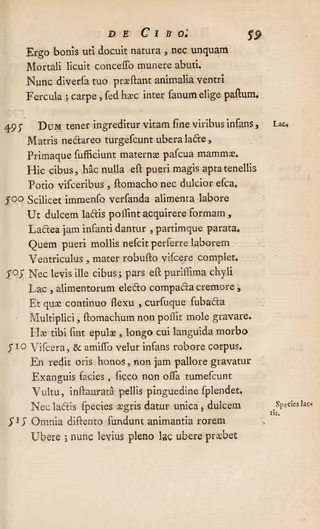
Therefore nature has taught us to use her good things, nor has it ever
been permitted to a mortal to abuse a granted gift.
Now various animals furnish dishes for your
belly; partake of them, but among these choose wholesome nourishment.
Ergo bonis uti docuit natura , nec unquam
Mortali licuit conceſſo munere abuti.
Nunc diverſa tuo præſtant animalia ventri
Fercula ; carpe , ſed hæc inter ſanum elige paſtum.