Hover or tap a word to see its match.
When life is most loved
And death is most hated,
Then death draws his draught
And makes men naked.
Earth out of earth is wondrously wrought,
Earth has gotten of earth dignity of nought,
Earth upon earth has set all his thought
How earth upon earth may be high brought.
Earth upon earth would be a king,
But how earth to earth shall, thinks he nothing;
But when earth bids earth his rent home bring,
Then shall earth from earth have hard parting.
Earth upon earth gets castles and towers,
Then says earth to earth, "All this is ours";
But when earth upon earth has built all his bowers,
Then shall earth from earth suffer hard showers.
Earth goes upon earth as mold upon mold,
Earth goes on earth glittering in gold,
Like as earth into earth never go should,
And yet shall earth into earth rather than he would.
Why that earth loves earth, wonder me thinks,
Why earth for earth sweat would or swink;
But when earth upon earth is brought into brink,
Then earth of earth shall have a foul stink.
Lo, earth upon earth, consider thou may
How earth comes to earth naked all day,
How may earth upon earth go stout and gay,
When earth shall pass to earth in a poor array?
Now I counsel earth upon earth that wickedly has wrought,
While earth is upon earth, to turn up his thought,
And pray to God upon earth that all has made of nought,
That earth out of earth to bliss may be brought.
Explicit
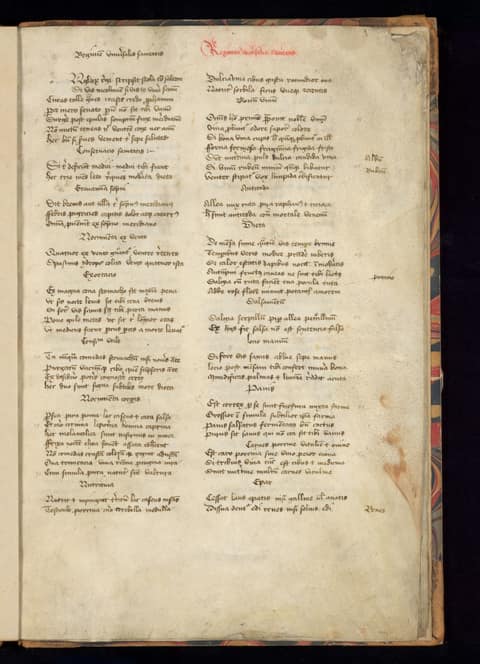
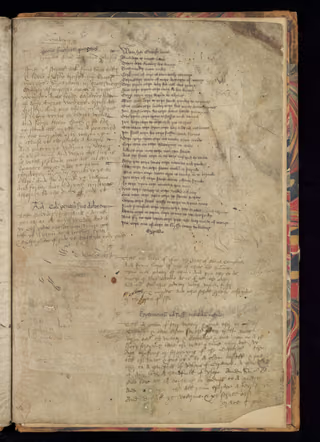
When lyfe is moost loued
And deþe is moost hated
Then deþe drawiþ his drauȝt
And makiþ men naked
Erþe out of erþe is wonderly wrouȝt
Erþe haþe geten of erþe dignyte of nouȝt
Erþe vpon erþe haþ set all his þouȝt
How erþe vpon erþe may be hie brouȝt
Erþe vpon erþe wolde be a kyng
But how erþe to erþe shall þenkiþ he noþing
But when erþe biddeþ erþe his rente home bryng
þen shall erþe fro erþe haue harde partyng
Erþe vpon erþe getiþ castellis and touris
þen seyþ erþe to erþe all þis is ours
But when erþe vpon erþe haþ bilde all his bours
þen shall erþe fro erþe suffre harde shours
Erþe goþe vpon erþe as molde vpon molde
Erþe goþe on erþe glettryng in golde
like as erþe in to erþe neu͛ goo shulde
And yet shall erþe in to erþe raþ͛ þan he wolde
Why þat erþe loueþ erþe wondre me þinke
Why erþe for erþe swete wold or swynke
But when erþe vpon erþe is brouȝt in to brynke
þen erþe of erþe shall haue afoule stynke
lo erþe vpon erþe concidre þou may
how erþe comeþ to erþe naked all day
how may erþe vpon erþe go stoute & gay
When erþe shall passe to erþe in a pore aray
Now y consell erþe vpon erþe þat wikkedly hath wrouȝt
While erþe is vpon erþe to turne vp his þouȝt
And p͛y to god vpon erþe þat all haþ made of nouȝt
þat erþe out of erþe to blysse may be brouȝt
Explicit