About this text
Provenance
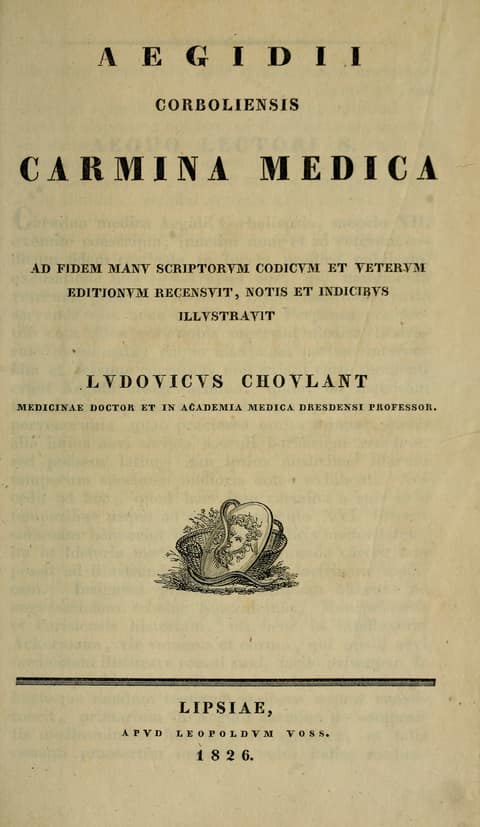
This digital edition is derived from the Internet Archive copy of Ludwig Choulant's 1826 edition of Aegidii Corboliensis carmina medica, preserving medieval Latin medical poems attributed to Aegidius Corboliensis.
Methodology
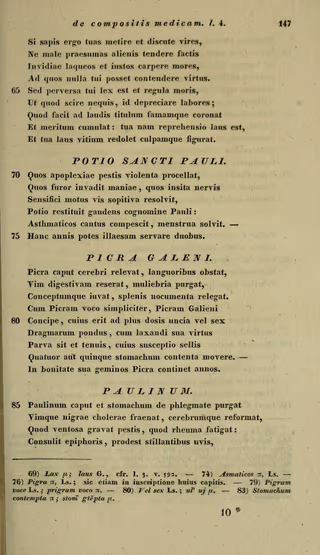
Each scan is treated as a page-level unit. The page image remains the authority for the edition. Local Kraken OCR was used as a Latin-print reading aid, then Gemini generated scan-grounded Latin transcription and English translation from the images, the OCR aid, and the approved glossary. Word links connect the English translation to the Latin transcription and locations on the scans. 9 uncertain word-link decisions remain unlinked. Some links highlight only the text because the source word could not be located on the scan.
Rights
The source work is in the public domain by publication age. The local rights evidence points to a Public Domain Mark record for the Internet Archive-derived file. Poet Doctor's presentation adds generated OCR, transcription, translation, navigation metadata, and editorial context.
Original scans: Countway Library / Medical Heritage Library copy via Internet Archive
(
Public Domain Mark 1.0
).
Historian’s note. This text records the medicine of its own time, and later evidence has replaced most of it. It is not medical advice. We read it as history, and we ask what, if anything, connects it to medicine today. More on how we read old medical books