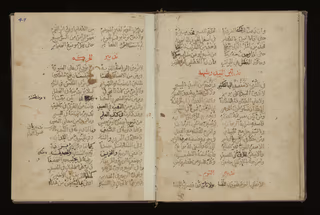
Regimen of wine and drinking it

تدبير النبيذ وشربه

Poet
Ibn Sina
Form
Rajaz
Open the page in the book
The page this poem fills. Each opens in the Ibn Sina's Urjuza fi al-tibb and other medical works in MS Arabic 129 reader.

Hover or tap a word to see its match.

In drinking, do not aim for excess / and be content with a little wine.

Do not be addicted to wine every day / and do not drink it after fasting,

Nor upon delicate food / nor upon dense nourishment.

Beware of being intoxicated all your life / unless it be once a month.

And whoever is struck down by wine / and is overcome by heat and fire,

Then give him a drink of basil / and let him drink sour pomegranate,

And with quince along with cucumber / and mix water for him with the wine.

And whoever complains of winds in his temperament / in his belly, then give him pure wine to drink;

The strong yellow one, for it is good / likewise, the accompanying snack for it should be salty.

And the watery white one in the summer / for it is more akin to the delicate.

And mix it with water and a sour snack / and eat astringent food with it.

في الشرب لا تقصد الي التكثير / واقنع من النبيذ باليسير

لا تدمن النبيذ كل يوم / ولا تكن تشربه بعد الصوم

ولا علي الطعام ذي اللطافة / ولا على الغذاء ذي الكثافة

اياك ان تسكر طول الدهر / إن لم تكن في مرة في الشهر

ومن يكن تصرعه العقار / ويعتريه للحر والنار

فاسقه شربة الريحان / ويشربن حامض الرمان

وبالسفرجل مع الخيار / وامزج له الماء مع العقار

ومن تشكى في المزاج بالرياح / في جوفه فاسقه صرف الراح

الاصفر القوي فهو الصالح / كذاك والنقل له موالح

والابيض المائي في المصيف / فانه أشبه باللطيف

وامزجه بالماء ونقل حامض / وكل عليه من طعام قابض
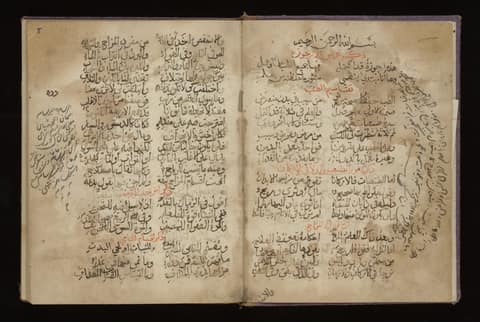
Title page of Ibn Sina's Urjuza fi al-tibb and other medical works in MS Arabic 129
Title page of Ibn Sina's Urjuza fi al-tibb and other medical works in MS Arabic 129 , 1700

About this text

Provenance

MS Arabic 129 is a handwritten Arabic medical volume held by Wellcome Collection in London. It is a composite manuscript: a single volume that brings together 11 separate works. They cover bloodletting, circumcision, the seasons, anatomy, the pulse, and urine, and most are in verse. Most of the verse in this edition is Ibn Sina's Urjuza fi al-tibb, a long poem on medicine, identified from the catalog card in the scans and from the poem's opening lines. Wellcome also names Ibn al-Tilmidh and Ibn Makki among the authors. Shams al-Din ibn Makki wrote three short poems here, and some pieces cannot be identified from the book. The manuscript is undated, and Wellcome estimates it as 18th century.

Methodology

Each scan is treated as a page-level unit. The page image remains the authority for the edition. Local Arabic Kraken OCR was weak and used only as auxiliary context; Gemini generated scan-grounded Arabic transcription and English translation primarily from the manuscript images and the approved glossary. Some word links remain uncertain, and some words have no reliable location on the scan.

Rights

The Wellcome Collection source record marks the digital surrogate with the Public Domain Mark 1.0. Poet Doctor's presentation adds generated OCR, transcription, translation, navigation metadata, and editorial context.

Original scans: Wellcome Collection ( Public Domain Mark 1.0 ).

Historian’s note. This text records the medicine of its own time, and later evidence has replaced most of it. It is not medical advice. We read it as history, and we ask what, if anything, connects it to medicine today. More on how we read old medical books