Hover or tap a word to see its match.
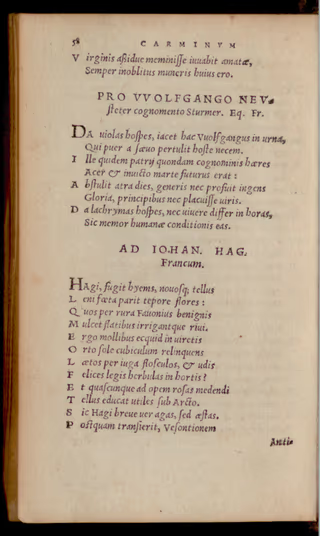
Hagius, winter has fled, and the earth,
Teeming with mild warmth, brings forth new flowers:
Which the West Wind caresses with kind breezes
Throughout the countryside, and the streams water.
Therefore, leaving your bedchamber
At sunrise, do you gather joyful little flowers
Along the ridges in the soft meadows, and fruitful
Little herbs in the dewy gardens?
And whatever roses the earth brings up
Under the Northern sky, useful for the aid of healing.
Thus, Hagius, may you spend a brief spring, but after
Summer has passed, to Besançon
may you come to the ancient [city], so that before winter
we may fly to the yellow waves of the Loire.
Or, if the will of the heavenly ones so directs,
to the joyful ridges of Montpellier.
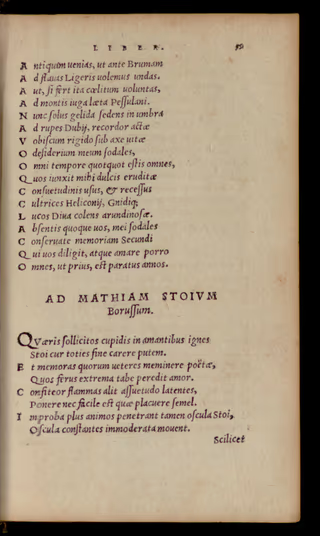
Now sitting alone in the cold shade
by the cliffs of the Doubs, I remember the life
spent with you beneath the frigid sky,
O my comrades, my longing,
all of you, however many you are at all times,
whom the sweet practice of learned fellowship
joined to me, and the dwellers in the Heliconian retreat,
and the Goddess dwelling in the groves of reedy Cnidus.
You too, my comrades, preserve the memory
of the absent Secundus,
who loves you, and is prepared to continue loving you
all, as before, through the years.
H agi, fugit hyems, nouoſq; tellus
L eni fœta parit tepore flores :
Q uos per rura Fauonius benignis
M ulcet flatibus irrigantque riui.
E rgo mollibus ecquid in uiretis
O rto ſole cubiculum relinquens
L ætos per iuga floſculos, & udis
F elices legis herbulas in hortis?
E t quaſcunque ad opem roſas medendi
T ellus educat utiles ſub Arcto.
S ic Hagi breue uer agas, ſed æſtas.
P oſtquam tranſierit, Veſontionem
Antiquum uenias, ut ante Brumam
Ad flauas Ligeris uolemus undas.
Aut, ſi fert ita cœlitum uoluntas,
Ad montis iuga læta Peſſulani.
Nunc ſolus gelida ſedens in umbra
Ad rupes Dubij, recordor actæ
Vobiſcum rigido ſub axe uitæ
O deſiderium meum ſodales,
Omni tempore quotquot eſtis omnes,
Quos iunxit mihi dulcis eruditæ
Conſuetudinis uſus, & receſſus
Cultrices Heliconij, Gnidiq;
Lucos Diua colens arundinoſæ.
Abſentis quoque uos, mei ſodales
Conſeruate memoriam Secundi
Qui uos diligit, atque amare porro
Omnes, ut prius, eſt paratus annos.