Hover or tap a word to see its match.
Dill is reported by physicians as dry and hot,
and they say that its degree in both is the second.
Its decoction, when taken, gives milk abundantly
to a wet nurse; it is accustomed to drive away diseases of the stomach.
If a sick person takes three cyathi of it warm,
a belch is the sign which shows that the mouth
of the stomach is open, and that harmful wind exits through it.
And severe nausea is settled by such a drink.
It provokes urine, driving back whatever obstructs,
And it helps the womb well if it is fomented with the same.
If a patient drinks crushed dill with warm water,
It cures the pain of the intestines and the belly.
By this drink also sluggish digestion is helped,
Whence the excretory force seems to become less.
Drunk constantly it harms the sight and the genitals.
It closes the path, drying the moisture of the seed within.
And if the uvula, swelling too much, is weighed down by moisture,
The powder of this burnt seed lifts it,
Applied with the fingers or poured inside with a clyster.
The ash of its roots is said to be sharper.
This ash eats away flesh growing in a wound,
Ulcers that creep: and it cures foul wounds.
This ash is said to especially cure the ulcers of the virile member,
Sprinkled often onto them.
By smell, the seed of dill represses hiccups,
If the sick person smells it often, roasted and hot.
They say its crushed and subsequently applied roots
Can remove the burning of the eyes.
If you apply the seed of dill to hemorrhoids,
Burnt, it cures them: and dissolves condylomata.
If the flower is boiled down in oil, it renders it medicinal;
That [oil] is especially beneficial for diseases born from the cold:
And it often restrains headache.
It relaxes the tensions of the sinews, it drives away chills.
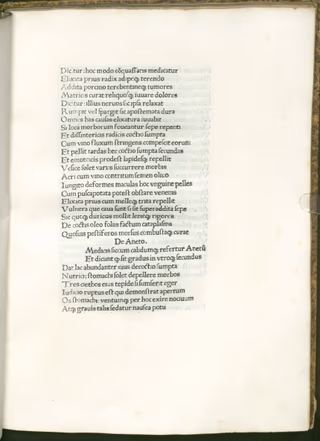
Medicis ſiccum calidumqꝫ refertur Anetū
Et dicunt ꝙ ſit gradus in vtroqꝫ ſecundus
Dat lac abundanter eius decoctio ſumpta
Nutrici: ſtomachi ſolet depellere morbos
Tres ciethos eius tepide ſi ſumſerit eger
Iudicio ruptus eſt qui demonſtrat apertum
Os ſtomachi: ventumqꝫ per hoc exire nociuum
Atqꝫ grauis talis ſedatur nauſea potu
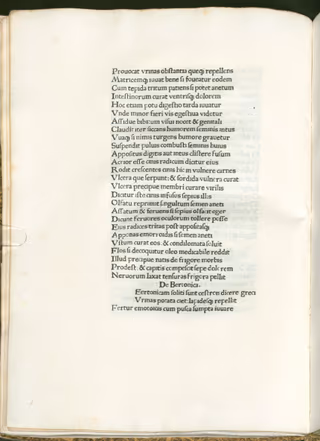
Prouocat vrinas obſtantia queqꝫ repellens
Matricemqꝫ iuuat bene ſi foueatur eodem
Cum tepida tritum patiens ſi potet anetum
Inteſtinorum curat ventriſqꝫ dolorem
Hoc etiam potu digeſtio tarda iuuatur
Vnde minor fieri vis egeſtiua videtur
Aſſidue bibitum viſui nocet & genitali
Claudit iter ſiccans humorem ſeminis intus
Vuaqꝫ ſi nimis turgens humore grauetur
Suſpendit puluis combuſti ſeminis huius
Appoſitus digitis aut intus cliſtere fuſum
Acrior eſſe cinis radicum dicitur eius
Rodit creſcentes cinis hic in vulnere carnes
Vlcera que ſerpunt: & ſordida vulnera curat
Vlcera precipue membri curare virilis
Dicitur iſte cinis infuſus ſepius illis
Olfatu reprimit ſingultum ſemen aneti
Aſſatum & feruens ſi ſepius olfacit eger
Dicunt feruores oculorum tollere poſſe
Eius radices tritas poſt appoſitaſqꝫ
Apponas emorroidis ſi ſemen aneti
Vſtum curat eos: & condilomata ſoluit
Flos ſi decoquitur oleo medicabile reddit
Illud precipue natis de frigore morbis
Prodeſt: & capitis compeſcit ſepe dolorem
Neruorum laxat tenſuras frigora pellit