Hover or tap a word to see its match.
Southernwood is read to be in the third degree of heat,
And of drying; the seed is hotter than the herb.
Hence it aids the nerves and all afflictions of the chest,
If a decoction of it boiled is consumed.
Thus also it benefits those short of breath: and drives away a cough,
And it benefits the loins: and thus complaints of the wombs.
For all these things it will be beneficial drunk raw with wine.
It purges the urine: and thus it cleanses the internal organs.
Thus it cures sciatica: thus consumed it purges the menses.
By its smell it drives away snakes: and drunk it extinguishes
Their poisons: it also settles the chills of a fever
Before it comes: if it is taken mixed with water,
Or if you anoint the limbs with the oil in which it is boiled.
By drinking this often you will kill worms of the belly.
Joining breadcrumbs and quinces to this,
You should boil them together in water; apply them when boiled to the pain
Of the eyes: or to their burning, and you will cure both.
It draws out embedded splinters and thorns themselves,
Applied by itself, or if fat is joined to it.
As Pliny writes, its herb arouses sexual desire,
If it is merely placed under the pillow at night;
Drunk, it resists all things harmful to sexual desire.
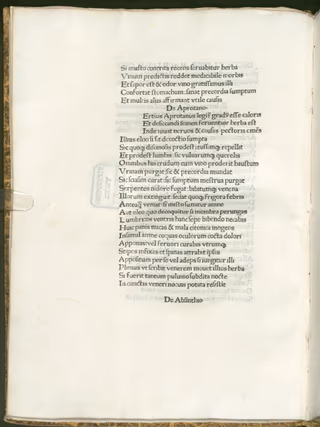
Ertius Aprotanus legit̉ gradꝰ eſſe caloris
Et deſiccandi ſemen feruentior herba eſt
Inde iuuat neruos & cauſas pectoris omēs
Illius elixi ſi ſit decoctio ſumpta
Sic quoqꝫ diſcinoſis prodeſt : tuſſimqꝫ repellit
Et prodeſt lumbis : ſic vuluarumqꝫ querelis
Omnibus his crudum cum vino proderit hauſtum
Vrinam purgat : ſic & precordia mundat
Sic ſciaſim curat : ſic ſumptum meſtrua purgat
Serpentes nidore fugat : bibitumqꝫ venena
Illorum extinguit : ſedat quoqꝫ frigora febris
Anteaꝗͣ veniat : ſi miſto ſumitur amne
Aut oleo quo decoquitur ſi membra perungas
Lumbricos ventris hanc ſepe bibendo necabis
Huic panis micas & mala citonica iungens
Inſimul amne coquas oculorum cocta dolori
Apponas : vel feruori curabis vtrumqꝫ
Stipes infixas et ſpinas attrahit ipſas
Appoſitum per ſe vel adeps ſi iungitur illi
Plinius vt ſcribit venerem mouet illius herba
Si fuerit tantum puluino ſubdita nocte
In cunctis veneri nocuis potata reſiſtit
