Hover or tap a word to see its match.
Dittany is reported to have a hot nature.
It is accustomed to help a woman giving birth;
Its juice combined with wine expels an aborted fetus.
If a fever is present, you should combine it with warm water,
And she will soon be saved without harm or danger.
This same juice quickly heals all wounds
Made by iron, stone, dog, club, or snake,
Or in whatever manner, drunk and poured inside.
And it puts poison to flight when drunk often with wine.
Crush dittany, agrimony, and southernwood together,
And, taking the juice, combine it with clean butter;
With such an ointment, if there are fresh wounds, you heal them.
A struck beast grazes on dittany, and thus
The wound is healed, and the iron is driven out.
It is said to kill snakes by its smell and touch.
The juice of this, combined with water and good wine,
And drunk, can bring forth a lost voice,
And taken in this manner, soothe the pain of a cough.
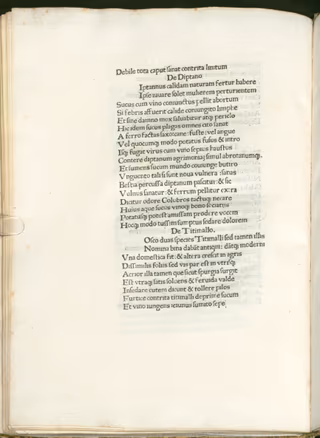
Iptannus calidam naturam fertur habere
Ipſe iuuare ſolet mulierem parturientem
Sucus cum vino coniunctus pellit abortum
Si febris affuerit calide coniungito limphe
Et ſine damno mox ſaluabitur atqꝫ periclo
Hic idem ſucus plagas omnes cito ſanat
A ferro factas ſaxo: cane: fuſte: vel angue
Vel quocumqꝫ modo potatus fuſus & intro
Iſqꝫ fugat virus cum vino ſepius hauſtus
Contere diptanum agrimoniaꝫ ſimul abrotanumqꝫ.
Et ſumens ſucum mundo coniunge butiro
Vnguento tali ſi ſunt noua vulnera: ſanas
Beſtia percuſſa diptanum paſcitur: & ſic
Vulnus ſanatur: & ferrum pellitur extra
Dicitur odore Colubros tactuqꝫ necare
Huius aque ſucus vinoqꝫ bono ſociatus
Potatuſqꝫ poteſt amiſſam prodere vocem
Hocqꝫ modo tuſſim ſumptus ſedare dolorem