Hover or tap a word to see its match.
About to speak of the powers of certain herbs in song,
*Arthemesia* gave its name to the mother of herbs,
To which I think it right to apply the Greek speech first.
It is reported that Diana first discovered its aid,
Who is called *Arthemis* in Greek, and from this the herb
Holds its name: because its discoverer is called thus.
This especially cures the diseases of women,
Its decoction taken brings down the menses,
With this also if the female womb is frequently fomented,
Or if it is drunk raw, ground and combined with unmixed wine,
Or if, ground while green, it is bound over the belly at night,
It expels an abortive fetus by drink: or merely placed underneath.
It resolves uterine hardnesses: and drives away swelling,
Drunk, it grants urine: and repels stones,
And it helps the jaundiced, drunk quite often with wine.
He praises applying this joined to fat to scrofulous tumors,
Pliny: and he orders to take this ground with wine.
If too much opium drunk has harmed anyone,
It helps exceptionally: if it is drunk joined with wine.
Certain men affirm that whoever has tasted it,
Can be harmed by no harmful medicine,
And that no wild beast will attack him with a bite.
Its root suspended from the neck is said
To oppose both toads and all harmful frogs.
Its juice drunk with wine will be beneficial for this.
If the freshly crushed herb is preserved in must,
It will render the wine medicinal for the aforementioned diseases.
And that wine has a most pleasing taste and smell.
When consumed, it comforts the stomach: it heals the internal organs,
And they affirm it is useful for many other conditions.
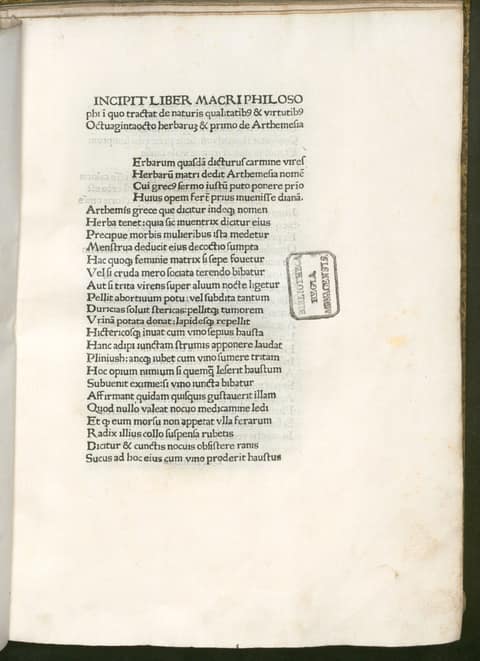
Erbarum quaſdā dicturuſ carmine vireſ
Herbarū matri dedit Arthemeſia nomē
Cui grecꝰ ſermo iuſtū puto ponere prio
Huius opem fert̉ prius inueniſſe dianā.
Arthemis grece que dicitur indeqꝫ nomen
Herba tenet: quia ſic inuentrix dicitur eius
Precipue morbis mulieribus iſta medetur
Menſtrua deducit eius decoctio ſumpta
Hac quoqꝫ feminie matrix ſi ſepe fouetur
Vel ſi cruda mero ſociata terendo bibatur
Aut ſi trita virens ſuper aluum nocte ligetur
Pellit abortiuum potu: vel ſubdita tantum
Duricias ſoluit ſtericas: pellitqꝫ tumorem
Vrinā potata donat: lapideſqꝫ repellit
Hictericoſqꝫ iuuat cum vino ſepius hauſta
Hanc adipi iunctam ſtrumis apponere laudat
Pliniush: ancqꝫ iubet cum vino ſumere tritam
Hoc opium nimium ſi quemqͣ leſerit hauſtum
Subuenit eximie: ſi vino iuncta bibatur
Affirmant quidam quiſquis guſtauerit illam
Quod nullo valeat nocuo medicamine ledi
Et ꝙ eum morſu non appetat vlla ferarum
Radix illius collo ſuſpenſa rubetis
Dicitur & cunctis nocuis obſiſtere ranis
Sucus ad hoc eius cum vino proderit hauſtus
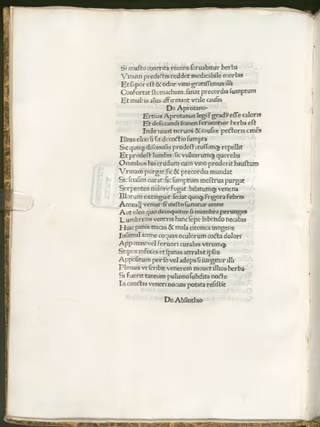
Si muſto contrita recens ſeruabitur herba
Vinum predictis reddet medicabile morbis
Et ſapor eſt & odor vino gratiſſimus illi
Confortat ſtomachum : ſanat precordia ſumptum
Et multis aliis affirmant vtile cauſis