Hover or tap a word to see its match.
Vervain *gerobotinum* and *peristerion*
the Greeks call it: this is said to have
two species: the effect is almost the same for the two.
With wine, it cures the jaundiced if it is drunk often.
Crushed and applied on top, it cures pestilential bites.
Indeed, this medicine is to be renewed with wine for four
days: it cleanses wounds of the mouth well
if its warm juice is rolled about in the mouth.
A fresh decoction made of the herb also provides this.
By this, too, any putrefaction of the mouth is driven away
if, warmed, it is rolled about in the sounding throat for a long time.
The fresh herb, crushed and applied on top, glues together a wound.
Taken with wine, it counters all poisons.
The fever that rages, coming on alternate days,
is driven away by this, if three of its roots are taken
and it is drunk dissolved in water with as many leaves
by the patient before he feels any chill.
And in this manner it heals quartan fevers,
when four leaves with as many roots are swallowed.
If a decoction of it is made in wine,
sprinkled among banquets,
it is said to render the guests cheerful: just as already described for bugloss.
If, carrying this herb in your hand, you ask a sick person:
"Tell me, brother, how are you doing?" If the sick man answers "Well,"
he will live: if "Badly," then there is no hope of recovery for him.
Some have ordered a crown made from this
to be placed on a head aching for any reason whatever;
thus they say it brings a swift remedy.
Pliny affirms that this is wholesome for all
ulcers of the side, diseases, and complaints of the liver,
And ailments of the breast: he asserts that it especially cures
conditions of the lungs and phthisis.
It represses parotid swellings mixed with old fat.
The herb to which they gave a name from a thousand leaves,
and betony, join in equal weight with vervain.
When these are drunk mixed with water, they believe no medicine
to be more useful for those whom the stone torments.
Pliny asserts that the magi praise this herb not a little:
they say that it opposes all diseases,
and whatever they seek, they obtain through anointing with it,
and thus the friendships of the powerful can be captured,
and it drives away fevers, and he feigns many such things,
which although powerful nature could grant them,
nevertheless seem to us, altogether, rightfully old wives' tales.
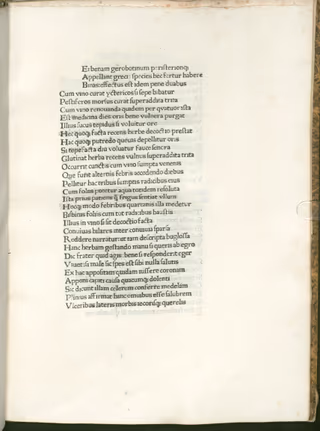
Erbenam gerobotinum periſterionqꝫ
Appellant greci: ſpecies hec fertur habere
Binas: effectus eſt idem pene duabus
Cum vino curat yctericos ſi ſepe bibatur
Peſtiferos morſus curat ſuperaddita trita
Cum vino renouanda quidem per quatuor iſta
Eſt medicina dies:oris bene vulnera purgat
Illius ſucus tepidus ſi voluitur ore
Hec quoqꝫ facta recens herbe decoctio preſtat
Hac quoqꝫ putredo queuis depellitur oris
Si tepefacta diu voluatur fauce ſonora
Glutinat herba recens vulnus ſuperaddita trita
Occurrit cunctis cum vino ſumpta venenis
Que furit alternis febris accedendo diebus
Pellitur hac tribus ſumptis radicibus eius
Cum foliis potetur aqua totidem reſoluta
Iſta prius patiens qͣ frigus ſentiat vllum
Hocqꝫ modo febribus quartanis illa medetur
Biſbinis foliis cum tot radicibus hauſtis
Illius in vino ſi ſit decoctio facta
Conuiuas hilares inter conuiuia ſparſa
Reddere narratur: ut iam deſcripta bugloſſa
Hanc herbam geſtando manu ſi queris ab egro
Dic frater quid agis: bene ſi reſponderit eger
Viuet: ſi male ſic ſpes eſt ſibi nulla ſalutis
Ex hac appoſitam quidam iuſſere coronam
Apponi capiti cauſa quacumqꝫ dolenti
Sic dicunt illam celerem conferre medelam
Plinius affirmat hanc omnibus eſſe ſalubrem
Vlceribus lateris morbis iecoriſqꝫ querelis
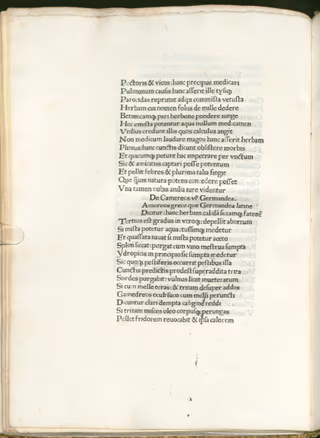
Pectoris & viciis: hanc precipue medicari
Pulmonum cauſis hanc aſſerit ille tyſiqꝫ
Parocidas reprimit adipi commiſta vetuſta
Herbam cui nomen foliis de mille dedere
Betonicamqꝫ pari berbene pondere iunge
Hec cū miſta potentur aqua nullum medicamen
Vtilius credunt illis quos calculus angit
Non modicum laudare magos hanc aſſerit herbam
Plinius: hanc cunctis dicunt obſiſtere morbis
Et quicumqꝫ petunt hac impetrare per vnctum
Sic & amicitias captari poſſe potentum
Et pellit febres & plurima talia fingit
Que ꝗͣuis natura potens concedere poſſet
Vna tamen nobis anilia iure videntur
