Hover or tap a word to see its match.
The Greeks are accustomed to call wood betony *cestron*.
Drunk, it provokes urine: and drives back stones.
It is said to help those who spit blood when taken with posca.
It is said to help those who spit blood when taken with posca.
It cures the dropsical when taken with wine and honey.
A poultice made from its crushed leaves
is of no little benefit to eyes which a blow has injured;
its juice, mixed with rose oil
and poured into the ears, drives away various pains from them.
The juice of betony joined with cooked honey
helps the *enepticos* and the cough: it takes away shortness of breath.
And taken, it drives away various pains of the stomach from there.
If the fever is hot, with wine: if the fever is absent,
this same powder drunk with mead moves the bowels.
With a poultice made from the leaves crushed with salt,
you will cure wounds which have been recently made.
And crushed, this alone heals a fracture of the head.
Let a poultice be made of its boiled leaves,
of no little use for various afflictions of the eyes.
Chewed or drunk, it restrains the tears of the eyes;
by this also the fearsome mist is accustomed to be repelled,
if it has been joined with rue in equal weight,
and if it is taken crushed with warm water;
thus the blood harmful to the eyes through the posterior
is said to be expelled: [and] thus the eyes rendered free.
By taking this warm, the dreadful abscess is purged;
and diseases of the chest are cured by the same drink.
A decoction of it, taken, helps the spleen and the liver.
Four ounces of old betony are to be allied
with three cyathi of wine; to these let there be added grains
of pepper, twenty-seven; these well crushed together
and drunk will purge the kidneys and drive away the pain,
an ounce drunk with two cyathi of warm water.
Is said to soothe excessive pain of the belly.
This puts a cough to flight with honey, and also softens the belly.
If a sick person is troubled by a fever every day,
Let one ounce of plantain be joined to two
Which, crushed with betony, let them be drunk warm
Before the warning chills of the fever occur.
An ounce of betony dissolved warm in a cyathus
Benefits the dropsical if it is drunk frequently.
The powder of the roots, crushed and swallowed with mead,
Quickly purges humors by vomiting, just like hellebore.
Pliny directed that twice two drachmas of these
Roots be given to be drunk with raisin wine or mead;
Phlegm especially will be purged by that vomiting.
The juice of the leaves, drunk with mead, benefits
The ruptured: and that drink relieves prolapsing wombs.
Drunk with wine, it opposes ingested poisons,
Especially the seed, which, if it is lacking, let the herb be given.
An ounce of betony taken with warm wine
Cures the jaundiced: with mead it purges the menses.
But the powder, consumed with honey in the weight of a bean,
After dinner, helps the stomach so that it digests food well.
If a crown is made from green betony
Around snakes, as the authority Pliny asserts,
They will never dare to cross the placed crown,
But perish by their own bite and the lashing of their tail.
Menemachus orders it to be joined to all antidotes,
As an herb more suited to the stomach than all others.
Pliny says of this: whoever carries the herb with him
Will be able to be harmed by no harmful drug;
And they say that if it is swallowed more often with wine,
A leaden complexion may depart and a better one be restored.
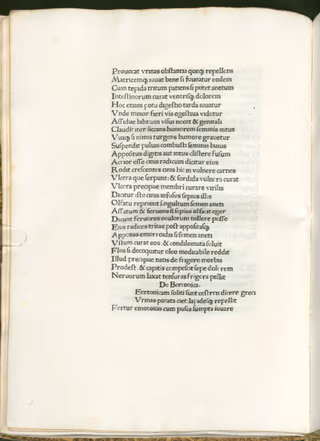
Eertonicam ſoliti ſunt ceſtron dicere greci
Vrinas potata ciet: lapideſqꝫ repellit
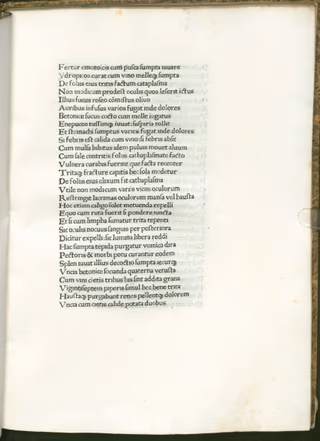
Fertur emotoicis cum puſca ſumpta iuuare
Fertur emotoicis cum puſca ſumpta iuuare
Ydropicos curat cum vino melleqꝫ ſumpta
De foliis eius tritis factum cataplaſma
Non modicum prodeſt oculis quos leſerit ictus
Illius ſucus roſeo cōmiſtus oliuo
Auribus infuſus varios fugat inde dolores
Betonice ſucus cocto cum melle iugatus
Enepticos tuſſimqꝫ iuuat: ſuſpiria tollit
Et ſtomachi ſumptus varios fugat inde dolores
Si febris eſt calida cum vino: ſi febris abſit
Cum mulſa bibitus idem puluis mouet aluum
Cum ſale contritis foliis cathaplaſmate facto
Vulnera curabis fuerint que facta recenter
Tritaqꝫ fracture capitis hec ſola medetur
De foliis eius elixum fit cathaplaſma
Vtile non modicum variis vitiis oculorum
Reſtringit lacrimas oculorum manſa vel hauſta
Hoc etiam caligo ſolet metuenda repelli
Equo cum ruta fuerit ſi pondere iuncta
Et ſi cum limpha ſumatur trita tepenti
Sic oculis nocuus ſanguis per poſteriora
Dicitur expelli: ſic lumina libera reddi
Hac ſumpta tepida purgatur vomica dira
Pectoris & morbi potu curantur eodem
Splen iuuat illius decoctio ſumpta iecurqꝫ
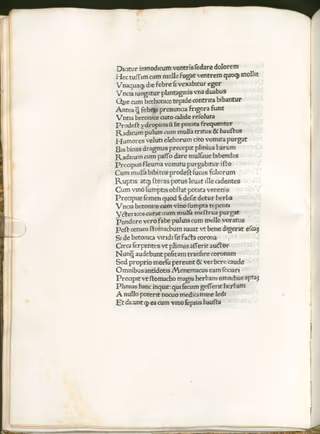
Vncia betonice ſocianda quaterna vetuſta
Cum vini cietis tribus his ſint addita grana
Vigintiſeptem piperis ſimul hec bene trita
Hauſtaqꝫ purgabunt renes pellentqꝫ dolorem
Vncia cum cietis calide potata duobus
Dicitur inmodicum ventris ſedare dolorem
Hec tuſſim cum melle fugat ventrem quoqꝫ mollit
Vnaquaqꝫ die febre ſi vexabitur eger
Vncia iungatur plantaginis vna duabus
Que cum bethonice tepide contrita bibantur
Antea qͣ febris prenuncia frigora fiant
Vntia betonice ciato calide reſoluta
Prodeſt ydropicis ſi ſit potata frequenter
Radicum puluis cum mulſa tritus & hauſtus
Humores veluti eleborum cito vomitu purgat
Bis binas dragmas precepit plinius harum
Radicum cum paſſo dare mulſaue bibendas
Precipue fleuma vomitu purgabitur iſto
Cum mulſa bibitus prodeſt ſucus foliorum
Ruptis: atqꝫ ſteras potus leuat ille cadentes
Cum vino ſumptis obſtat potata venenis
Precipue ſemen quod ſi deſit detur herba
Vncia betonice cum vino ſumpta tepenti
Yctericos curat: cum mulſa meſtrua purgat
Pondere vero fabe puluis cum melle voratus
Poſt cenam ſtomachum iuuat vt bene digerat eſcaꝫ
Si de betonica viridi ſit facta corona
Circa ſerpentes vt plinius aſſerit auctor
Nunqͣ audebunt poſitam tranſire coronam
Sed proprio morſu pereunt & verbere caude
Omnibus antidotis Menemacus eam ſociari
Precipit vt ſtomacho magis herbam omnibus aptaꝫ
Plinius hanc inquit: qui ſecum geſſerit herbam
A nullo poterit nocuo medicamine ledi
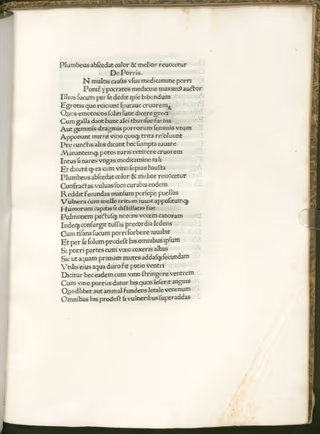
Et dicunt ꝙ ea cum vino ſepius hauſta
Plumbeus abſcedat color & melior reuocetur
