Hover or tap a word to see its match.
Erigeron in Greek, we call seniclum,
Because in its flower it seems similar to hoary hairs.
It grows on walls and in gardens and on tiled roofs.
The power of that herb is said to be cold.
Its root is not put to medicinal use.
Plucking the flowers with the leaves, pour them into a little
Sweet wine, and thus warmed, apply these together to a tumor
Of the anus or of the testicles.
With frankincense added to these, you will easily cure the sinews and any wounds
With such a poultice applied.
Its little heads, ground up, do these same things.
They forbid it to be drunk because certain men affirm
That it suffocates the drinker; but on the contrary, the authority Pliny
Says that he once gave a wholesome drink to the jaundiced
With wine; only with such a medicine,
For diseases of the bladder, he says he has proven it on many,
And that he gave it for defects of the heart and liver,
And that a potion with raisin wine helped the gripes.
These various diseases which the inwards suffer,
This green herb treats, if it is swallowed dipped in vinegar.
Ground with salt, it is accustomed to scatter hard scrofulous tumors.
If someone digs this up without iron, having drawn a line around it,
And touches an aching tooth with it three times,
Spitting on each occasion, and afterwards puts it back in the same
In the place where it grew: thus the herb lives again,
As Pliny says, that tooth will no longer ache.
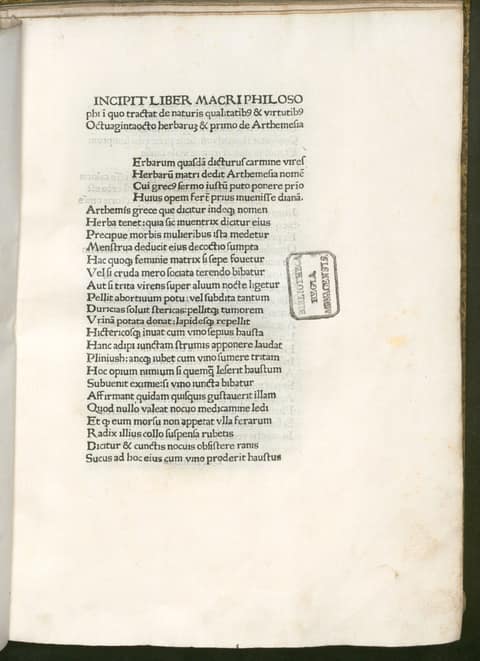
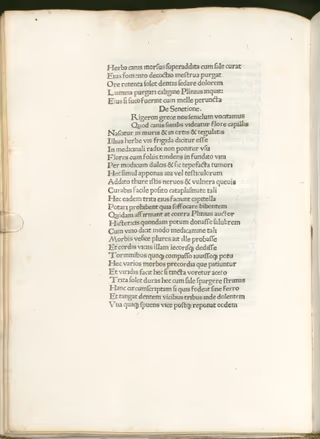
Rigeron grece nos ſeniclum vocitamus
Quod canis ſimilis videatur flore capillis
Naſcitur in muris & in ortis & tegulatis
Illius herbe vis frigida dicitur eſſe
In medicinali radix non ponitur vſu
Flores cum foliis tondens in fundito vini
Per modicum dulcis & ſic tepefacta tumori
Hec ſimul apponas ani vel teſticulorum
Addito thure iſtis neruos & vulnera queuis
Curabis facile poſito cataplaſmate tali
Hec eadem trita eius faciunt capitella
Potari prohibent quia ſoffocare bibentem
Quidam affirmant at contra Plinius auctor
Hictericis quondam potum donaſſe ſalubrem
Cum vino dicit modo medicamine tali
Morbis veſice plures ait ille probaſſe
Et cordis viciis illam iecoriſqꝫ dediſſe
Torminibus quoqꝫ compaſſo iuuiſſeqꝫ potu
Hec varios morbos precordia que patiuntur
Et viridis facit hec ſi tincta voretur aceto
Trita ſolet duras hec cum ſale ſpargere ſtrumas
Hanc circumſcriptam ſi quis fodeat ſine ferro
Et tangat dentem vicibus tribus inde dolentem
Vna quaqꝫ ſpuens vice poſtqꝫ reponat eodem
Quo fuit orta loco: ſic rurſus viuit herba
Plinius vt dicit iam non dens ille dolebit