Hover or tap a word to see its match.
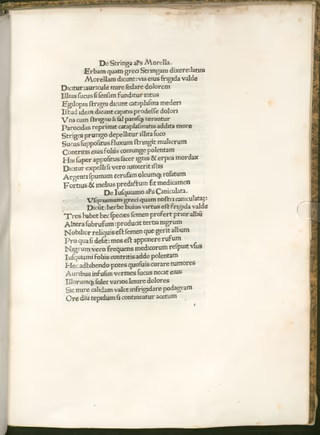
The Greeks call it *Iusquiamum*, which ours call *caniculata*:
the virtue of this herb is very cold.
It has three species; the first brings forth white seed,
the second somewhat red; the third produces black.
The one which bears white seed is nobler than the rest;
in place of which, if it is lacking, the custom is to apply the red.
But the frequent use of physicians rejects the black.
Add barley meal to the crushed leaves of *iusquiamus*;
by applying these you can cure any tumors whatsoever.
Its juice poured into the ears kills worms,
and is accustomed to soothe their various pains.
Thus it is able to wonderfully cool hot gout,
if warm vinegar is held in the mouth for a long time
In which the roots of that herb have been boiled,
It is said to soothe excessive toothache.
The expressed juice of its crushed seed
Can restrain a viscous and hot rheum,
If suffering eyes are anointed with it.
An obol of that seed mixed with the seed
Of poppy is taken together with honey-water by them
Usefully, who suffer a flux of the womb,
And they say it can thus heal those who spit blood,
Or in whatever way blood is cast from the mouth,
This potion is said to heal if drunk often.
The seed crushed with wine and made into a poultice
They say cures swelling breasts and testicles;
It is added to many plasters and antidotes.
That poultice brings healing like a vegetable,
The same juice excels poured into any wound.
Vſquiamum greci quam noſtri caniculataꝫ:
Dicūt:herbe huius virtus eſt frigida valde
Tres habet hec ſpecies ſemen profert prior albū
Altera ſubrufum:producit tertia nigrum
Nobilior reliquis eſt ſemen que gerit album
Pro qua ſi deſit:mos eſt apponere rufum
Nigrum vero frequens medicorum reſpuit vſus
Iuſquiami foliis contritis adde polentam
Hec adhibendo potes quoſuis curare tumores
Auribus infuſus vermes ſucus necat eius
Illorumqꝫ ſolet varios lenire dolores
Sic mire calidam valet infrigidare podagram
Ore diu tepidum ſi contineatur acetum
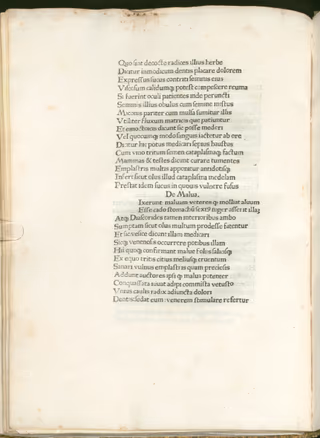
Quo ſint decocte radices illius herbe
Dicitur inmodicum dentis placare dolorem
Expreſſus ſucus contriti ſeminis eius
Viſcoſum calidumqꝫ poteſt compeſcere reuma
Si fuerint oculi patientes inde peruncti
Seminis illius obulus cum ſemine miſtus
Miconis pariter cum mulſa ſumitur illis
Vtiliter fluxum matricis que patiuntur
Et emoctoicis dicunt ſic poſſe mederi
Vel quocumqꝫ modo ſanguis iactetur ab ore
Dicitur hic potus medicari ſepius hauſtus
Cum vino tritum ſemen cataplaſmaqꝫ factum
Mammas & teſtes dicunt curare tumentes
Emplaſtris multis apponitur antidotiſqꝫ
Infert ſicut olus illud cataplaſma medelam
Preſtat idem ſucus in quouis vulnere fuſus
