Hover or tap a word to see its match.
Lovage took its name from the country of Liguria,
Where a greater abundance of that herb grows,
And their virtue is equal in whatever medicine.
The virtue of the root is greater than that of its seed.
To it belongs the third degree of dry and hot vigor.
Taken with wine, it cures an inflated stomach,
And by such a drink the digestive virtue is aided,
And thus it is beneficial for all diseases of the internal organs.
Taken thus, they promote urine: and purge the menses.
The whole herb heals venomous bites
If it is drunk, well crushed first and dissolved in wine,
And a part of the crushed herb is placed upon them.
Chewed or drunk, it is of no small benefit for the colicky,
Or if a decoction of the root is drunk.
Not only does this decoction aid the colicky,
But when drunk it will heal all the aforementioned conditions.
Its seed is well joined to digestive remedies,
And to all antidotes, because an astringent virtue is present there.
Strabo asserts that this is harmful to the eyes by drink and smell,
He ordered only its seed to be mixed into antidotes:
Whether he said this word of his own accord
Or from the books of the learned: is not known to me.
This I know, that the ancients with no small praises
Extol this herb: nor do I remember reading
Anyone who agrees with the words of Strabo.
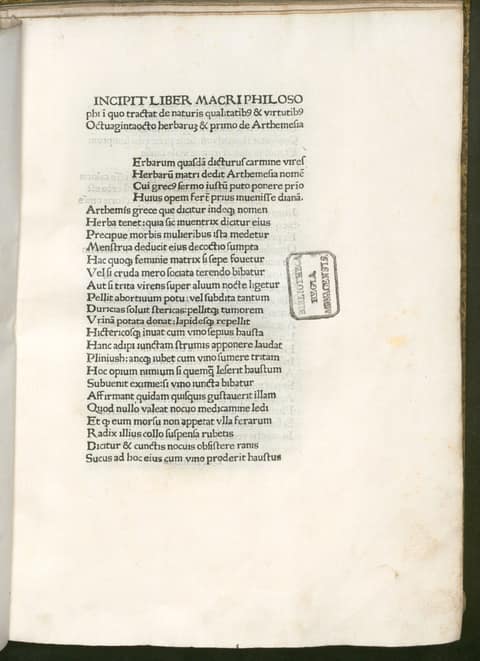
Igurgum patria ſumſere liguſtia nomen
Copia quo maior ibi naſcitur illius herbe
Et par eſt illis vis in medicamine quouis
Maior radicis vis eſt qͣ ſeminis eius
Tertius huic gradus ſicci calidiqꝫ vigoris
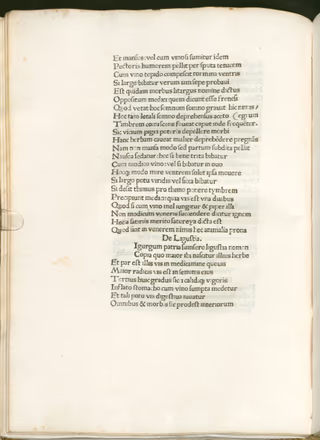
Inflato ſtomacho cum vino ſumpta medetur
Et tali potu vis digeſtiua iuuatur
Omnibus & morbis ſic prodeſt interiorum
Vrinas ſic ſumpta mouent: & meſtrua purgant
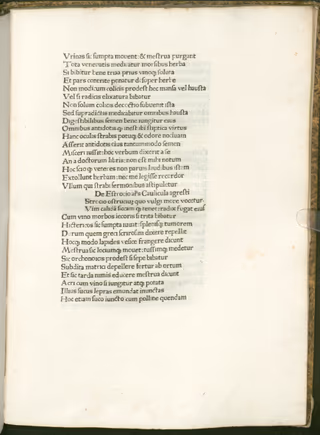
Tota venenatis medicatur morſibus herba
Si bibitur bene trita prius vinoqꝫ ſoluta
Et pars contrite ponatur deſuper herbe
Non modicum colicis prodeſt hec manſa vel hauſta
Vel ſi radicis elixatura bibatur
Non ſolum colicis decoctio ſubuenit iſta
Sed ſupradictis medicabitur omnibus hauſta
Digeſtibilibus ſemen bene iungitur eius
Omnibus antidotis ꝙ ineſt ibi ſtiptica virtus
Hanc oculis ſtrabis potuqꝫ & odore nociuam
Aſſerit antidotis eius tantummodo ſemen
Miſceri iuſſit: hoc verbum dixerit a ſe
An a doctorum libris: non eſt mihi notum
Hoc ſcio ꝙ veteres non paruis laudibus iſtam
Extollunt herbam: nec me legiſſe recordor
Vllum qui ſtrabi ſermonibus aſtipuletur