Hover or tap a word to see its match.
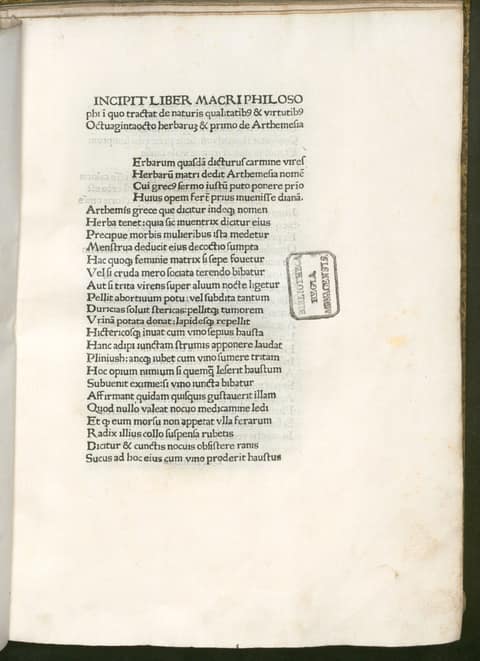
They say the force of the poppy is cold and dry.
They assign three species to it: the flower of one is white,
of another, red: and the flower of the smaller one is pale rosy;
this one they commonly call the wild poppy.
Nobler than all is the one on which a white flower grows;
from its tender heads they make opium:
the outermost skin being lightly cut, the milk which flows
from there they catch in receptacles and save the juice,
suitable for many antidotes and various complaints.
There are those who pound its little heads along with their milk,
and the liquor pressed out from them they dry in the sun.
After the first juice, this juice has secondary virtues.
But from the species which I said produces rosy flowers:
they make an oil from the crushed seed,
not a little pleasant to the taste and sleep-inducing.
The third, whose flower is red and provides a blackish seed:
offers sleep, if it is drunk, in the manner of the others.
A warm decoction of any of these,
if a sick person foments his face with it or drinks it,
he will catch the desired sleep, unless death is very near.
The seed of the black poppy drunk with wine is said to bind the belly;
and in this way, it is said, it restrains women's fluxes.
Drunk, it gives sleep, it checks a severe cough.
These seeds ought to be taken in the weight of a denarius,
for a larger amount more often brings lethargy or death.
A poultice made from its pounded leaves
They say it excellently cures swollen throats,
And it is said to extinguish the fires which they call sacred.
By cold or merely by drink or food or morsel
If the vocal cord has been rendered harsh,
By applying such a medicine it will become smooth.
The white kind of meconium: for so
They say every poppy is called in the language of the Greeks,
Is far more noble and useful than the two.
Then, when the little heads of this poppy flow with milk,
Let water be boiled with the milk: to which let a third part of honey
Be added; boil them all until the decoction is thick
Like honey: thus let it be preserved for various uses.
When taken, it causes sleep, drives away a cough, and binds the bowels.
It well dries rheums of the vocal cord.
Opium made from the tender little heads of the same,
Just as I have already taught, you will mix with rose oil.
Anoint the head: with these mixed, all pain will be calmed,
And this ointment is accustomed to provide quiet sleep.
Mix the fragrant threads of saffron with the aforesaid things;
You will cure pain of the ear by pouring this in.
Also, with this worked together with woman's milk and saffron,
By anointing, you will be able to calm hot gout.
Placed as a suppository in the anus, this is accustomed to bring on sleep.
That same thing is thought to provide it by its odor alone.
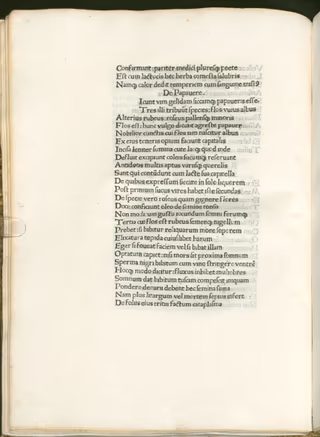
Icunt vim gelidam ſiccamqꝫ papaueris eſſe.
Tres illi tribuūt ſpecies: flos vnius albus
Alterius rubeus: roſeus pallenſqꝫ minoris
Flos eſt: hunc vulgo dicunt agreſte papauer
Nobilior cunctis cui flos iam naſcitur albus
Ex eius teneris opium faciunt capitalis
Inciſa leniter ſumma cute lacqꝫ quod inde
Defluit excipiunt coleis ſucumqꝫ reſeruant
Antidotis multis aptus variiſqꝫ querelis
Sunt qui contūdunt cum lacte ſua capitella
De quibus expreſſum ſiccant in ſole liquorem
Poſt primum ſucus vires habet iſte ſecundas
De ſpecie vero roſeos quam gignere flores
Dixi: conficiunt oleo de ſemine tonſo
Non modicum guſtu iocundum ſomni ferumqꝫ
Tertia cui flos eſt rubeus ſemenqꝫ nigellum
Prebet: ſi bibitur reliquarum more ſoporem
Elixatura tepida cuiuſlibet harum
Eger ſi foueat faciem vel ſi bibat illam
Optatum capiet: niſi mors ſit proxima ſomnum
Sperma nigri bibitum cum vino ſtringere ventrē
Hocqꝫ modo dicitur: fluxus inhibet muliebres
Somnum dat bibitum tuſcim compeſcit iniquam
Pondere denarii debent hec ſemina ſumi
Nam plus litargum vel mortem ſepius infert
De foliis eius tritis factum cataplaſma
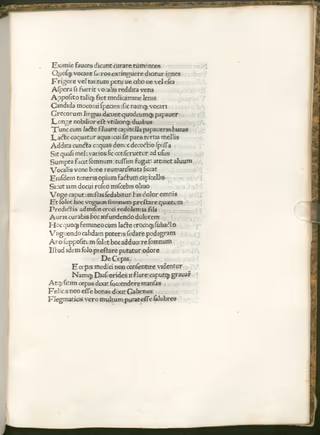
Eximie fauces dicunt curare tumentes
Quoſꝙ vocant ſacros extinguere dicitur ignes
Frigore vel tantum potu ue cibo ue vel eſca
Aſpera ſi fuerit vocalis reddita vena
Appoſito taliꝙ fiet medicamine lenis
Candida moconii ſpecies: ſic namꝙ vocari
Grecorum lingua dicunt quodcumꝙ papauer
Longe nobilior eſt vtiliorꝙ duabus
Tunc cum lacte fluunt capitella papaueris huius
Lacte coquatur aqua: cui ſit pars tertia mellis
Addita cuncta coquas donec decoctio ſpiſſa
Sit quaſi mel: varios ſic conſeruetur ad uſus
Sumpta facit ſomnum: tuſſim fugat: attinet aluum
Vocalis vene bene reumatiſmata ſiccat
Eiuſdem teneris opium factum capitellis
Sicut iam docui roſeo miſcebis oliuo
Vnge caput: miſtis ſedabitur his dolor omnis
Et ſolet hoc vnguen ſomnum preſtare quietum
Predictis admiſce croci redolentia fila
Auris curabis hoc infundendo dolorem
Hoc quoꝙ femineo cum lacte crocoꝙ ſubacto
Vnguendo calidam poteris ſedare podagram
Ano ſuppoſitum ſolet hoc adducere ſomnum
Iſtud idem ſolo preſtare putatur odore