Hover or tap a word to see its match.
The herb *lapacium* is commonly accustomed to be called *paratella*.
There are said to be four species of it,
But the power in medicine is almost equal in all of them;
In all of them there is a hot and harsh virtue.
One indeed comforts the stomach when consumed: and is accustomed
To drive away wind enclosed in the stomach through belches,
And when consumed like a vegetable it is said to bind the belly.
A biting itch, and skin torn by scabies,
Yield to warm decoctions made of it.
The roots, boiled in wine and well crushed,
When applied, suppress scrofula and parotid swellings.
If a warm decoction of it is often gargled,
it will soothe the uvulas, and the swollen aching of a tooth.
This, in a drink, helps dysenterics and celiacs.
Pain of the ear is driven away by this warm [decoction], if it is fomented.
Its roots boiled in strong vinegar,
crushed and often applied to a swelling spleen,
repress the tumor, although it is not small, by drying it out.
A decoction of the roots made with wine or water,
when drunk, restrains the menses and drives out stones.
This same thing helps the jaundiced; and hung from the neck,
its root will prevent scrofula from developing.
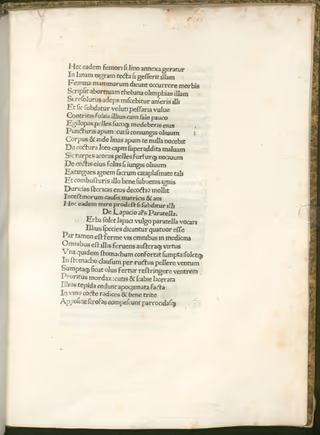
Erba ſolet lapaci vulgo paratella vocari
Illius ſpecies dicuntur quatuor eſſe
Par tamen eſt ferme vis omnibus in medicina
Omnibus eſt illis feruens auſteraqꝫ virtus
Vna quidem ſtomachum confortat ſumpta:ſoletqꝫ
In ſtomacho clauſum per ructus pellere ventum
Sumptaqꝫ ſicut olus fertur reſtringere ventrem
Pruritus mordax:cutis & ſcabie lacerata
Illius tepida cedunt apoczimata facta
In vino cocte radices & bene trite
Appoſite ſcrofas compeſcunt parrocidaſqꝫ
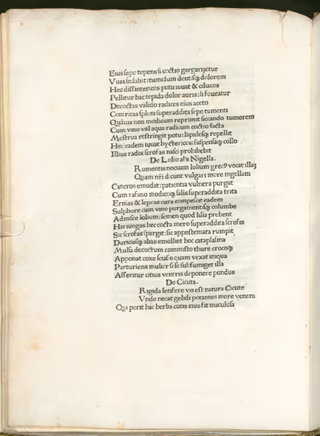
Eius ſepe tepens ſi coctio gargarizetur
Vuas ſedabit: tumidum dentiſqꝫ dolorem
Hec diſſintericos potu iuuat & ciliacos
Pellitur hac tepida dolor auris: ſi foueatur
Decoctas valido radices eius aceto
Contritas ſpleni ſuperaddita ſepe tumenti
Quāuis non modicum reprimit ſiccando tumorem
Cum vino vel aqua radicum coctio facta
Meſtrua reſtringit potu: lapideſqꝫ repellit
Hec eadem iuuat hyctericos: ſuſpenſaqꝫ collo
Illius radix ſcrofas naſci prohibebit