Hover or tap a word to see its match.
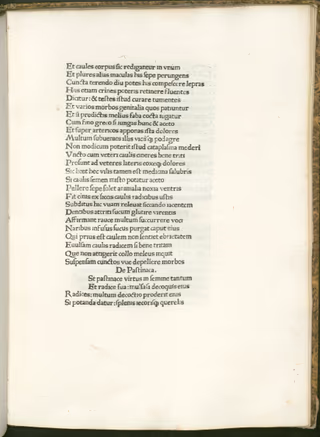
The virtue of the parsnip is in its seed only
And in its root: if you boil its
Roots in mead: its decoction will be very beneficial
If it is given to be drunk: for complaints of the spleen and liver
And drunk, the same relieves pains of the loins.
Boil this in milk; the decoction taken will help
asthmatics, however chronic, and flowing bowels.
Its root hung from the neck,
as some say, subdues swellings of the testicles.
He who carries parsnip or who has chewed it
is said to be able to be harmed by no serpent.
It kindles Venus if it is taken in abundance.
If you scrape around the teeth with its roots,
they say they are very often relieved from immense pain.
If parsnip seed is drunk in wine,
it subdues the harsh strikes that a scorpion has inflicted.
Thus also they say it cures a swelling of the female belly,
by which a woman seems as if pregnant.
Applied to cancers, pounded with honey, it heals them.
Because it provides food, it is called parsnip;
for the roots yield better food with honey.
St paſtinace virtus in ſemine tantum
Et radice ſua: mulſa ſi decoquis eius
Radices: multum decoctio proderit eius
Si potanda datur: ſplenis iecoriſqꝫ querelis
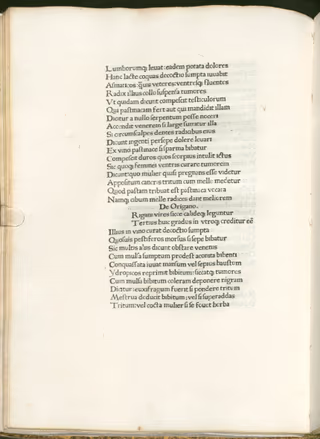
Lumborumqꝫ leuat: eadem potata dolores
Hanc lacte coquas decoctio ſumpta iuuabit
Aſmaticos: qͣuis veteres: ventreſqꝫ fluentes
Radix illius collo ſuſpenſa tumores
Vt quidam dicunt compeſcit teſticulorum
Qui paſtinacam fert aut qui mandidit illam
Dicitur a nullo ſerpentum poſſe noceri
Accendit venerem ſi large ſumitur illa
Si circumſcalpes dentes radicibus eius
Dicunt ingenti perſepe dolere leuari
Ex vino paſtinace ſi ſperma bibatur
Compeſcit duros quos ſcorpius intulit ictus
Sic quoqꝫ feminei ventris curare tumorem
Dicunt: quo mulier quaſi pregnans eſſe videtur
Appoſitum cancris tritum cum melle medetur
Quod paſtam tribuat eſt paſtinaca vocata
Namqꝫ cibum melle radices dant meliorem