
Hover or tap a word to see its match.
We have known the radish to be of a hot nature
If you eat it, it moves the urine: and loosens the bowels.
And thrice crushed: if it is joined with vinegar
And honey, it draws down vomit from the bottom of the stomach
If a poultice is made from this crushed [radish]
It is effective in helping the dropsical and the splenetic
And in such a way you treat a quinsy, by thus gargling
The juice: joining it to honey and vinegar
Join the crushed root of this to soap
And placing it over the navel: it will quickly soften the bowels
This root, eaten, will be able to settle the stomach
And boiled with wine, it is said to cure a stony
Bladder: if it is allied with wine and beer
Thus the bowels are suppressed if the juice is often drunk
While you steam yourself: or take dry baths.
With this you will also repel roundworms, worms, and maw-worms.
Drinking the juice fasting, you can thus heal
The pain of the knees, as they say, and the swelling.
Pounded radish bound in a linen bag
And applied over by placing it on for three days.
You will anoint the head with this cooked in oil: take your sleep.
He will gargle oxymel and Syrian seed.
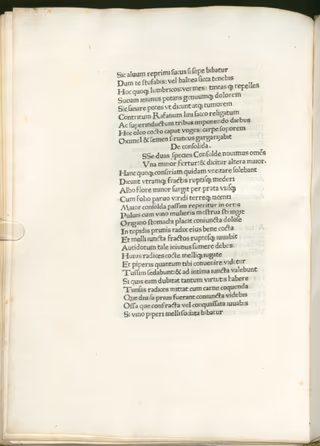
Ature calide Rafanum cognouimus eſſe
Si comedis mouet vrinam: ventrē qꝫ laxat.
Ac ter contritus: ſi coniungatur aceto
Et melli vomitum ſtomacho deducit ab imo
Ex hoc ſi trito factum fuerit cataplaſma
Ydropicis: & ſpleneticis valet auxiliari
Et tali pacto ſinacem ſic gargarizando
Procuras ſucum: melli iungens & aceto
Huius radicem tritam coniunge ſaponi
Ac ſuper vmbilicum ponens: cito molliet aluum
Hec radix poterit ſtomachum ſedare comeſta
Coctaqꝫ cum vino fertur curare petroſam
Veſicam: vino & ceruiſie ſi ſociatur
Sic aluum reprimi ſucus ſi ſepe bibatur
Dum te ſtufabis: vel balnea ſicca tenebis
Hoc quoqꝫ lumbricos: vermes: tineasqꝫ repelles
Sucum ieiunus potans genuumqꝫ dolorem
Sic ſanare potes vt dicunt atqꝫ tumorem
Contritum Rafanum lini ſacco religatum
Ac ſuperinductum tribus imponendo diebus
Hoc oleo cocto caput vnges: carpe ſoporem
Oximel & ſemen ſiriacus gargarizabit