Hover or tap a word to see its match.
They say rocket is moderately hot,
not so dry: its food digests food.
And chewed or drunk, it has the power to move urine.
It is usefully chewed for boys and repels a cough.
And joined with honey they report it cleanses the skin of spots,
and renders faces clean of freckles.
The root first boiled and worked into wounds
and added to broken bones, draws them out.
If its seed is taken, crushed with wine,
it seems to cure any pestiferous bites.
Smeared on with ox gall, it cures black spots:
I speak wonders: drunk more copiously with wine,
they say it hardens the senses against blows.
If a cook mixes the herb
or seed into seasonings: they say it provides a pleasant flavor.
And the Greeks usually call this *causon* *Ethimium*.
They report that rocket, because its taste is good,
chewed or drunk, stimulates Venus not a little.
Physicians and many poets alike affirm:
this herb is wholesome when eaten with lettuces,
for its heat, mixed with the blood, gives balance.
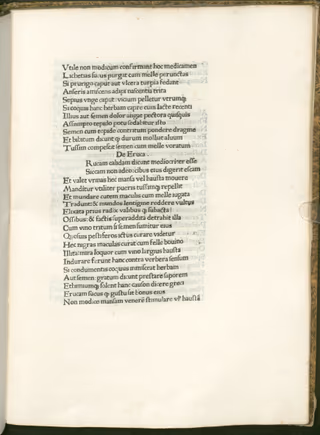
Rucam calidam dicunt mediocriter eſſe
Siccam non adeo: cibus eius digerit eſcam
Et valet vrinas hec manſa vel hauſta mouere
Manditur vtiliter pueris tuſſimqꝫ repellit
Et mundare cutem maculis cum melle iugata
Tradunt: & mundos lentigine reddere vultus
Elixata prius radix vulneribꝰqꝫ ſubacta
Oſſibus: & fractis ſuperaddita detrahit illa
Cum vino tritum ſi ſemen ſumitur eius
Quoſuis peſtiferos ictus curare videtur
Hec nigras maculas curat cum felle bouino
Illita: mira loquor cum vino largius hauſta
Indurare ferunt hanc contra verbera ſenſum
Si condimentis coquus inmiſceat herbam
Aut ſemen: gratum dicunt preſtare ſaporem
Ethimiumqꝫ ſolent hanc caulem dicere greci
Erucam ferunt ꝙ guſtu ſit bonus eius
Non modice manſam venerē ſtimulare vl̓ hauſtā
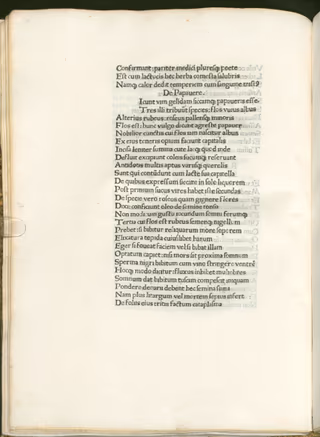
Confirmant: pariter medici plureſqꝫ poete
Eſt cum lactucis hec herba comeſta ſalubris
Namqꝫ calor dedit temperiem cum ſanguine miſtꝰ
