Hover or tap a word to see its match.
They say that nasturtium has burning powers
And drying; like rue, it restrains fierce sexual desire
By drying up the seed, if it is taken frequently.
Crushing this herb, mixed with yeast by grinding,
It cures carbuncles: which the common people call good ulcers.
And if it is placed over it, a boil is cured by this,
It emits pus, with which the pain itself recedes.
The juice of that herb is stronger for retaining falling hair;
The seed expels an aborted fetus.
It is asserted to relieve the pain of a tooth,
Poured into the ear on the side where the aching tooth is.
Drunk with wine, it expels animals of the belly,
And thus they say it opposes the poisons of a serpent;
Its mere odor, placed on coals, drives them away.
It reduces the spleen if it is drunk often mixed with vinegar.
Join the herb or the seed with polinum in vinegar;
Add these, crushed together, over the pain of sciatica.
They confirm this medicine is useful in no small measure.
The juice purges lichens smeared on with honey.
If itchiness or foul ulcers foul the head,
mixing crushed nasturtium with goose fat,
anoint the head often: both afflictions will be driven away.
If you boil this herb with fresh goat's milk
or its seed, whatever pain torments the chest
will be relieved by taking this warm potion.
The seed crushed warmly at the weight of a drachma
and drunk, they say that it softens a hard belly.
The seed swallowed with honey checks a cough.
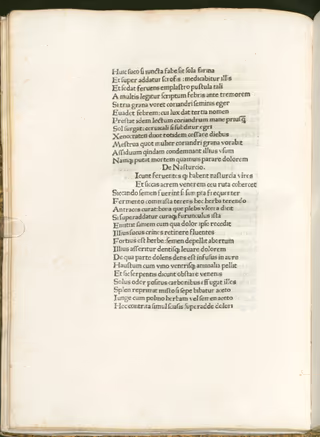
d Icunt feruentes ꝙ habent naſturcia vires
Et ſiccas acrem venerem ceu ruta cohercet
Siccando ſemen fuerint ſi ſumpta frequenter
Fermento commiſta terens hec herba terendo
Antraces curat: bona que plebs vlcera dicit
Si ſuperaddatur curaqꝫ furunculus iſta
Emittit ſaniem cum qua dolor ipſe recedit
Illius ſucus crines retinere fluentes
Fortius eſt herbe: ſemen depellit abortum
Illius aſſeritur dentiſqꝫ leuare dolorem
De qua parte dolens dens eſt infuſus in aure
Hauſtum cum vino ventriſqꝫ animalia pellit
Et ſic ſerpentis dicunt obſtare venenis
Solus odor poſitus carbonibus effugat illos
Splen reprimit miſto ſi ſepe bibatur aceto
Iunge cum polino herbam vel ſemen aceto
Hec contrita ſimul ſciaſis ſuperadde dolori
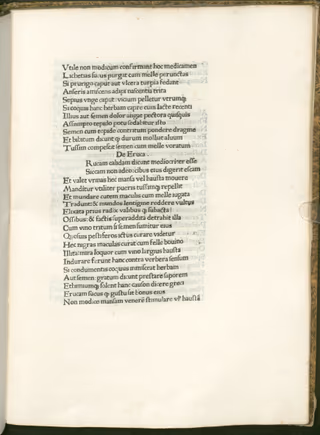
Vtile non modicum confirmant hoc medicamen
Lichenas ſucus purgat cum melle perunctas
Si prurigo caput aut vlcera turpia fedant
Anſeris amiſcens adipi naſturcia trita
Sepius vnge caput: vicium pelletur vtrumqꝫ
Si coquis hanc herbam capre cum lacte recenti
Illius aut ſemen dolor angat pectora quiſquis
Aſſumpto tepido potu ſedabitur iſto
Semen eius tepide contritum pondere dragme
Et bibitum dicunt ꝙ durum molliat aluum
Tuſſim compeſcit ſemen cum melle voratum
