Hover or tap a word to see its match.
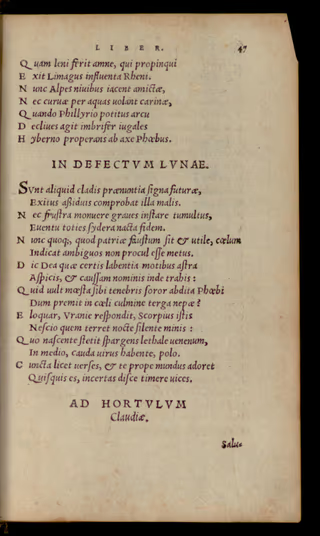
Signs foretelling future disaster are of some consequence,
The outcome proves them with relentless evils.
Nor have they warned in vain that grievous upheavals threaten,
The stars having so often won credence by the event.
Now too—may it be auspicious and beneficial to the fatherland—the sky
Indicates that ambiguous fears are not far off.
Tell me, Goddess, you who observe the stars gliding
In fixed motions, and draw the cause of your name from thence:
What does the sorrowful sister of Phoebus mean, hidden in darkness,
While she presses upon the back of the scorpion at the summit of the sky?
"I will speak," Urania replied. "The Scorpion terrifies
I know not whom in the silent night with those threats:
At whose birth he stood, scattering lethal poison,
In the middle of the sky, his tail holding venom.
Though you may overturn all things, and the world almost adore you,
Whoever you are, learn to fear uncertain turns of fate."
SVnt aliquid cladis prænuntia ſigna futuræ,
Exitus aſsiduis comprobat illa malis.
Nec fruſtra monuere graues inſtare tumultus,
Euentu toties ſydera nacta fidem.
Nunc quoqꝫ quod patriæ fauſtum ſit & utile, cœlum
Indicat ambiguos non procul eſſe metus.
Dic Dea quæ certis labentia motibus aſtra
Aſpicis, & cauſſam nominis inde trahis:
Quid uult mœſta ſibi tenebris ſoror abdita Phœbi
Dum premit in cœli culmine terga nepæ?
Eloquar, Vranie reſpondit, Scorpius iſtis
Neſcio quem terret nocte ſilente minis:
Quo naſcente ſtetit ſpargens lethale uenenum,
In medio, cauda uirus habente, polo.
Cuncta licet uerſes, & te prope mundus adoret
Quiſquis es, incertas diſce timere uices.