Hover or tap a word to see its match.
The herb which the Greeks called *millesophillos*,
Our people commonly call it borage.
It is said to be the most pleasing to bees above all herbs;
They seem to rejoice in this more than the flower of any other.
And if you smear the hives of the bees with the crushed leaves,
They will not flee: you would do better if you join milk to it.
Beekeepers retain the swarms with such an ointment.
Thus it brings immediate help to the stings of bees,
If the sting is immediately covered with it crushed.
And in this way it cures those whom a wasp or spider harms.
Crushed with salt, it is accustomed to check old scrofulous tumors.
And in this way they say it relieves ailments of the anus.
A woman is purged by the juice boiled down with salt.
Harmful swelling is dispelled by such a drink.
If a decoction of it green is often drunk,
It helps chronic dysenterics and celiacs.
The same is beneficial for asthmatics and the orthopneic,
It cleanses ulcers, it relieves diseases of the joints.
The herb, applied over them with salt, cures dog bites.
A decoction of it purges the menses by fomentation.
Held in the mouth, it is accustomed to soothe the pain of a tooth.
Pliny says that the eyes are purged of dimness:
If they have been anointed with its juice along with honey.
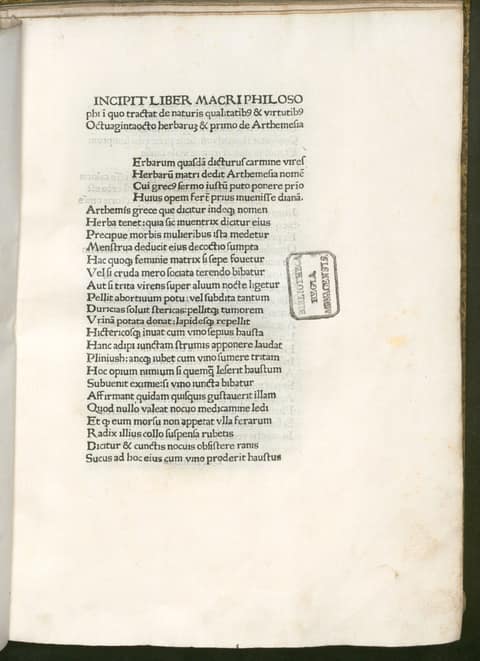
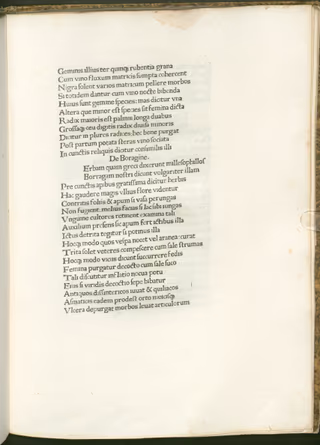
Erbam quam greci dixerunt milleſophilloſ
Borragam noſtri dicunt volgariter illam
Pre cunctis apibus gratiſſima dicitur herbis
Hac gaudere magis vllius flore videntur
Contritis foliis & apum ſi vaſa perungas
Non fugient: melius facias ſi lac ſibi iungas
Vnguine cultores retinent examina tali
Auxilium preſens ſic apum fert ictibus illa
Ictus detrita tegitur ſi potinus illa
Hocqꝫ modo quos veſpa nocet vel aranea: curat
Trita ſolet veteres compeſcere cum ſale ſtrumas
Hocqꝫ modo viciis dicunt ſuccurrere ſedis
Femina purgatur decocto cum ſale ſuco
Tali diſcutitur inflatio nocua potu
Eius ſi viridis decoctio ſepe bibatur
Antiquos diſſintericos iuuat & quiliacos
Aſmaticis eadem prodeſt orto moiciſqꝫ
Vlcera depurgat morbos leuat articulorum
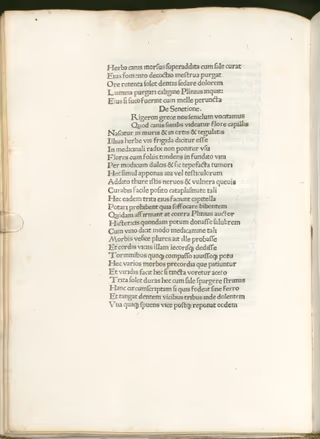
Herba canis morſus ſuperaddita cum ſale curat
Eius fomento decoctio meſtrua purgat
Ore retenta ſolet dentis ſedare dolorem
Lumina purgari caligine Plinius inquit:
Eius ſi ſuco fuerint cum melle peruncta