Hover or tap a word to see its match.
There are a greater and a lesser species of Centaurea,
As I have said concerning many herbs written above;
But because the greater species is known to very few,
Passing over this, I will narrate the virtues of the lesser,
Which I believe is known to all, even the commoners themselves.
It is said to be of a desiccating virtue;
Therefore it glues together recent wounds not a little
And when applied over them, it closes old scars.
For one who suffers from sciatica, a decoction of it is wonderfully
beneficial: if it is introduced through the anus,
after blood is drawn off, it soon soothes the pain.
As a fomentation, it will cure sick sinews.
Its juice, when consumed, draws down the menses,
expels an abortus and all harmful drugs.
Taken with wine, they say it purges through the anus.
With honey joined to it, it purges the eyes of dimness.
Its juice is pressed out in the autumn season,
which you should set aside to be dried in the burning sun,
for the wholesome cure of the things we mentioned before.
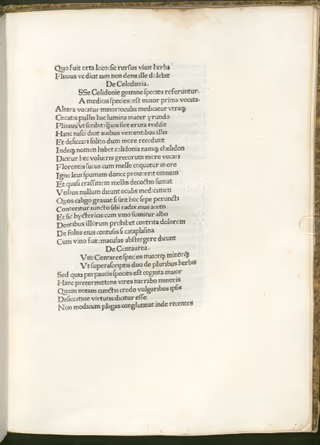
Vnt Centaree ſpecies maiorqꝫ minorqꝫ
Vt ſuperaſcriptis dixi de pluribus herbis
Sed quia perpaucis ſpecies eſt cognita maior
Hanc pretermittens vires narrabo minoris
Quam notam cunctis credo vulgaribus ipſis
Deſiccatiue virtutis dicitur eſſe
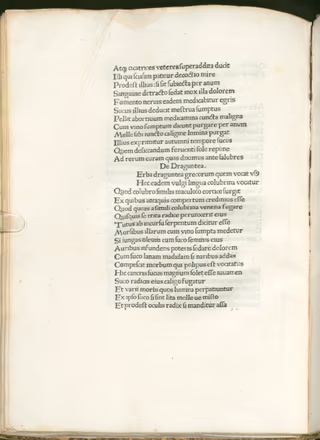
Non modicum plagas conglutinat inde recentes
Atqꝫ cicatrices veteres ſuperaddita ducit
Illi qui ſciaſim patitur decoctio mire
Prodeſt illius: ſi ſit ſubiecta per anum
Sanguine detracto ſedat mox illa dolorem
Fomento neruis eadem medicabitur egris
Sucus illius deducit meſtrua ſumptus
Pellit abortiuum medicamina cuncta maligna
Cum vino ſumptum dicunt purgare per anum
Melle ſibi iuncto caligine lumina purgat
Illius exprimitur autumni tempore ſucus
Quem deſiccandum feruenti ſole repone
Ad rerum curam quas diximus ante ſalubres
