Hover or tap a word to see its match.
Part 1
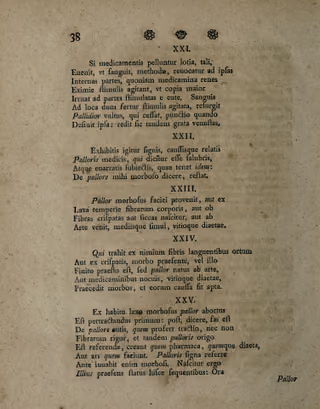
XXV.
Morbid pallor arisen from a lax habit
Must be treated first: afterwards, it is right to speak
Of the pallor of the skin which tension brings forth, as well as
The rigor of the fibres, and finally the origin of the pallor
Must be related, which drugs create, and which diet,
Or which art produces. For it will be helpful first to relate
The signs of morbid pallor. Therefore its
Present state arises from these following things: The face
Ex habitu laxo morboſus pallor abortus
Eſt pertractandus primum: poſt, dicere, fas eſt
De pallore cutis, quem profert tractio, nec non
Fibrarum rigor, et tandem palloris origo
Eſt referenda, creant quem pharmaca, quemque diaeta,
Aut ars quem faciunt. Palloris ſigna referre
Ante iuuabit enim morboſi. Naſcitur ergo
Illius praeſens ſtatus hiſce ſequentibus: Ora
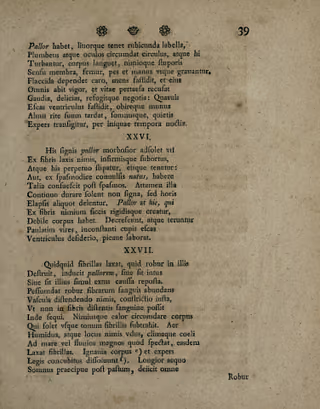
Part 2
Pallor possesses the face, and lividity holds the ruby lips,
And a leaden circle surrounds the eyes, and these
Are troubled, the body languishes, and with an excessive sense
Of stupor the limbs, thigh, foot, and hand are continually weighed down.
The flesh hangs flaccid, the mind feels disgust, and all its
Vigour departs, and weary of life it refuses
Joys and delights, and shuns business: The stomach loathes
any food, and the bowels delay
To duly perform their office, and sleep, devoid
Of rest, is passed through the hours of an uneasy night.
Pallor habet, liuorque tenet rubicunda labella,
Plumbeus atque oculos circumdat circulus, atque hi
Turbantur, corpus languet, nimioque ſtuporis
Senſu membra, femur, pes et manus vsque grauantur.
Flaccida dependet caro, mens faſtidit, et eius
Omnis abit vigor, et vitae pertaeſa recuſat
Gaudia, delicias, refugitque negotia: Quasuis
Eſcas ventriculus faſtidit, obireque munus
Aluus rite ſuum tardat, ſomnusque, quietis
Expers tranſigitur, per iniquae tempora noctis.