Hover or tap a word to see its match.
Part 1
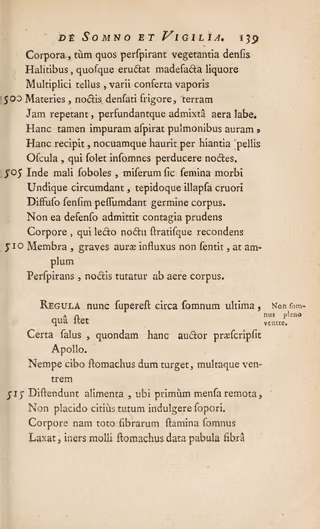
THERE now remains a final rule concerning sleep,
whereby
sure health may stand; of old the author Apollo prescribed
this.
Namely, while the stomach swells with food, and much nourishment
distends the belly, as soon as the table is removed,
it is not safe to indulge too quickly in gentle slumber.
For sleep relaxes the threads of the fibers throughout the whole
body; the sluggish stomach, with its softened fiber, the food given to it No sleep on a full belly.
REGULA nunc ſupereſt circa ſomnum ultima,
quâ ſtet
Certa ſalus, quondam hanc auctor præſcripſit
Apollo.
Nempe cibo ſtomachus dum turget, multaque ven-
trem
Diſtendunt alimenta, ubi primùm menſa remota,
Non placido citiùs tutum indulgere ſopori.
Corpore nam toto fibrarum ſtamina ſomnus
Laxat, iners molli ſtomachus data pabula fibrâ Non ſom-nus pleno ventre.
Part 2
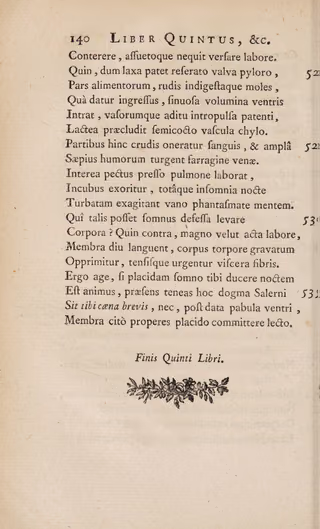
is unable to grind it down and churn it with its accustomed labor.
Moreover, while the lax valve lies open with the pylorus unbarred,
A part of the aliments, a crude and undigested mass,
Where entry is granted, enters the winding coils of the belly,
And driven inward through the gaping entrance of the vessels,
Blocks the lacteal vessels with half-digested chyle.
Hence the blood is burdened with crude particles, and often
The veins swell with an ample medley of humors.
Meanwhile the chest labors with the lungs compressed,
Nightmare arises, and through the whole night sleeplessness
Harasses the troubled mind with vain phantasms.
How could such sleep relieve wearied
Bodies? Nay, on the contrary, as if driven by great labor,
The limbs long languish, the body weighed down by torpor
Is oppressed, and the viscera are distressed by stretched fibers.
Come then, if it is your wish to spend a peaceful night
In sleep, hold fast this ready precept of Salerno:
Let your supper be light, nor, after food is given to the belly,
Hasten too quickly to commit your limbs to the peaceful bed.
Conterere , aſſuetoque nequit verſare labore.
Quin , dum laxa patet reſerato valva pyloro ,
Pars alimentorum , rudis indigeſtaque moles ,
Quà datur ingreſſus , ſinuoſa volumina ventris
Intrat , vaſorumque aditu intropulſa patenti ,
Lactea præcludit ſemicocto vaſcula chylo.
Partibus hinc crudis oneratur ſanguis , & amplâ
Sæpius humorum turgent farragine venæ.
Interea pectus preſſo pulmone laborat ,
Incubus exoritur , totâque inſomnia nocte
Turbatam exagitant vano phantaſmate mentem.
Quî talis poſſet ſomnus defeſſa levare
Corpora ? Quin contra , magno velut acta labore ,
Membra diu languent , corpus torpore gravatum
Opprimitur , tenſiſque urgentur viſcera fibris.
Ergo age , ſi placidam ſomno tibi ducere noctem
Eſt animus , præſens teneas hoc dogma Salerni
Sit tibi cæna brevis , nec , poſt data pabula ventri ,
Membra citò properes placido committere lecto.