Hover or tap a word to see its match.
Part 1
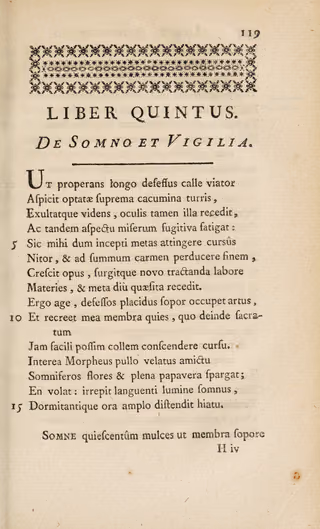
BOOK FIVE.
ON SLEEP AND WAKING.
As a weary traveler, hastening along a lengthy path,
Beholds the topmost peaks of a longed-for tower,
And exults at the sight, yet it recedes from his eyes,
And fleeing, at last exhausts the wretched man with its sight:
So for me, while I strive to reach the goals of the course I have begun,
And to bring my poem to its final end,
The work grows, and matter arises to be treated with new labor,
And the goal long sought recedes.
Come then, let gentle slumber seize my weary limbs,
And let rest refresh my members, whereby afterward the sacred
Hill I may now be able to ascend with an easy course.
Meanwhile, let Morpheus, veiled in a dark cloak,
Scatter sleep-bringing flowers and full poppies;
Lo, he flies: sleep creeps in upon my drooping eyes,
And stretches my drowsy mouth in a wide yawn.
O Sleep, how you soothe the limbs of the resting with slumber,
UT properans longo defeſſus calle viator
Aſpicit optatæ ſuprema cacumina turris ,
Exultatque videns , oculis tamen illa recedit ,
Ac tandem aſpectu miſerum fugitiva fatigat :
Sic mihi dum incepti metas attingere cursûs
Nitor , & ad ſummum carmen perducere finem ,
Creſcit opus , ſurgitque novo tractanda labore
Materies , & meta diù quæſita recedit.
Ergo age , defeſſos placidus ſopor occupet artus ,
Et recreet mea membra quies , quo deinde ſacra-
tum
Jam facili poſſim collem conſcendere curſu.
Interea Morpheus pullo velatus amictu
Somniferos flores & plena papavera ſpargat ;
En volat : irrepit languenti lumine ſomnus ,
Dormitantique ora amplo diſtendit hiatu.
SOMNE quieſcentûm mulces ut membra ſopore
Part 2
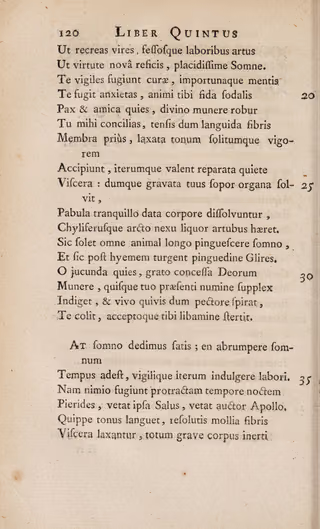
How you restore strength, and refresh limbs weary with toil
with new vigor, O most gentle Sleep.
Wakeful cares flee from you, and troublesome anxiety
of the mind flees from you; peace of mind is your faithful companion
and friendly rest; by a divine gift you procure
strength for me, while the limbs, previously languid with tense fibers,
are relaxed and receive their accustomed tone and
vigor, and the viscera, repaired by rest, are strong once more:
and while your slumber releases the burdened organs,
nourishment given in a tranquil body is dissolved,
and the chyle-bearing fluid clings to the limbs in a close bond.
Thus every animal is wont to grow fat from long sleep,
and thus dormice swell with fatness after winter.
O pleasant rest, granted by the welcome gift of the Gods,
everyone, as a suppliant, stands in need of your present divinity,
and whoever breathes with a living breast
worships you, and, when a libation pleasing to you has been made, snores.
But we have given enough to sleep; behold, the time
is here to break off sleep, and to indulge once more in wakeful toil.
For the Pierides shun a night prolonged by excessive time;
Salus herself forbids it, Apollo the founder forbids it.
For indeed the tone languishes, the soft viscera are relaxed
with loosened fibers, the whole heavy body by sluggish
Ut recreas vires, feſſoſque laboribus artus
Ut virtute novâ reficis, placidiſſime Somne.
Te vigiles fugiunt curæ, importunaque mentis
Te fugit anxietas, animi tibi fida ſodalis
Pax & amica quies, divino munere robur
Tu mihi concilias, tenſis dum languida fibris
Membra priùs, laxata tonum ſolitumque vigo-
rem
Accipiunt, iterumque valent reparata quiete
Viſcera : dumque gravata tuus ſopor organa ſol-
vit,
Pabula tranquillo data corpore diſſolvuntur,
Chyliferuſque arcto nexu liquor artubus hæret.
Sic ſolet omne animal longo pingueſcere ſomno,
Et ſic poſt hyemem turgent pinguedine Glires.
O jucunda quies, grato conceſſa Deorum
Munere, quiſque tuo præſenti numine ſupplex
Indiget, & vivo quivis dum pectore ſpirat,
Te colit, acceptoque tibi libamine ſtertit.
AT ſomno dedimus ſatis ; en abrumpere ſom-
num
Tempus adeſt, vigilique iterum indulgere labori.
Nam nimio fugiunt protractam tempore noctem
Pierides, vetat ipſa Salus, vetat auctor Apollo.
Quippe tonus languet, reſolutis mollia fibris
Viſcera laxantur, totum grave corpus inerti
Part 3
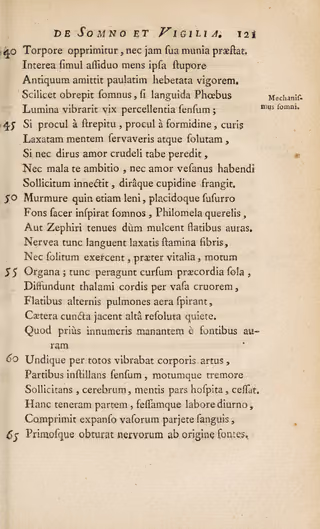
torpor, and no longer performs its functions.
Meanwhile, at the same time, by constant stupor the mind itself,
Dulled, gradually loses its former vigor.
Indeed, sleep creeps in if Phoebus has darted
Languid rays scarcely striking the sense;
If far from noise, far from fear, you have kept
Your mind relaxed and freed from cares;
If neither dire love consumes you with cruel wasting,
Nor evil ambition, nor the mad love of possessing
Entangles you in anxiety, and breaks you with dire desire.
Moreover, with a gentle murmur and placid whisper,
A sacred spring inspires sleep, or Philomela with her complaints,
Or while gentle Zephyrs soothe the air with their breezes.
Then the nervous threads languish with relaxed fibers,
Nor do the organs, except the vital ones, exercise their accustomed
Motion; then the praecordia alone complete their course,
The chambers of the heart diffuse blood through the vessels,
With alternate breaths the lungs breathe the air,
All other things lie relaxed in deep rest.
That which previously vibrated a breeze flowing from countless springs
Everywhere through all the limbs of the body,
Instilling sense into the parts, and arousing motion
By its tremor, the brain, the hospitable seat of the mind, ceases.
This tender part, weary from daily labor,
The blood compresses with the expanded wall of the vessels,
And blocks the first springs of the nerves from their origin.
Torpore opprimitur, nec jam ſua munia præſtat.
Interea ſimul aſſiduo mens ipſa ſtupore
Antiquum amittit paulatim hebetata vigorem.
Scilicet obrepit ſomnus, ſi languida Phœbus
Lumina vibrarit vix percellentia ſenſum;
Si procul à ſtrepitu, procul à formidine, curis
Laxatam mentem ſervaveris atque ſolutam,
Si nec dirus amor crudeli tabe peredit,
Nec mala te ambitio, nec amor veſanus habendi
Sollicitum innectit, dirâque cupidine frangit.
Murmure quin etiam leni, placidoque ſuſurro
Fons ſacer inſpirat ſomnos, Philomela querelis,
Aut Zephiri tenues dùm mulcent flatibus auras.
Nervea tunc languent laxatis ſtamina fibris,
Nec ſolitum exercent, præter vitalia, motum
Organa; tunc peragunt curſum præcordia ſola,
Diffundunt thalami cordis per vaſa cruorem,
Flatibus alternis pulmones aera ſpirant,
Cætera cuncta jacent altâ reſoluta quiete.
Quod priùs innumeris manantem è fontibus auram
Undique per totos vibrabat corporis artus,
Partibus inſtillans ſenſum, motumque tremore
Sollicitans, cerebrum, mentis pars hoſpita, ceſſat.
Hanc teneram partem, feſſamque labore diurno,
Comprimit expanſo vaſorum parjete ſanguis,
Primoſque obturat nervorum ab origine fontes.
Part 4
Thus motion gradually languishes throughout the whole body,
Indeed, true death would often succeed the turns of peaceful
Slumber, if the cerebellum were not able to withstand the pressing blood
And drive the nerves with its influx.
Being harder, it resists the burden with its firm structure,
And sustains the slumbering life with a gentle breath.
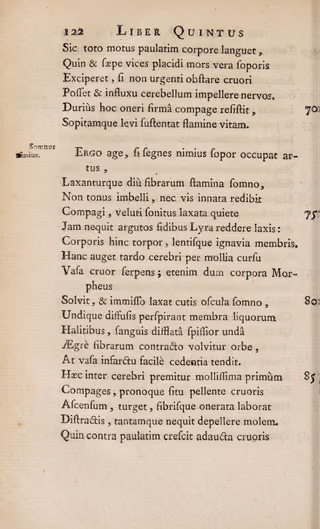
Sic toto motus paulatim corpore languet,
Quin & ſæpe vices placidi mors vera ſoporis
Exciperet, ſi non urgenti obſtare cruori
Poſſet & influxu cerebellum impellere nervos.
Duriùs hoc oneri firmâ compage reſiſtit,
Sopitamque levi ſuſtentat flamine vitam.