Hover or tap a word to see its match.
Part 1
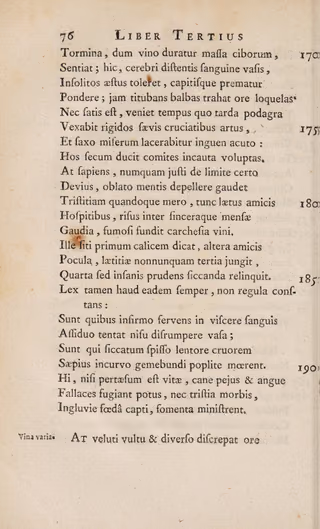
Various wines. But just as in countenance and diverse feature differs
Vina varia. AT veluti vultu & diverſo diſcrepat ore
Part 2
so great a multitude of men, so too wines are distinguished by various
qualities, according as they are produced by this or that soil.
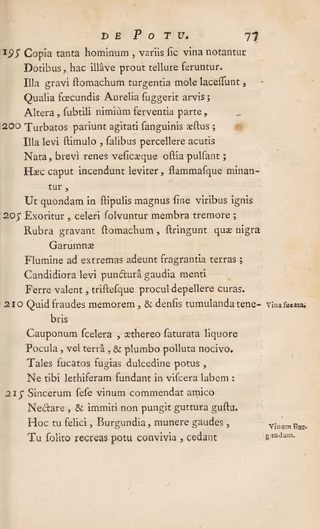
Some, swelling with a heavy mass, vex the stomach,
such as Orléans supplies from its fertile fields;
others, fermenting too much in their subtle part,
beget turbulent heats of agitated blood;
some, with a light stimulus, born to strike with sharp salts,
quickly beat upon the kidneys and the openings of the bladder;
these lightly inflame the head, and threaten
flames,
as at times a great fire without strength arises in the stubble,
and the limbs are loosened by a swift tremor;
red wines weigh down the stomach, and those dark ones bind it which, fragrant,
go forth by the river Garonne to the farthest lands;
the whiter ones, with a light prickling, have the power to bring
joys to the mind, and to drive sad cares far away.
Why should I mention the frauds, and the crimes of tavern-keepers,
to be buried in thick darkness, cups saturated with an ethereal
liquor, or polluted with earth and harmful lead.
Flee such drinks disguised with sweetness,
lest they pour a deadly ruin into your entrails:
pure wine commends itself by its friendly
nectar, and does not sting the throat with a harsh taste.
In this happy gift you rejoice, O Burgundy,
you refresh banquets with a customary drink; let yield Adulterated wines. Burgundy
wine.
Copia tanta hominum, variis ſic vina notantur
Dotibus, hac illâve prout tellure feruntur.
Illa gravi ſtomachum turgentia mole laceſſunt,
Qualia fœcundis Aurelia ſuggerit arvis;
Altera, ſubtili nimiùm ferventia parte,
Turbatos pariunt agitati ſanguinis æſtus;
Illa levi ſtimulo, ſalibus percellere acutis
Nata, brevì renes veſicæque oſtia pulſant;
Hæc caput incendunt leviter, flammaſque minan-
tur,
Ut quondam in ſtipulis magnus ſine viribus ignis
Exoritur, celeri ſolvuntur membra tremore;
Rubra gravant ſtomachum, ſtringunt quæ nigra
Garumnæ
Flumine ad extremas adeunt fragrantia terras;
Candidiora levi puncturâ gaudia menti
Ferre valent, triſteſque procul depellere curas.
Quid fraudes memorem, & denſis tumulanda tene-
bris
Cauponum ſcelera, æthereo ſaturata liquore
Pocula, vel terrâ, & plumbo polluta nocivo.
Tales fucatos fugias dulcedine potus,
Ne tibi lethiferam fundant in viſcera labem:
Sincerum ſeſe vinum commendat amico
Nectare, & immiti non pungit guttura guſtu.
Hoc tu felici, Burgundia, munere gaudes,
Tu ſolito recreas potu convivia, cedant Vina fucata. Vinum Bur-
Part 3
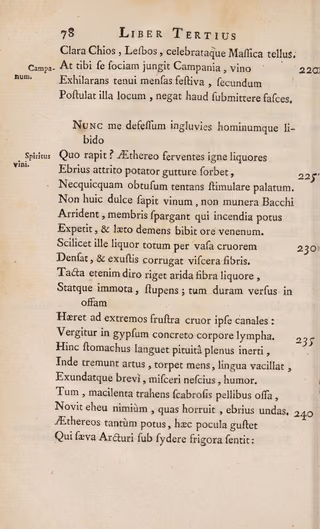
famous Chios, Lesbos, and the celebrated Massic land.
But Champagne joins herself to you as a companion;
festively cheering the tables with a light wine, she demands
the second place, and does not refuse to lower the fasces.
Champagne.
Clara Chios, Leſbos, celebrataque Maſſica tellus.
At tibi ſe ſociam jungit Campania, vino
Exhilarans tenui menſas feſtiva, ſecundum
Poſtulat illa locum, negat haud ſubmittere faſces.
Campanum.