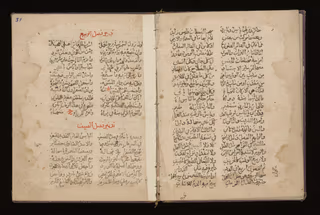
Regimen of the Spring Season

تدبير فصل الربيع

Poet
Ibn Sina
Form
Rajaz
Open the page in the book
The page this poem fills. Each opens in the Ibn Sina's Urjuza fi al-tibb and other medical works in MS Arabic 129 reader.

Hover or tap a word to see its match.

At the first descent of the sun into the sign of Aries / Drink lukewarm water in haste

And if you put rose syrup in it / You will be safe from fever and some cold

And phlebotomy and cupping are according to the degree of fatigue / So resolve, if you intend, upon drinking medicine

And drink lukewarm water on an empty stomach / A little amount, always, early in the morning

And do not seek the bathhouse in it, and listen / And shave the hair of the head in it, you will benefit

And reduce in it intercourse with women / And consume meat and drink coffee

And avoid aged wine, for it / Generates yellow bile, and that is an affliction

Beware of eating hot meat / For blood has a great, overflowing dominion

And seek light food in it early / For hunger in this time is disliked

And sleep is stronger in it than in other [times] / And go out to defecate whenever you perceive it

اول نزول الشمس في برج الحمل / اشرب الما فاتر على العجل

وان تضع فيه شراب الوردي / تامن من الحمى وبعض البرد

والفصد والحجم على قدر التعب / فاعزم اذا نويت على شرب الدوا

واشرب على الريق الما فاتر / شيا يسيرا دايما من باكر

ولا ترم الحمام فيه واستمع / واحلق لشعر الراس فيه تنتفع

وقلل فيه من جماع النسوة / واستعمل اللحم وشرب القهوة

واجتنب الخمر العتيق فانه / يولد الصفرا وذاك فتنه

اياك ان تاكل لحم الحامي / فللدم سلطان عظيم طامي

واستلطف الغذا فيه بكره / فالجوع في هذا الزمان يكره

والنوم اقوى منه في سواه / واخرج للبراز متى تراه
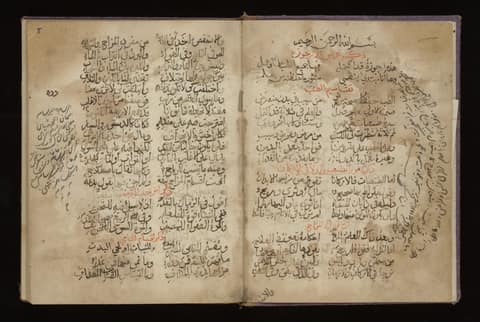
Title page of Ibn Sina's Urjuza fi al-tibb and other medical works in MS Arabic 129
Title page of Ibn Sina's Urjuza fi al-tibb and other medical works in MS Arabic 129 , 1700

About this text

Provenance

MS Arabic 129 is a handwritten Arabic medical volume held by Wellcome Collection in London. It is a composite manuscript: a single volume that brings together 11 separate works. They cover bloodletting, circumcision, the seasons, anatomy, the pulse, and urine, and most are in verse. Most of the verse in this edition is Ibn Sina's Urjuza fi al-tibb, a long poem on medicine, identified from the catalog card in the scans and from the poem's opening lines. Wellcome also names Ibn al-Tilmidh and Ibn Makki among the authors. Shams al-Din ibn Makki wrote three short poems here, and some pieces cannot be identified from the book. The manuscript is undated, and Wellcome estimates it as 18th century.

Methodology

Each scan is treated as a page-level unit. The page image remains the authority for the edition. Local Arabic Kraken OCR was weak and used only as auxiliary context; Gemini generated scan-grounded Arabic transcription and English translation primarily from the manuscript images and the approved glossary. Some word links remain uncertain, and some words have no reliable location on the scan.

Rights

The Wellcome Collection source record marks the digital surrogate with the Public Domain Mark 1.0. Poet Doctor's presentation adds generated OCR, transcription, translation, navigation metadata, and editorial context.

Original scans: Wellcome Collection ( Public Domain Mark 1.0 ).

Historian’s note. This text records the medicine of its own time, and later evidence has replaced most of it. It is not medical advice. We read it as history, and we ask what, if anything, connects it to medicine today. More on how we read old medical books