Hover or tap a word to see its match.
I lived for a long time freed from all cares,
I lived according to my prayers, in peace, with letters,
Abounding in love, grace, and companions.
Now (alas, the heavy vicissitudes of things)
I waste away alone, just as the poor marjoram
Dries up in the heat of the maddening Dog Star:
O my glory, we have passed
Scarcely five lustra, and already all delight,
Jokes, pleasantries, Cupids,
And eagerness grow old from the roots.
I never rise so early in the morning, nor so late in the evening
Do I revisit my dear bed, but that I overflow
With the greatest force of tears, mindful of the crises
Of my falling country, alas the calamity
Of abominable slavery, alas the madness,
Alas the perverse mind, alas the discord of citizens.
Nourishing happiness begrudged me, to be sure,
Lest I should see with you the sweet shore of the Adriatic sea,
Borne through the rocks of the Ligurian waters,
Or walking on the banks of the clear Tiber
Or the Po, I might heal these troubles
With obscure leisure.
Where now you, lying beneath the two-colored poplar,
Spend blessed hours unmindful of me.
We, at the source of the murmuring Durance,
Your companions, the most wretched of all,
Will drag out our lives as exiles in darkness,
Until, which is the final thing, the desired kindness
Of the heavenly ones shall shine back.
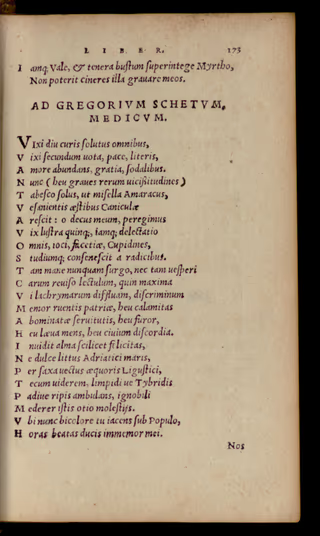
Vixi diu curis solutus omnibus,
Vixi secundum uota, pace, literis,
Amore abundans, gratia, sodalibus.
Nunc (heu graues rerum uicissitudines)
Tabesco solus, ut misella Amaracus,
Vesanientis æstibus Caniculæ
Arescit: o decus meum, peregimus
Vix lustra quinq;, iamq; delectatio
Omnis, ioci, facetiæ, Cupidines,
Studiumq; consenescit a radicibus.
Tam mane nunquam surgo, nec tam uesperi
Carum reuiso lectulum, quin maxima
Vi lachrymarum diffluam, discriminum
Memor ruentis patriæ, heu calamitas
Abominatæ seruitutis, heu furor,
Heu læua mens, heu ciuium discordia.
Inuidit alma scilicet felicitas,
Ne dulce littus Adriatici maris,
Per saxa uectus æquoris Ligustici,
Tecum uiderem, limpidiue Tybridis
Padiue ripis ambulans, ignobili
Mederer istis otio molestijs.
Vbi nunc bicolore tu iacens sub Populo,
Horas beatas ducis immemor mei.
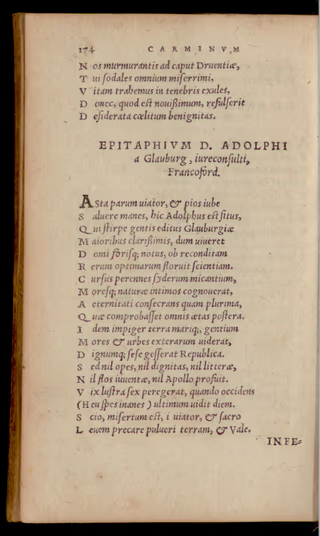
Nos murmurantis ad caput Druentiæ,
Tui ſodales omnium miſerrimi,
Vitam trahemus in tenebris exules,
Donec, quod eſt nouißimum, refulſerit
Deſiderata cœlitum benignitas.