Hover or tap a word to see its match.
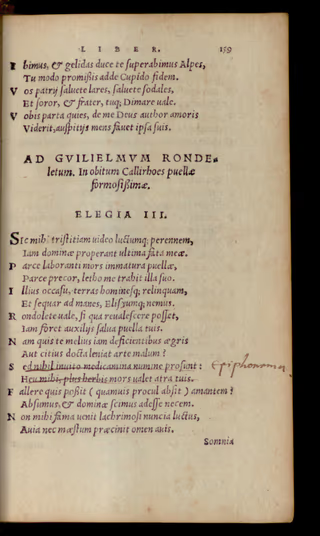
Thus I see for myself unending sadness and mourning,
already the final fates of my mistress are hastening.
Spare the suffering girl, premature death,
spare her, I pray; she drags me with her in her death.
At her passing, I shall leave the lands and men,
and follow her to the shades and the Elysian grove.
Farewell, Rondelet; if in any way she could recover her health,
the girl would already be safe by your aid.
For who could better, or more swiftly, with learned art,
soothe the affliction for the sick who are now failing?
But medicines are of no use when the divine will is opposed:
woe is me, dark death has more power than your herbs.
Who could deceive a lover (even though he is far away)?
We are absent, and yet we know the death of our mistress is at hand.
No rumor has come to me as a messenger of tearful mourning,
nor does a wandering bird foretell a mournful omen.
Dreams terrify me, and phantoms from the tombs,
And the shade that flits before my bed as I sleep.
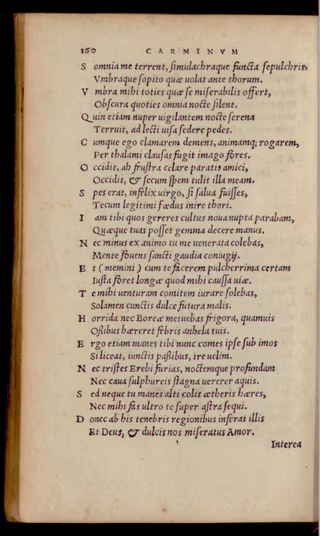
The wretched shade that presents itself to me so often,
As often as all things are silent in the dark night.
Indeed, even recently, while I was awake on a clear night,
It terrified me, seen sitting at the foot of my bed.
And when, out of my mind, I cried out and called to her spirit,
The image fled through the closed doors of the chamber.
She has died—ah, in vain do you prepare to hide it, friends—
She has died, and she has taken my hope with her.
My hope was, unhappy maiden, if you had lived,
To enter with you into the pact of a lawful marriage-bed.
Already I was preparing the finery you would wear as a new bride,
And whatever gem might grace your hands.
And no less did you sincerely revere and cherish me,
Cherishing in your mind the joys of holy wedlock.
And (I remember), most beautiful one, when I assured you
That the cause for my long journey was just,
You used to swear that you would come as a companion to me,
Destined to be a sweet solace for all my woes.
Nor did you fear the rugged cold of the North Wind, although
A panting fever clung to your bones.
Therefore, even now I myself would wish to go as a companion to you
Down to the lowest shades, if it were allowed, with joined steps.
Nor would I fear the grim Furies of Erebus, and the deep night,
Nor the hollow pools with their sulfurous waters.
But neither do you, an heir of the high heaven, dwell among the shades,
Nor is it lawful for me to follow you unbidden beyond the stars,
Until from this darkness into those regions
Both God and sweet Love, taking pity, shall convey us.
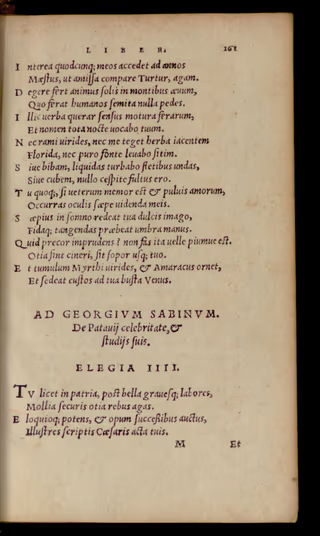
Meanwhile, whatever shall be added to my years,
Sorrowful, I shall pass, like a turtledove that has lost its mate.
My mind moves me to spend my life in lonely mountains,
Where no path brings human feet.
There I will complain in words that will move the feelings of wild beasts,
And I will call your name all night long.
Neither green branches nor flowery grass will cover me
As I lie, nor shall I relieve my thirst from a pure spring.
If I drink, I will muddy the clear waters with tears,
If I lie down, I will be propped up by no turf.
You too, if even dust is mindful of old loves,
May you often present yourself to my eyes to be seen.
May your sweet image return more often in sleep,
And may your faithful shade offer its hands to be touched.
What do I ask, foolishly? It is neither lawful nor pious to wish thus.
Let there be rest for your ashes, let your sleep be unbroken.
And let green myrtles and marjoram adorn your tomb,
And let Venus sit as a guardian at your grave.
Sic mihi triſtitiam uideo luctumq; perennem,
Iam dominæ properant ultima fata meæ.
Parce laboranti mors immatura puellæ,
Parce precor, letho me trahit illa ſuo.
Illius occaſu, terras homineſq; relinquam,
Et ſequar ad manes, Eliſiumq; nemus.
Rondolete uale, ſi qua reualeſcere poſſet,
Iam foret auxilijs ſalua puella tuis.
Nam quis te melius iam deficientibus ægris
Aut citius docta leniat arte malum?
Sed nihil inuito medicamina numine proſunt:
Heu mihi, plus herbis mors ualet atra tuis.
Fallere quis poſsit (quamuis procul abſit) amantem?
Abſumus, & dominæ ſcimus adeſſe necem.
Non mihi fama uenit lachrimoſi nuncia luctus,
Auia nec mæſtum præcinit omen auis.
Somnia me terrent, ſimulachraque functa ſepulchris,
Vmbraque ſopito quæ uolat ante thorum.
Vmbra mihi toties quæ ſe miſerabilis offert,
Obſcura quoties omnia nocte ſilent.
Quin etiam nuper uigilantem nocte ſerena
Terruit, ad lecti uiſa ſedere pedes.
Cumque ego clamarem demens, animamq; rogarem,
Per thalami clauſas fugit imago fores.
Occidit, ah fruſtra celare paratis amici,
Occidit, & ſecum ſpem tulit illa meam.
Spes erat, infelix uirgo, ſi ſalua fuiſſes,
Tecum legitimi fœdus inire thori.
Iam tibi quos gereres cultus noua nupta parabam,
Quæque tuas poſſet gemma decere manus.
Nec minus ex animo tu me uenerata colebas,
Mente fouens ſancti gaudia coniugij.
Et ( memini ) cum te facerem pulcherrima certam
Iuſta foret longæ quod mihi cauſſa uiæ.
Te mihi uenturam comitem iurare ſolebas,
Solamen cunctis dulce futura malis.
Horrida nec Boreæ metuebas frigora, quamuis
Oßibus hæreret febris anhela tuis.
Ergo etiam manes tibi nunc comes ipſe ſub imos
Si liceat, iunctis paßibus, ire uelim.
Nec triſtes Erebi furias, noctemque profundam
Nec caua ſulphureis ſtagna uererer aquis.
Sed neque tu manes alti colis ætheris hæres,
Nec mihi fas ultro te ſuper aſtra ſequi.
Donec ab his tenebris regionibus inferat illis
Et Deus, & dulcis nos miſeratus Amor.
Interea quodcunq; meos accedet ad annos
Mæſtus, ut amiſſa compare Turtur, agam.
Degere fert animus ſolis in montibus æuum,
Quo ferat humanos ſemita nulla pedes.
Illic uerba querar ſenſus motura ferarum,
Et nomen tota nocte uocabo tuum.
Nec rami uirides, nec me teget herba iacentem
Florida, nec puro fonte leuabo ſitim.
Siue bibam, liquidas turbabo fletibus undas,
Siue cubem, nullo ceſpite fultus ero.
Tu quoq;, ſi ueterum memor eſt & puluis amorum,
Occurras oculis ſæpe uidenda meis.
Sæpius in ſomno redeat tua dulcis imago,
Fidaq; tangendas præbeat umbra manus.
Quid precor imprudens? non fas ita uelle piumue eſt.
Otia ſint cineri, ſit ſopor uſq; tuo.
Et tumulum Myrthi uirides, & Amaracus ornet,
Et ſedeat cuſtos ad tua buſta Venus.