Hover or tap a word to see its match.
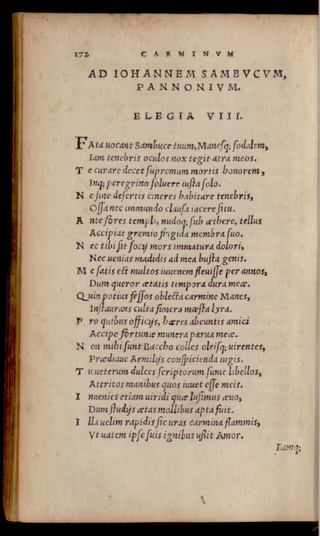
The Fates, Sambucus, and the shades are calling your companion;
Already dark night covers my eyes with shadows.
It is fitting for you to attend to the final honor of death,
And to perform the last rites on foreign soil.
Do not let my ashes dwell in forsaken darkness,
Nor let my bones lie enclosed in a foul resting place.
Before the temple doors, beneath the open sky, let the earth
Receive my cold limbs into her lap.
Let not your companion's untimely death be a sorrow to you,
And do not come to my tomb with tear-stained cheeks.
It is enough that I have wept for many years in my youth,
As I lament the hard times of my life.
Rather, delight my weary shade with a song,
Celebrating the mournful rites with a cultivated lyre.
For these services, as the heir of your departing friend,
Accept the small gifts of my estate.
I have no hills green with vines and olive trees,
Or estates to be admired on the Emilian ridges.
Take the sweet little books of ancient writers,
Which it may please you to find well-worn by my hands.
You will also find what I playfully wrote in my green youth,
When my age was suited for tender pursuits.
I would wish that you burn those poems with swift flames,
Just as Love himself burned the poet with his own fires.
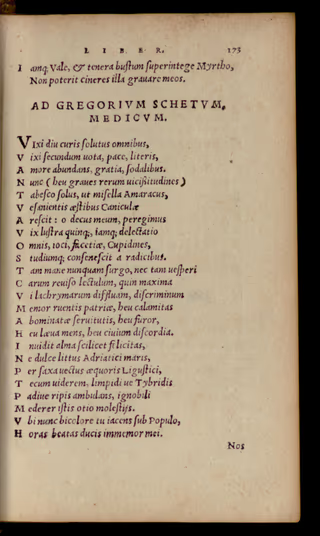
And now farewell, and cover my tomb with tender myrtle,
It will not be able to weigh down my ashes.
FAta uocant Sambuce tuum, Maneſq; ſodalem,
Iam tenebris oculos nox tegit atra meos.
Te curare decet ſupremum mortis honorem,
Inq; peregrino ſoluere iuſta ſolo.
Ne ſine deſertis cineres habitare tenebris,
Oſſa nec immundo clauſa iacere ſitu.
Ante fores templi, nudoq; ſub æthere, tellus
Accipiat gremio frigida membra ſuo.
Nec tibi ſit ſocij mors immatura dolori,
Nec uenias madidis ad mea buſta genis.
Me ſatis eſt multos iuuenem fleuiſſe per annos,
Dum queror ætatis tempora dura meæ.
Quin potius feſſos oblecta carmine Manes,
Inſtaurans culta funera mœſta lyra.
Pro quibus officijs, hæres abeuntis amici
Accipe fortunæ munera parua meæ.
Non mihi ſunt Baccho colles oleiſq; uirentes,
Prædiaue Aemilijs conſpicienda iugis.
Tu ueterum dulces ſcriptorum ſume libellos,
Attritos manibus quos iuuet eſſe meis.
Inuenies etiam uiridi quæ luſimus æuo,
Dum ſtudijs ætas mollibus apta fuit.
Illa uelim rapidis ſic uras carmina flammis,
Vt uatem ipſe ſuis ignibus uſſit Amor.
Iamq; Vale, & tenera bustum superintege Myrtho,
Non poterit cineres illa grauare meos.