Hover or tap a word to see its match.
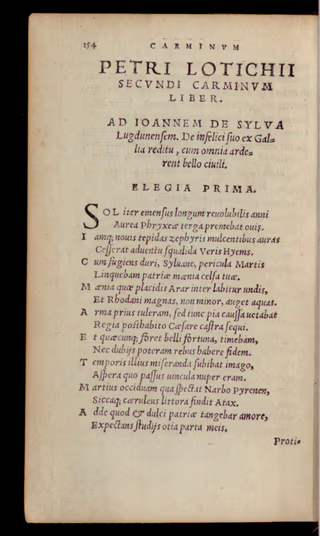
The sun, having measured the long journey of the revolving year,
Was pressing upon the golden back of the Phryxean sheep.
And now, with new zephyrs soothing the warm breezes,
Dreary Winter had yielded to the arrival of Spring.
When, fleeing the dangers of harsh Mars, O Sylvanus,
I was leaving the lofty walls of your homeland.
The walls through which the Saône glides with placid waves,
And, no less great, augments the mighty waters of the Rhône.
I had borne arms before, but then a pious cause forbade me
To follow the royal camp, disregarding the Emperor.
And whatever the fortune of war might be, I was afraid,
Nor could I place my faith in uncertain affairs.
The pitiable image of that time came to my mind,
When I had recently suffered harsh chains.
Where martial Narbonne faces the western Pyrenees,
And the cerulean Aude cleaves the dry shores.
Add to this that I was also touched by the sweet love of my homeland,
Expecting the leisure acquired for my studies.
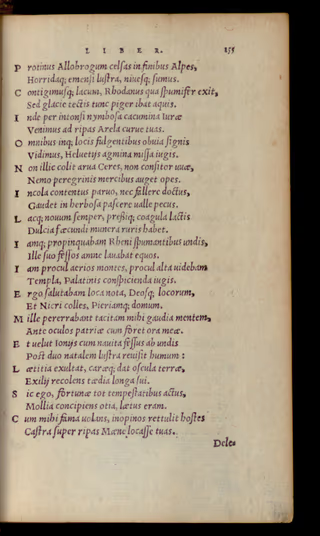
Immediately we traversed the lofty Alps on the borders of the Allobroges,
and the rugged wilds, and the snows.
And we reached the lake where the foaming Rhone flows out,
but then it moved sluggishly, its waters covered by ice.
Thence through the stormy peaks of the wooded Jura
we came to your banks, O curving Aare.
And in all places, meeting us with shining standards,
we saw troops sent from the Helvetian heights.
Ceres does not cultivate the fields there, nor does the planter of vines;
no one increases their wealth with foreign merchandise.
The inhabitant, content with little and untaught in deceit,
rejoices to pasture his flock in the grassy valley.
He always has fresh milk and the curds of pressed milk,
the sweet gifts of the fertile countryside.
And now I was approaching the foaming waves of the Rhine,
which was washing the weary horses in its stream.
Already from afar I saw the airy mountains, from afar the lofty
temples visible on the Palatine ridges.
Therefore I greeted the familiar places, and the gods of those places,
and the hills of the Neckar, and the Pierian home.
A thousand joys wandered through my silent mind,
when the borders of my homeland were before my eyes.
And just as when a sailor, weary from the Ionian waves,
revisits his native soil after ten years:
He exults with joy, and gives kisses to the dear earth,
recalling the long weariness of his exile.
Thus I, driven by so many storms of fortune,
was joyful, anticipating gentle leisure.
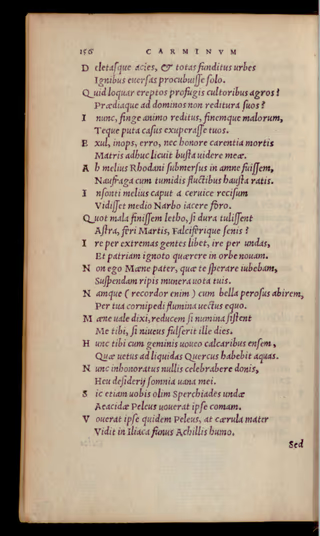
When flying rumor reported to me that unexpected enemies
had pitched their camp upon your banks, O Main.
And that battle lines had been destroyed, and entire cities,
Utterly overturned by fires, had fallen to the ground.
Why should I speak of the fields snatched from the fleeing farmers?
And the estates that will not return to their masters?
Go now, imagine your return in your mind, and the end of evils,
And suppose that you have overcome your misfortunes.
An exile, destitute, I wander, and it has not yet been permitted
To see the tomb of my mother, lacking the honors of death.
Ah, it would have been better had I been submerged in the river of the Rhone,
When my shipwrecked vessel was swallowed by the swelling waves.
Better had Narbo seen my head severed from my innocent neck,
Lying in the middle of the forum.
How many evils I would have ended with death, if the harsh stars
Of fierce Mars and the scythe-bearing old man had permitted it!
It pleases me to go through the most distant nations, to go through the waves,
And to seek a new homeland in an unknown world.
I will not, Father Main, hang upon your banks
The vowed gifts that I bade you to hope for.
For (as I recall) when I departed, hating wars,
Carried across your streams by a hoofed horse,
I said, "Farewell, Main; if the divine powers bring me back
To you, if that bright day shall shine:
I vow to you this sword along with its twin spurs,
Which an old oak will hold by your clear waters."
Now, unhonored, you will be celebrated with no gifts;
Alas, the vain dreams of my longing!
Thus also to you once, O waves of the Spercheios,
Peleus himself had vowed the hair of the descendant of Aeacus.
Peleus himself had indeed vowed it, but his sea-blue mother
Saw the death of Achilles on Trojan soil.
But let this fear be far from us, and let my bones, at least,
rest one day in their native seats.
And what the gods deny me while living, let them repay after death;
thus, oh, let there be peace and rest for my ashes.
SOL iter emenſus longum reuolubilis anni
Aurea Phryxeæ terga premebat ouis.
Iamq; nouis tepidas zephyris mulcentibus auras
Ceſſerat aduentu ſqualida Veris Hyems.
Cum fugiens duri, Syluane, pericula Martis
Linquebam patriæ mœnia celſa tuæ.
Mœnia quæ placidis Arar inter labitur undis,
Et Rhodani magnas, non minor, auget aquas.
Arma prius tuleram, ſed tunc pia cauſſa uetabat
Regia poſthabito Cæſare caſtra ſequi.
Et quæcunq; foret belli fortuna, timebam,
Nec dubijs poteram rebus habere fidem.
Temporis illius miſeranda ſubibat imago,
Aſpera quo paſſus uincula nuper eram.
Martius occiduam qua ſpectat Narbo Pyrenen,
Siccaq; cæruleus littora findit Atax.
Adde quod & dulci patriæ tangebar amore,
Expectans ſtudijs otia parta meis.
Protinus Allobrogum celſas in finibus Alpes,
Horridaq; emenſi luſtra, niueſq; ſumus.
Contigimuſq; lacum, Rhodanus qua ſpumifer exit,
Sed glacie tectis tunc piger ibat aquis.
Inde per intonſi nymboſa cacumina Iuræ
Venimus ad ripas Arelæ curue tuas.
Omnibus inq; locis fulgentibus obuia ſignis
Vidimus, Heluetijs agmina miſſa iugis.
Non illic colit arua Ceres, non conſitor uuæ,
Nemo peregrinis mercibus auget opes.
Incola contentus paruo, nec fallere doctus,
Gaudet in herboſa paſcere ualle pecus.
Lacq; nouum ſemper, preßiq; coagula lactis
Dulcia fæcundi munera ruris habet.
Iamq; propinquabam Rheni ſpumantibus undis,
Ille ſuo feſſos amne lauabat equos.
Iam procul aerios montes, procul alta uidebam
Templa, Palatinis conſpicienda iugis.
Ergo ſalutabam loca nota, Deoſq; locorum,
Et Nicri colles, Pieriamq; domum.
Mille pererrabant tacitam mihi gaudia mentem,
Ante oculos patriæ cum foret ora meæ.
Et uelut Ionijs cum nauita feſſus ab undis
Poſt duo natalem luſtra reuiſit humum:
Lætitia exultat, caræq; dat oſcula terræ,
Exilij recolens tædia longa ſui.
Sic ego, fortunæ tot tempeſtatibus actus,
Mollia concipiens otia, lætus eram.
Cum mihi fama uolans, inopinos rettulit hoſtes
Caſtra ſuper ripas Mæne locaſſe tuas.
Deletaſque acies, & totas funditus urbes
Ignibus euerſas procubuiſſe ſolo.
Quid loquar ereptos profugis cultoribus agros?
Prædiaque ad dominos non reditura ſuos?
I nunc, finge animo reditus, finemque malorum,
Teque puta caſus exuperaſſe tuos.
Exul, inops, erro, nec honore carentia mortis
Matris adhuc licuit buſta uidere meæ.
Ah melius Rhodani ſubmerſus in amne fuiſſem,
Naufraga cum tumidis fluctibus hauſta ratis.
Inſonti melius caput a ceruice reciſum
Vidiſſet medio Narbo iacere foro.
Quot mala finiſſem letho, ſi dura tuliſſent
Aſtra, feri Martis, Falciferique ſenis?
Ire per extremas gentes libet, ire per undas,
Et patriam ignoto quærere in orbe nouam.
Non ego Mæne pater, quæ te ſperare iubebam,
Suſpendam ripis munera uota tuis.
Namque (recordor enim) cum bella peroſus abirem,
Per tua cornipedi flumina uectus equo.
Mæne uale dixi, reducem ſi numina ſiſtent
Me tibi, ſi niueus fulſerit ille dies.
Hunc tibi cum geminis uoueo calcaribus enſem,
Quæ uetus ad liquidas Quercus habebit aquas.
Nunc inhonoratus nullis celebrabere donis,
Heu deſiderij ſomnia uana mei.
Sic etiam uobis olim Sperchiades undæ
Aeacidæ Peleus uouerat ipſe comam.
Vouerat ipſe quidem Peleus, at cærula mater
Vidit in Iliaca funus Achillis humo.
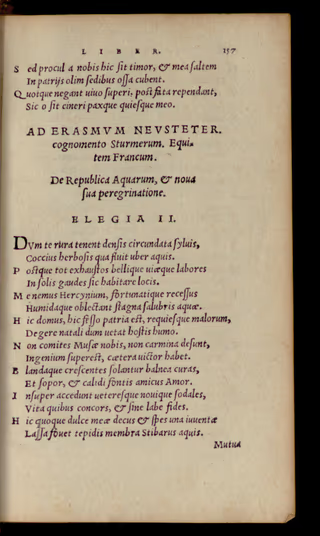
Sed procul a nobis hic ſit timor, & mea ſaltem
In patrijs olim ſedibus oſſa cubent.
Quotque negant uiuo ſuperi, poſt fata rependant,
Sic o ſit cineri paxque quieſque meo.