Hover or tap a word to see its match.
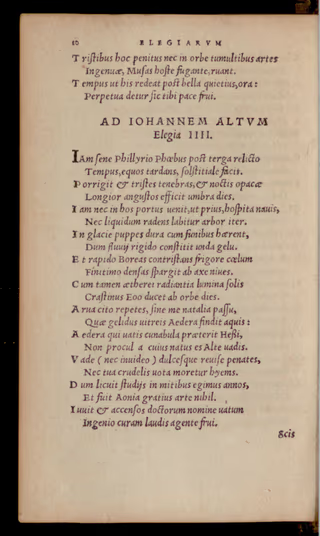
Now Phoebus, having left the Phillyrian elder behind his back,
slowing his steeds, makes the time of the solstice.
He extends the gloomy darkness, and the longer shadow
of opaque night makes the days short.
Now no visiting ship comes into these ports, as before,
nor does the timber glide, skimming a liquid path.
The ships stick fast with their ropes in the hard ice,
while the water of the river stands still in rigid frost.
And Boreas, saddening the sky with piercing cold,
scatters thick snows from the neighboring pole.
Yet when tomorrow's day will bring the radiant lights
of the ethereal sun from the Eastern world,
you will swiftly seek again your native fields, journeying without me,
which the cold Eder cleaves with its glassy waters:
The Eder, which flows past the cradle of the poet Hessus,
not far from whose shallows you were born, Altus.
Go (I do not begrudge it) and revisit your sweet hearth,
and let not the cruel winter delay your desires.
While it was permitted, we spent our years in gentle studies,
and nothing was more pleasing than the Aonian art.
And it pleased us, kindled by the title of learned poets,
to enjoy the pursuit of praise, our intellect driving us on.
You know indeed, nor are the grove and caves ignorant of us,
And the oak with its aged trunk, beside the waters.
Often beneath it, on the tender grass, we read
A poem just composed, among the birds soothing the air.
Often (for I remember) it was sweet to relate many things
About war, but now it is a grief to remember.
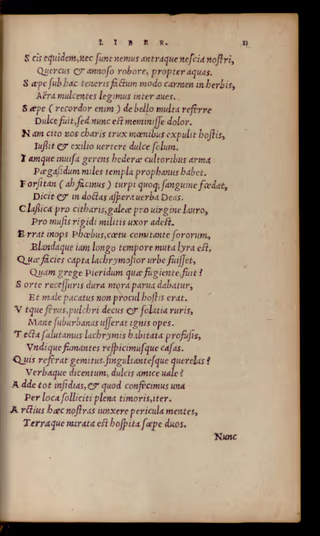
For swiftly the fierce enemy expelled us from the dear walls,
And ordered us to exchange the sweet soil for exile.
And now bearing weapons hateful to the devotees of ivy,
The profane soldier occupies the temples of the Pegasides.
Perhaps (ah, the crime) he also defiles them with foul blood,
And speaks harsh words against the learned Goddesses.
Trumpets instead of lyres, helmets instead of the virgin laurel,
Instead of the Muses, the wife of a stern soldier is present.
Destitute Phoebus wanders, accompanied by the band of sisters,
And his soothing lyre has now been mute for a long time.
What sight would have been more tearful in a captured city,
Than that which there was when the flock of the Pierides fled?
By a harsh fate, little delay was given to those about to depart,
And the ill-pacified enemy was not far away.
And when the fierce fire, in the morning, had burned the suburban wealth,
The glory and solace of the beautiful countryside,
With profuse tears we bid farewell to the dwellings we inhabited,
And we look back at the smoking cottages on all sides.
Who could recount the groans, and the sobbing complaints?
And the words of those saying, "Farewell, sweet friend"?
Add so many ambushes, and that we made our journey together,
Anxious, through places full of fear.
These dangers have joined our minds more closely,
And the hospitable land has often marveled at the two of us.
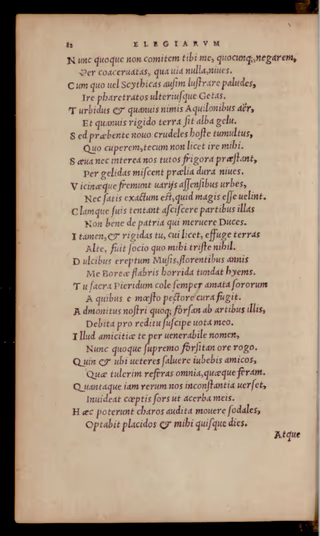
Even now I would not refuse to be your companion, wherever it might be,
Through heaped-up snows, where there is no path.
With whom I would dare to traverse even the Scythian swamps,
And go beyond the quiver-bearing Getae.
And even though the air is too stormy with the North Winds,
And even though the earth is white with rigid frost.
But as a new enemy brings about cruel tumults,
I am not allowed to go with you where I would wish.
Nor does the savage cold keep us safe in the meantime,
Through the icy snows they mingle harsh battles.
And neighboring cities roar with varying allegiances,
Nor is it sufficiently clear what they would rather be.
And secretly leaders who have not served their country well
Attempt to win them over to their factions.
Go, however, and you, to whom it is permitted, flee the rigid lands,
Altus, with whom as a companion nothing was sorrowful to me.
Let the rough winter beat me with the blasts of the North Wind,
Torn from the sweet Muses in my blooming years.
You, always cultivate the beloved sacred rites of the Pierian sisters,
By whom care flees from a sorrowful breast.
Perhaps also reminded of me by those arts,
Undertake the vows owed for my return.
By that venerable name of friendship,
Now too I ask you this, perhaps with my final breath.
Moreover, when you bid greeting to our old friends,
Relate all that I have endured, and what I still endure.
And what great instability of affairs now tosses us about,
How a bitter fate envies my undertakings.
These things, once heard, will be able to move our dear companions,
And each one will wish for peaceful days for me.
And someone will say, with tears pouring forth into words,
"May the gods grant that you swiftly turn your steps from there."
Would that the heavenly power might assent to these prayers, and to mine,
So that I might follow you, Altus, with the least delay.
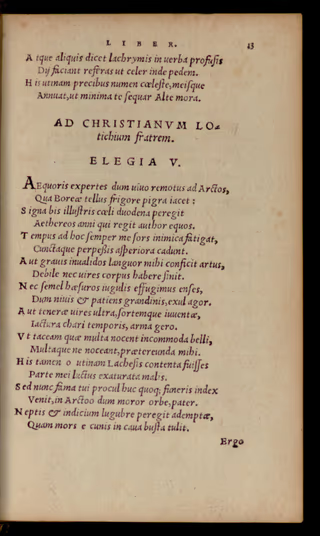
Iam ſene Phillyrio Phœbus poſt terga relicto
Tempus, equos tardans, ſolſtitiale facit.
Porrigit & triſtes tenebras, & noctis opacæ
Longior anguſtos efficit umbra dies.
Iam nec in hos portus uenit, ut prius, hoſpita nauis,
Nec liquidum radens labitur arbor iter.
In glacie puppes dura cum funibus hærent,
Dum fluuij rigido conſtitit unda gelu.
Et rapido Boreas contriſtans frigore cœlum
Finitimo denſas ſpargit ab axe niues.
Cum tamen ætherei radiantia lumina ſolis
Craſtinus Eoo ducet ab orbe dies.
Arua cito repetes, ſine me natalia paſſu,
Quæ gelidus uitreis Aedera findit aquis:
Aedera qui uatis cunabula præterit Heßi,
Non procul a cuius natus es Alte uadis.
Vade (nec inuideo) dulceſque reuiſe penates,
Nec tua crudelis uota moretur hyems.
Dum licuit ſtudijs in mitibus egimus annos,
Et fuit Aonia gratius arte nihil.
Iuuit & accenſos doctorum nomine uatum
Ingenio curam laudis agente frui.
Scis equidem, nec ſunt nemus antraque neſcia noſtri,
Quercus & annoſo robore, propter aquas.
Sæpe ſub hac teneris factum modo carmen in herbis,
Aëra mulcentes legimus inter aues.
Sæpe (recordor enim) de bello multa referre
Dulce fuit, ſed nunc eſt meminiſſe dolor.
Nam cito nos charis trux mœnibus expulit hoſtis,
Iuſsit & exilio uertere dulce ſolum.
Iamque inuiſa gerens hederæ cultoribus arma
Pægaſidum miles templa prophanus habet.
Forſitan (ah facinus) turpi quoq; ſanguine fœdat,
Dicit & in doctas aſpera uerba Deas.
Claſsica pro citharis, galeæ pro uirgine lauro,
Pro muſis rigidi militis uxor adeſt.
Errat inops Phœbus, cœtu comitante ſororum,
Blandaque iam longo tempore muta lyra eſt.
Quæ facies capta lachrymoſior urbe fuiſſet,
Quam grege Pieridum quæ fugiente fuit?
Sorte receſſuris dura mora parua dabatur,
Et male pacatus non procul hoſtis erat.
Vtque ferus, pulchri decus & ſolatia ruris,
Mane ſuburbanas uſſerat ignis opes.
Tecta ſalutamus lachrymis habitata profuſis,
Vndique fumantes reſpicimuſque caſas.
Quis referat gemitus, ſingultanteſque querelas?
Verbaque dicentum, dulcis amice uale?
Adde tot inſidias, & quod confecimus una
Per loca ſolliciti plena timoris, iter.
Arctius hæc noſtras iunxere pericula mentes,
Terraque mirata eſt hoſpita ſæpe duos.
Nunc quoque non comitem tibi me, quocunq; negarem,
Per coaceruatas, qua uia nulla, niues.
Cum quo uel Scythicas auſim luſtrare paludes,
Ire pharetratos ulteriuſque Getas.
Turbidus & quanuis nimis Aquilonibus aër,
Et quanuis rigido terra ſit alba gelu.
Sed præbente nouo crudeles hoſte tumultus,
Quo cuperem, tecum non licet ire mihi.
Sæua nec interea nos tutos frigora præſtant,
Per gelidas miſcent prælia dura niues.
Vicinæque fremunt uarijs aſſenſibus urbes,
Nec ſatis exactum eſt, quid magis eſſe uelint.
Clamque ſuis tentant aſciſcere partibus illas
Non bene de patria qui meruere Duces.
I tamen, & rigidas tu, cui licet, effuge terras
Alte, fuit ſocio quo mihi triſte nihil.
Dulcibus ereptum Muſis, florentibus annis
Me Boreæ flabris horrida tundat hyems.
Tu ſacra Pieridum cole ſemper amata ſororum
A quibus e mœſto pectore cura fugit.
Admonitus noſtri quoq; forſan ab artibus illis,
Debita pro reditu ſuſcipe uota meo.
Illud amicitiæ te per uenerabile nomen,
Nunc quoque ſupremo forſitan ore rogo.
Quin & ubi ueteres ſaluere iubebis amicos,
Quæ tulerim referas omnia, quæque feram.
Quantaque iam rerum nos inconſtantia uerſet,
Inuideat cœptis ſors ut acerba meis.
Hæc poterunt charos audita mouere ſodales,
Optabit placidos & mihi quiſque dies.
Atque aliquis dicet lachrymis in uerba profuſis
Dij faciant referas ut celer inde pedem.
His utinam precibus numen cœleſte, meiſque
Annuat, ut minima te ſequar Alte mora.