Hover or tap a word to see its match.
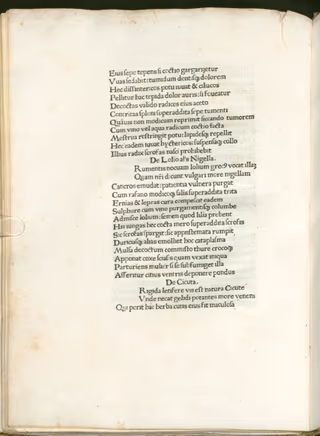
The harsh nature of *Cicuta* is a lethal power,
wherefore it kills those who drink it in the manner of a cold poison;
whoever perishes by this herb, his skin becomes spotted.
From which the kind of death can be seen through these signs.
This used to be the public penalty for criminals in Athens.
Having taken this, the great Socrates was killed.
How this happens: I do not think it is for us to say,
By whom nothing that harms, but what helps must be reported.
If anyone, having taken this herb, is very close to death,
Let him perhaps drink warm wine: and he will escape the danger.
But although it is very often accustomed to harm in a drink,
Nevertheless, when applied, it is accustomed to help wonderfully.
It wonderfully helps summer fluxes of the eyes
If the forehead is covered with its crushed green leaf
Or if the eyes are smeared around with its juice.
By this treatment also holy fire and *herpes* will be driven away.
Anaxilaus relates that if a virgin smears her breasts often with its juice
When they first to swell
Begin, they will remain small and always firm.
Crushed green and placed over the breasts, this dries them up;
It extinguishes sexual desire: and all flux of seed.
If it is well crushed: you may poultice with it often;
Mixing these with foam of silver and fat,
You may apply it warmly as a healthful poultice for gout,
And I have proved that by itself it profits such a person much.
Why should I mention individual things? Any harmful heat whatever
You will be able to cure by applying crushed hemlock.
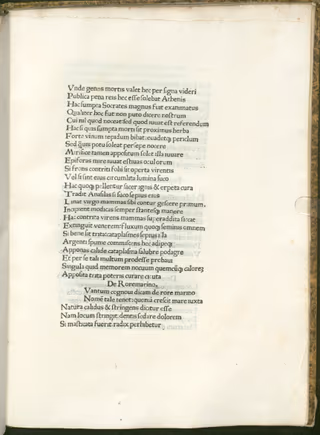
Rigida letifere vis eſt natura Cicute
Vnde necat gelidi potantes more veneni
Qui perit hac herba cutis eius fit maculoſa
Vnde genus mortis valet hec per ſigna videri
Publica pena reis hec eſſe ſolebat Athenis
Hac ſumpta Socrates magnus fuit exanimatus
Qualiter hoc fiat: non puto dicere noſtrum
Cui nil quod noceat: ſed quod iuuat eſt referendum
Hac ſi quis ſumpta morti ſit proximus herba
Forte vinum tepidum bibat: euadetqꝫ periclum
Sed qͣuis potu ſoleat perſepe nocere
Mirifice tamen appoſitum ſolet illa iuuare
Epiforas mire iuuat eſtiuas oculorum
Si frons contriti folii ſit operta virentis
Vel ſi ſint eius circumlita lumina ſuco
Hac quoqꝫ pellentur ſacer ignis & erpeta cura
Tradit Anaſilas ſi ſuco ſepius eius
Linat virgo mammas ſibi contur geſcere primum.
Incipient modicas ſemper ſtanteſqꝫ manere
Hac contrita virens mammas ſuperaddita ſiccat
Extinguit venerem: fluxum quoqꝫ ſeminis omnem
Si bene ſit trita: cataplaſmes ſepius illa
Argenti ſpume commiſcens hec adipeqꝫ
Apponas calide cataplaſma ſalubre podagre
Et per ſe tali multum prodeſſe probaui
Singula quid memorem nocuum quemcūqꝫ caloreꝫ
Appoſita trita poteris curare cicuta