Hover or tap a word to see its match.
We all know that there are two species of comfrey.
One is called the lesser: and the other is called the greater.
Some were also accustomed to call this consiria.
They say both heal broken and ruptured things.
The lesser rises with a white flower through meadows and roads
With a small green leaf lying on the ground.
The greater comfrey is found everywhere in gardens.
The powder with wine binds a woman's menses.
Joined with oregano, it appeases the pain of the stomach.
Its root well cooked in warm coals
And joined to honey will help the broken and ruptured.
You ought to take such an antidote fasting:
The cooked roots of this, joined to honey,
And as much pepper as seems suitable to you,
Will calm a cough: and joined, will be effective for the internal organs.
If anyone doubts that it has so much virtue,
Let him put the pounded roots with meat to be cooked;
You will see joined what had previously been divided.
You will help bones which are broken or shattered,
If it is drunk associated with wine, pepper, and honey.
It thus treats wounds, ruptures, [and] fractures;
joined with old grease it consolidates a fractured bone.
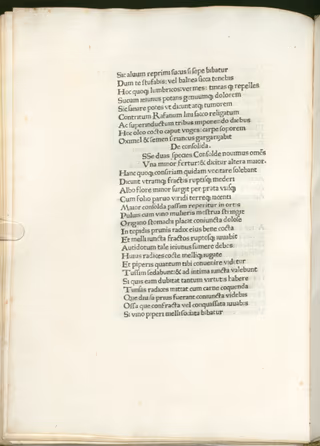
SSe duas ſpecies Conſolde nouimus omēs
Vna minor fertur: & dicitur altera maior.
Hanc quoqꝫ conſiriam quidam vocitare ſolebant
Dicunt vtramqꝫ fractis ruptiſqꝫ mederi
Albo flore minor ſurgit per prata viaſqꝫ
Cum folio paruo viridi terreqꝫ iacenti
Maior conſolda paſſim reperitur in ortis
Puluis cum vino mulieris meſtrua ſtringit
Origano ſtomachi placat coniuncta dolore
In tepidis prunis radix eius bene cocta
Et melli iuncta fractos ruptoſqꝫ iuuabit
Antidotum tale ieiunus ſumere debes
Huius radices cocte melliqꝫ iugate
Et piperis quantum tibi conuenire videtur
Tuſſim ſedabunt: & ad intima iuncta valebunt
Si quis eam dubitat tantum virtutis habere
Tunſas radices mittat cum carne coquenda
Que diuiſa prius fuerant coniuncta videbis
Oſſa que confracta vel conquaſſata iuuabis
Si vino piperi melli ſociata bibatur
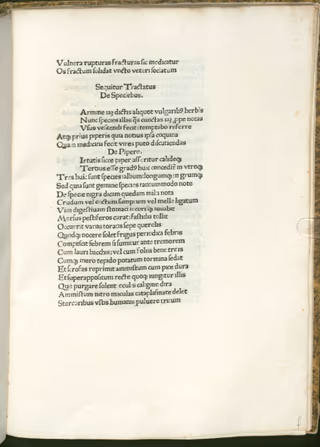
Vulnera rupturas fracturas ſic medicatur
Os fractum ſolidat vncto veteri ſociatum