Hover or tap a word to see its match.
I know two species of spurge, but nevertheless
The ancients gave them two names, and the moderns give them.
One is domestic, and the other grows in the fields,
Dissimilar in leaves, but the power is equal in both.
That one is sharper, however, which rises up like spurge;
Each is quite loosening and very hot.
They say they disfigure the skin and remove hairs.
With the bush of spurge crushed, press out the juice,
And combining it with wine, take it often while fasting;
It helps injured internal organs: and it will be effective for all internal parts
If you join the milk of this to the juice of celandine
You will be able to cure warts in a few days
If you break this while it stands growing: milk falls from there
If you crush this broken and green, then press out the juice
A fistula is cured by it, allied with wine
If you pour it over, fitting a paste on top
The flower boiled in resin is said to soothe the leprous:
And with a powder made of this root
And joined with wine, it produces vomit: and softens the bowels
Joined among butcher's broom with warm waters and fat
And drunk, it greatly and quickly loosens a hard belly
With the milk collected during the days of summer time
And hardened, you will keep it for many uses,
And you will do whatever you wish in the manner of scammony
You will either produce vomit: or you will move the belly, and both
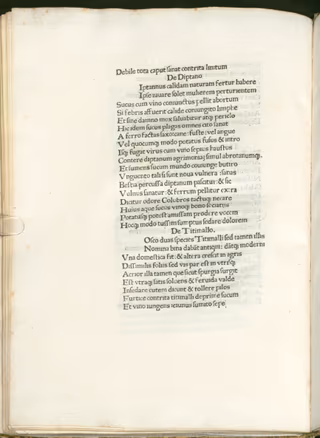
Oſco duas ſpecies Titimalli ſed tamen illis
Nomina bina dabāt antiqui: dātqꝫ moderni
Vna domeſtica fit: & altera creſcit in agris
Diſſimilis foliis. ſed vis par eſt in vtriſqꝫ
Acrior illa tamen que ſicut ſpurgia ſurgit
Eſt vtraqꝫ ſatis ſoluens & feruida valde
Infedare cutem dicunt & tollere pilos
Frutice contrita titimalli deprime ſucum
Et vino iungens ieiunus ſumito ſepe
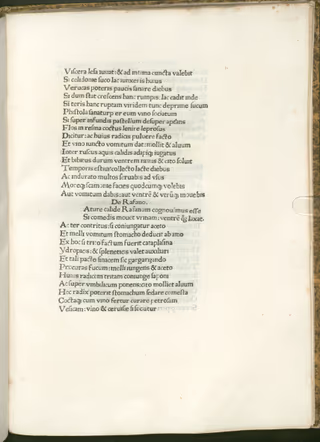
Viſcera leſa iuuat: & ad intima cuncta valebit
Si celidonie ſuco lac iunxeris huius
Verucas poteris paucis ſanare diebus
Si dum ſtat creſcens hanc rumpis: lac cadit inde
Si teris hanc ruptam viridem tunc deprime ſucum
Phiſtola ſanatur per eum vino ſociatum
Si ſuper infundis paſtellum deſuper aptans
Flos in reſina coctus lenire leproſus
Dicitur: ac huius radicis puluere facto
Et vino iuncto vomitum dat: mollit & aluum
Inter ruſcus aquis calidis adipiqꝫ iugatus
Et bibitus durum ventrem nimis & cito ſoluit
Temporis eſtiui: collecto lacte diebus
Ac indurato multos ſeruabis ad vſus
Moreqꝫ ſcamonie facies quodcumqꝫ volebis
Aut vomitum dabis: aut ventrē & vtrūqꝫ mouebis