Hover or tap a word to see its match.
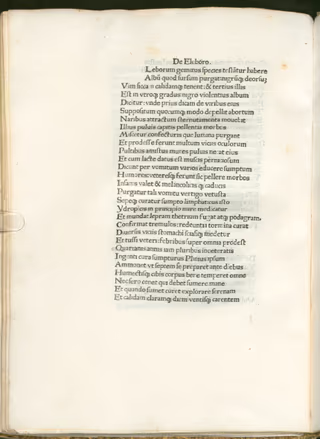
They testify that hellebore has two species,
The white which purges upwards: and the black downwards.
They hold a dry and hot virtue: and the third degree
Is in both of them: the white is said to be more violent
Than the black: whence I will first speak of its powers.
Applied as a suppository in whatever manner, it drives out an abortion.
Drawn into the nostrils, it will provoke sneezings.
Its powder is mixed into remedies driving away diseases of the head,
And into preparations which purge the eyes,
And they say it is of great benefit to defects of the eyes.
Mixed with porridge, its powder kills mice,
And given with milk, it is pernicious to flies.
They say that, when taken, it draws out various
Humors through vomiting: and they report that it thus drives away chronic diseases.
It is effective for the insane, and for the melancholic, and for epileptics.
An old vertigo is purged by such vomiting,
And often the frenzied is cured by taking it.
It marvellously medicates the dropsical in the beginning,
And it cleanses leprosy, puts to flight thetrium, and gout.
It strengthens the trembling: it cures returning gripes,
It heals various defects of the stomach and sciatica,
And a chronic cough: it is beneficial above all for fevers,
Quartan ones already inveterate for many years.
Pliny advises that one about to take it with great care
Should prepare himself for seven days beforehand,
And should well temper his whole body with moist foods,
Nor should he dine late who is to take it in the morning,
And when he takes it, he should take care to seek out a serene
And warm and clear day, lacking winds,
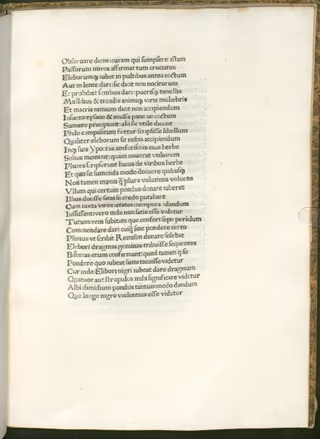
Observe the day: he affirms that he who has undertaken this treatment
Will then suffer strange torments.
And he orders Hellebore to be given, previously cooked in pottages
Or in lentils: thus he says it will not be harmful.
And he forbids it to be given to old men, and to tender boys,
To the soft and timid, and to men of womanly spirit,
And he says it must not be taken by the excessively lean,
For the unaccustomed: they instruct to take it cooked in ptisan
And mead or bread: others say it is useful thus.
Philo is said to have written a composed little book
On how Hellebore should be taken by us.
And Hippocrates in his Aphorisms mentioned
This herb alone: which he knew to be more useful.
Many have written about the virtues of this herb,
And taught in what manner it should be taken, and by whom.
Yet I have not found, though turning over very many volumes,
Anyone who ordered a certain weight to be given.
I believe they thought they had said enough about it,
When they had ordered it to be given according to strength, ages, and times:
But to me it does not seem to be safe enough,
To commend a drastic substance, which often brings danger,
To be given to anyone without a certain weight.
As Pliny writes, Remison used to give
Double drachmas of Hellebore; subsequent authors
Even confirm that he administered twice two: yet he himself
Seems to have kept silent on the weight at which he orders it to be taken.
Why then he orders a drachma of black Hellebore to be given,
Or four scruples, seems to me to signify
That only half the weight of the white should be given,
Because it seems to be far more violent than the black.
ELeborum geminas ſpecies teſtātur habere
Albū quod ſurſum purgat: nigrūqꝫ deorſuꝫ
Vim ſiccam calidamqꝫ tenent: & tertius illis
Eſt in vtroqꝫ gradus: nigro violentius album
Dicitur: vnde prius dicam de viribus eius
Suppoſitum quocumqꝫ modo depellit abortum
Naribus attractum ſternutamenta mouebit
Illius puluis capitis pellentia morbos
Miſcetur confecturis que lumina purgant
Et prodeſſe ferunt multum viciis oculorum
Pultibus amiſtus mures puluis necat eius
Et cum lacte datus eſt muſcis pernicioſum
Dicunt per vomitum varios educere ſumptum
Humores: vetereſqꝫ ferunt ſic pellere morbos
Inſanis valet & melancolicis qꝫ caducis
Purgatur tali vomitu vertigo vetuſta
Sepeqꝫ curatur ſumpto limphaticus iſto
Ydropicis in principio mire medicatur
Et mundat lepram thetrium fugat atqꝫ podagram.
Confirmat tremulos: redeuntia tormina curat
Diuerſis viciis ſtomachi ſciaſiqꝫ medetur
Et tuſſi veteri: febribus ſuper omnia prodeſt
Quartanis annis iam pluribus inueteratis
Ingenti cura ſumpturus Plinius ipſum
Ammonet vt ſeptem ſe preparet ante diebus
Humectiſqꝫ cibis corpus bene temperet omne
Nec ſero cenet qui debet ſumere mane
Et quando ſumet curet explorare ſerenam
Et calidam claramqꝫ diem ventiſqꝫ carentem
Obſeruare diem: curam qui ſumpſerit iſtam
Paſſurum miros affirmat tum cruciatus
Eleborumqꝫ iubet in pultibus antea coctum
Aut in lente dari: ſic dicit non nociturum
Et prohibet ſenibus dari: pueriſqꝫ tenellis
Mollibus & timidis animiqꝫ viris muliebris
Et macris nimium dicit non accipiendum
Inſueto: tyſane & mulſa pane ue coctum
Sumere precipiunt: alii ſic vtile dicunt
Philo compoſitum fertur ſcripſiſſe libellum
Qualiter eleborum ſit nobis accipiendum
Inqꝫ ſuis Ypocras amforiſmis eius herbe
Solius meminit: quam nouerat vtiliorem
Plures ſcripſerunt huius de viribus herbe
Et quo ſit ſumenda modo docuere quibuſqꝫ
Non tamen inueni qͣ plura volumina voluens
Vllum qui certum pondus donare iuberet
Illius dixiſſe ſatis ſe credo putabant
Cum iuxta vires: etates: tempora: dandum
Iuſſiſſent: vero mihi non ſatis eſſe videtur
Tutum: rem ſubitam que confert ſepe periclum
Commendare dari cuiqͣ ſine pondere certo
Plinius vt ſcribit Temeſon donare ſolebat
Elebori dragmas geminas tribuiſſe ſequentes
Biſbinas etiam confirmant: quod tamen ipſe
Pondere quo iubeat ſumi tacuiſſe videtur
Cur inde Elibori nigri iubeat dare dragmam
Quatuor aut ſtrupulos mihi ſignificare videtur
Albi dimidium pondus tantummodo dandum
Quo longe nigro violentius eſſe videtur
