Hover or tap a word to see its match.
Black hellebore is not as violent
Nor to be feared as much as we just said the white is.
The ancients advise that this too should be cooked in lentils
Or in broths; taken thus, they say
It treats the insane: and thus benefits gout,
And the dropsical: with fever removed, it is thus said to help.
The paralytic feels wondrous help when it is taken,
And drunk, it relieves various diseases of the joints.
It draws out various biles and phlegm through the bowel.
Dimness of sight is put to flight by a drink of its decoction.
Made into a poultice, suppurated indurations
When it concocts and purges: it empties fistulas, in the neck
Fixed, a small shoot of its root.
And after two days let that shoot be removed;
Join the flour which barley yields to it crushed.
A dropsical swelling will be dried out by these things applied.
Applied as a suppository, it purges the menses: it drives out a dead fetus.
It restores hearing if into deaf ears that
You place: and remove it after two or three days.
Its poultice applied removes spots,
It cleanses leprosies: it repels whatever scabs.
The vinegar in which you have cooked it, held for a long time in the mouth,
They say settles no small pain of the tooth.
Pliny instructed that one drachma of black hellebore
Be given: thus it gently moves the bowel.
He forbids more than twice two obols to be taken.
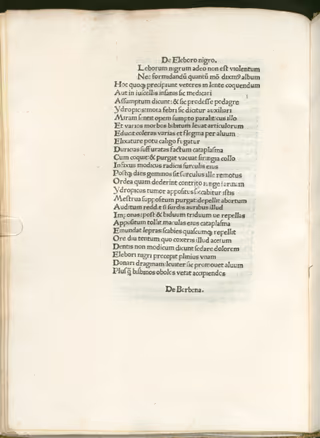
Leborum nigrum adeo non eſt violentum
Nec formidandū quantū mō diximꝰ album
Hoc quoqꝫ precipiunt veteres in lente coquendum
Aut in iuſcellis inſanis ſic medicari
Aſſumptum dicunt: & ſic prodeſſe podagre
Ydropicis: mota febri ſic dicitur auxiliari
Miram ſentit opem ſumpto paraliticus illo
Et varios morbos bibitum leuat articulorum
Educit coleras varias et flegma per aluum
Elixature potu caligo fugatur
Duricias ſuppuratas factum cataplaſma
Cum coquit: & purgat vacuat ſiringia collo
Infixus modicus radicis ſurculus eius
Poſtqꝫ dies geminos ſit ſurculus ille remotus
Ordea quam dederint contrito iunge farinam
Ydropicus tumor appoſitus ſiccabitur iſtis
Meſtrua ſuppoſitum purgat: depellit abortum
Auditum reddit ſi ſurdis auribus illud
Imponas: poſt & biduum triduum ue repellas
Appoſitum tollit maculas eius cataplaſma
Emundat lepras: ſcabies quaſcumqꝫ repellit
Ore diu tentum quo coxeris illud acetum
Dentis non modicum dicunt ſedare dolorem
Elebori nigri precepit plinius vnam
Donari dragmam: leuiter ſic promouet aluum
Pluſ q̄ biſbinos obolos vetat accipiendos