Hover or tap a word to see its match.
The ancients said that mallow softens the belly,
Sextus Niger asserts that it is bad (*cado*) for the stomach,
And Dioscorides too; yet to the inner parts both
Confess that taken like a vegetable it is of much benefit,
And thus they say it heals the bladder,
And thus that it counters poisonous drinks.
These also confirm that with the leaves of mallow and willow
Crushed equally, faster and better a bloody
Wound is healed, than with precious plasters.
The authors themselves add that mallow powerfully
Helps, when crushed and mixed with old fat;
The root of a single stalk, applied to the pain
Of a tooth, soothes it: it is reported to stimulate Venus.
If this same [plant] is worn attached to the thigh with thread,
If a woman wears it covered in black wool:
They say it counteracts diseases of the breasts.
Olympias of Thebes wrote that it causes abortion,
If the melted fat of a goose is mixed with it
And it is inserted in this way into the womb like a pessary.
With its leaves crushed with a little salt,
You will drive away *aegilopes*, and with its juice you will cure
The stings of bees: to which if you add olive oil
And anoint the body with it, no bee will harm you.
A decoction of mallow added to the washed head,
Thus you will drive away foul scabs and harmful scurf.
If you add olive oil to its boiled leaves,
You will extinguish the holy fire with such a poultice,
And you will help well with it the burns of fire.
Its decoction softens hysterical hardnesses;
For conditions of the intestines, the womb, and the anus,
This same [plant] is wonderfully beneficial if it is applied underneath to it.
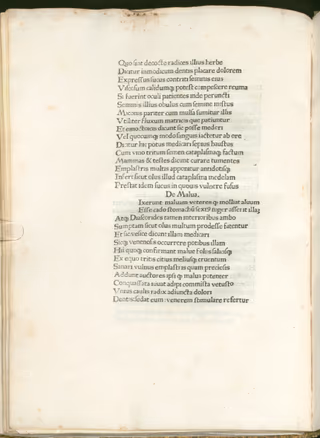
Ixerunt maluam veteres ꝙ molliat aluum
Eſſe cado ſtomachū ſextꝰ niger aſſerit illaꝫ
Atqꝫ Diaſcorides tamen interioribus ambo
Sumptam ſicut olus multum prodeſſe fatentur
Et ſic veſice dicunt illam medicari
Sicqꝫ venenoſis occurrere potibus illam
Hii quoqꝫ confirmant malue foliis ſaliciſqꝫ
Ex equo tritis citius meliuſqꝫ cruentum
Sanari vulnus emplaſtris quam precioſis
Addunt auctores ipſi ꝙ malua potenter
Conquaſſata iuuat adipi commiſta vetuſto
Vnius caulis radix adiuncta dolori
Dentis: ſedat eum: venerem ſtimulare refertur
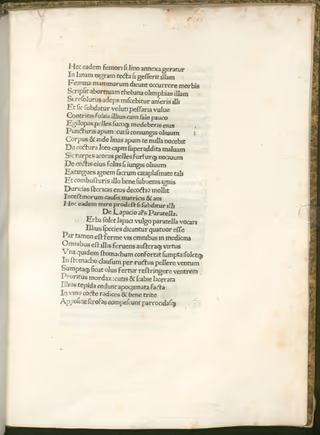
Hec eadem femori ſi lino annexa geratur
In lanam nigram tecta ſi geſſerit illam
Femina:mammarum dicunt occurrere morbis
Scripſit abortiuam thebana olimphias illam
Si reſolutus adeps miſcebitur anſeris illi
Et ſic ſubdatur veluti peſſaria vulue
Contritis foliis illius cum ſale pauco
Egilopas pelles ſucoqꝫ medeberis eius
Puncturis apum:cui ſi coniungis oliuum
Corpus & inde linas apum te nulla nocebit
De coctura loto capiti ſuperaddita maluam
Sic turpes acoras pelles furfurqꝫ nociuum
De coctis eius foliis ſi iungis oliuum
Extingues ignem ſacrum cataplaſmate tali
Et combuſturis illo bene ſubuenis ignis
Duricias ſtericas eius decoctio mollit
Inteſtinorum cauſis matricis & ani
Hec eadem mire prodeſt ſi ſubditur illi