Hover or tap a word to see its match.
No one denies that the althea is a species of mallow,
And they call it althea because it grows on high.
They call this same plant *ebiscum*, because, like birdlime,
its root, when contracted, seems to be moist.
By many, this is usually called the wild mallow.
Its flower, cooked in mead, cleanses wounds,
Or if you apply the crushed flower on top with wine,
to scatter scrofulas in this way, and to relieve the pain of the anus,
It is said: in this way it heals the badly bruised.
The root, first boiled, and ground with pork fat
and turpentine added, cures tumors
of the womb, and helps other pains.
It is said: thus it itself relaxes the sinews,
it breaks or thus disperses hard imposthumes.
The decoction will help all these conditions
if the places of the diseases are frequently fomented with it fresh.
And taken by those suffering from dysentery, the decoction of the root
with wine restrains their flux by binding it,
and this decoction, when taken, expels the delayed afterbirth,
and it is beneficial for those who spit blood, and it drives out stones
of the bladder; it is accustomed to relieve various diseases.
The seed crushed with sour wine and olive oil,
Combine them: you will drive away unsightly spots with this ointment.
Drunk with posca, it can oppose poisons.
First boiled, and crushed with honey, it drives back
wounds that are hollow, if it is frequently applied over them.
Thus also it softens hardnesses and soothes stiffnesses.
A poultice made from the leaves boiled in oil
cures any pestilential bites and burns.
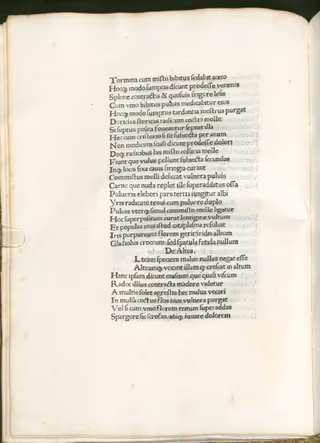
A Lteam ſpeciem malue nullus negat eſſe
Alteamqꝫ vocant illam ꝙ creſcat in altum
Hanc ipſam dicunt ebiſcum que quaſi viſcum
Radix illius contuſa madere videtur
A multis ſolet agreſtis hec malua vocari
In mulſa coctus flos eius vulnera purgat
Vel ſi cum vino florem tritum ſuperaddas
Spargere ſic ſcrofas/ aniqꝫ iuuare dolorem
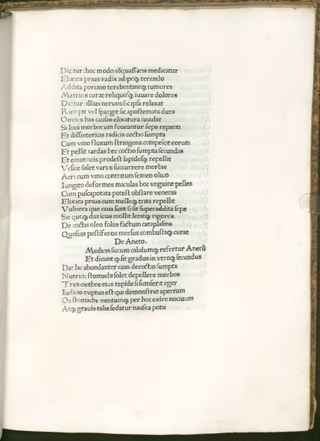
Dicitur: hoc modo cōquaſſatis medicatur
Elixata prius radix adipeqꝫ terendo
Addita porcino terebentineqꝫ tumores
Matricis curat reliquoſqꝫ iuuare dolores
Dicitur: illius neruos ſic ipſa relaxat
Rumpit vel ſpargit ſic apoſtemata dura
Omnes has cauſas elixatura iuuabit
Si loca morborum foueantur ſepe repenti
Et diſſintericis radicis coctio ſumpta
Cum vino fluxum ſtringens compeſcit eorum
Et pellit tardas hec coctio ſumpta ſecundas
Et emotoicis prodeſt lapideſqꝫ repellit
Veſice ſolet variis ſuccurrere morbis
Acri cum vino contritum ſemen oliuo
Iungito deformes maculas hoc vnguine pelles
Cum puſcapotata poteſt obſtare venenis
Elixata prius cum melleqꝫ trita repellit
Vulnera que caua ſunt ſi ſit ſuperaddita ſepe
Sic quoqꝫ duricias mollit lenitqꝫ rigores
De coctis oleo foliis factum cataplaſma
Quoſuis peſtiferos morſus combuſtaqꝫ curat
