Hover or tap a word to see its match.
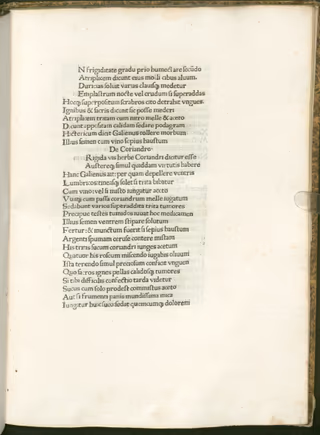
The power of the herb Coriander is said to be rigid,
and at the same time to have a certain austere virtue.
Galen states this: by which it is accustomed to drive out
worms and tapeworms of the belly if it is drunk ground
with wine, or if it is joined with mixed vinegar.
And Coriander joined with raisin and honey,
ground and applied on top, will soothe various tumors.
This medicine especially helps swollen testicles.
Its seed is reported to bind a loose belly:
and it will have been applied as an ointment, if it is drunk more often.
Grind foam of silver mixed with white lead,
to these ground things you will join juice of coriander [and] vinegar.
By mixing, you will join rose oil to these four;
grinding these together makes a precious ointment,
with which you may drive away holy fires and hot swellings.
If the preparation seems difficult and slow to you,
the juice mixed with vinegar alone is beneficial;
or if the cleanest crumb of wheat bread
is joined to this juice: it soothes any pain.
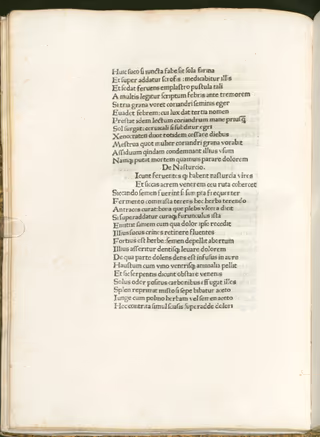
If only bean flour is joined to this juice,
And placed over scrofula: it will heal them,
And a burning pustule is soothed by such a plaster.
It is read, written by many, that before the trembling of a fever,
If a sick person swallows three grains of coriander seed,
He will escape the fever: to which the third day gives its name.
Coriander gathered in the morning before the sun rises
Provides the same, if it is placed under the sick person's pillow.
Xenocrates said that the menses cease for as many days
As the number of coriander grains a woman swallows.
Some condemn the constant use of it,
For they think it brings about death or any pain whatsoever.
Rigida vis herbe Coriandri dicitur eſſe
Auſtereqꝫ ſimul quiddam virtutis habere
Hanc Galienus ait: per quam depellere ventris
Lumbricos:tineaſqꝫ ſolet ſi trita bibatur
Cum vino:vel ſi miſto iungatur aceto
Vuaqꝫ cum paſſa coriandrum melle iugatum
Sedabunt varios ſuperaddita trita tumores
Precipue teſtes tumidos iuuat hoc medicamen
Illius ſemen ventrem ſtipare ſolutum
Fertur:& inunctum fuerit ſi ſepius hauſtum
Argenti ſpumam ceruſe contere miſtam
His tritis ſucum coriandri iunges acetum
Quatuor his roſeum miſcendo iugabis oliuum
Iſta terendo ſimul precioſum conficit vnguen
Quo ſacros ignes pellas calidoſqꝫ tumores
Si tibi difficilis confectio tarda videtur
Sucus cum ſolo prodeſt commiſtus aceto
Aut ſi frumenti panis mundiſſima mica
Iungitur huic ſuco:ſedat quemcumqꝫ dolorem
Huic ſuco ſi iuncta fabe ſit ſola farina
Et ſuper addatur ſcrofis: medicabitur illis
Et ſedat feruens emplaſtro puſtula tali
A multis legitur ſcriptum febris ante tremorem
Si tria grana voret coriandri ſeminis eger
Euadet febrem: cui lux dat tertia nomen
Preſtat idem lectum coriandrum mane priuſqͣ
Sol ſurgat: ceruicali ſi ſubditur egri
Xenocraten dixit totidem ceſſare diebus
Meſtrua quot mulier coriandri grana vorabit
Aſſiduum quidam condemnant illius vſum
Namqꝫ putat mortem quamuis parare dolorem
