Hover or tap a word to see its match.
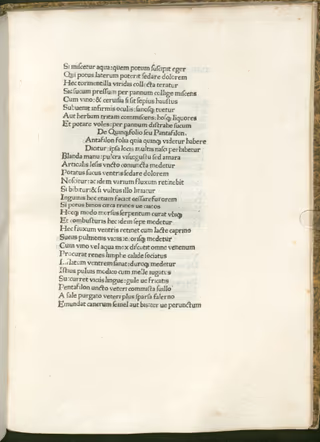
*Pantafilon* is so called because it seems to have five leaves:
It is said to grow in many places,
Soft to the hand, beautiful to the sight, but bitter to the taste.
Joined with ointment, it heals injured joints.
The drunk juice is known to soothe the pain
Of the belly: and the same will restrain a varied flux
If it is drunk: and if the face is smeared with it,
This will also make the inflammation of the groin cease
If the drink is about two or three cyathi.
And in this way it cures the bites of serpents everywhere,
And this same thing often heals burns.
This restrains the flux of the belly with goat's milk.
The juice heals the ailments of the lungs and the liver.
With wine or water it soon dispels all poison.
Joined with warm water, it treats the kidneys.
It heals a swollen belly: and heals a hard one.
The powder of this, joined with a little honey,
Will aid the ailments of the tongue, or of the throat, when rubbed on.
*Pentafilon* mixed with old pig's fat
Purged from salt, sprinkled more with old Falernian wine,
Cleanses a cancer, when smeared on once or twice, or three times.
Crushed whole and smeared on, it heals a weak head.
Antafilon folia quia quinqꝫ videtur habere
Dicitur: ipſa locis multis naſci perhibetur
Blanda manu: pulcra viſu: guſtu ſed amara
Articulis leſis vncto coniuncta medetur
Potatus ſucus ventris ſedare dolorem
Noſcitur: ac idem varium fluxum retinebit
Si bibitur: & ſi vultus illo liniatur
Inguinis hec etiam faciet ceſſare furorem
Si potus binos circa trinos ue ciatos
Hocqꝫ modo morſus ſerpentum curat vbiqꝫ
Et combuſturis hec idem ſepe medetur
Hec fluxum ventris retinet cum lacte caprino
Sucus pulmonis viciis iecoriſqꝫ medetur
Cum vino vel aqua mox diſcutit omne venenum
Procurat renes limphe calide ſociatus
Inflatum ventrem ſanat: duroqꝫ medetur
Iſtius puluis modico cum melle iugatus
Succurret viciis lingue: gule ue fricatis
Pentafilon vncto veteri commiſta ſuillo
A ſale purgato veteri plus ſparſa falerno
Emundat cancrum ſemel aut bis: ter ue perunctum
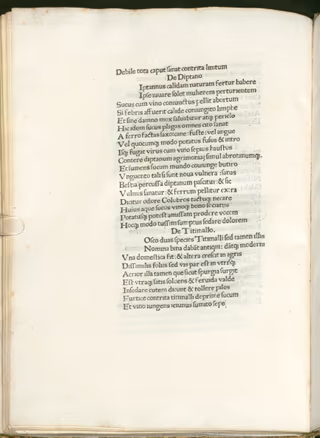
Debile tota caput ſanat contrita linitum
