Hover or tap a word to see its match.
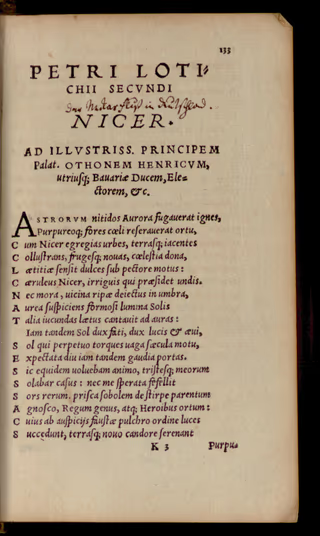
Aurora had put to flight the shining fires of the stars,
And with her purple rising had unlocked the doors of heaven,
When the Neckar, surveying the excellent cities and the lands spread out below,
And the new crops, those heavenly gifts,
Felt sweet stirrings of joy within his breast:
The cerulean Neckar, who presides over the irrigating waves.
Without delay, casting himself down in the bank's nearby shade,
Looking up at the golden lights of the beautiful Sun,
He joyfully sang these words to the pleasant breezes:
Now at last, O Sun, guide of fate, guide of light and time,
O Sun, who turn the wandering ages in perpetual motion,
You bring at last the long-awaited joys.
Thus indeed I pondered in my mind, and consoled the sad
Misfortunes of my people: nor has the hoped-for turn of events
Deceived me. I recognize the offspring from the ancient stock of ancestors,
A race of Kings, and born of Heroes:
Under whose auspices auspicious days in beautiful order
Follow, and brighten the lands with a new radiance
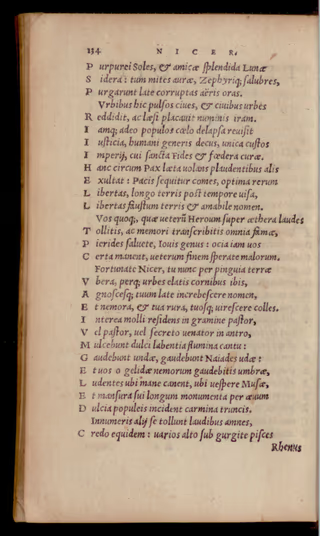
Radiant suns, and the splendid stars of the friendly moon:
then mild breezes, and wholesome Zephyrs,
have purged far and wide the corrupted regions of the air.
He has restored driven-out citizens to their cities, and cities to their citizens,
and has placated the wrath of the offended deity.
And now indeed Justice, gliding down from heaven, revisits the peoples,
the glory of the human race, the singular guardian
of the empire, for whom holy Faith and treaties are a care.
Around her joyful Peace, flying with applauding wings,
exults: as a companion of Peace follows Liberty, the best of things,
seen in the lands after a long time,
Liberty, a favorable and lovely name for the lands.
You too, who raise the praises of ancient Heroes above the ether,
and transcribe all things for mindful fame,
hail Pierides, offspring of Jupiter: now certain leisure
awaits you, hope for an end to ancient evils.
Fortunate Neckar, you will now go with raised horns through the fertile
breasts of the earth, and through the cities,
and you will acknowledge that your name grows widespread,
and that your groves, and your countryside, and your hills grow green.
Meanwhile a shepherd, sitting on the soft grass,
either a shepherd, or a hunter in a secret cave,
will soothe the gliding rivers with sweet song:
The waves will rejoice, the wet Naiads will rejoice:
and you, O cool shadows of the groves, will rejoice,
where the playing Muses will sing in the morning, where in the evening,
and will carve sweet songs on the poplar trunks,
monuments of themselves to endure through a long age.
Other rivers raise themselves with countless praises,
I believe indeed: various fishes beneath the deep swirl
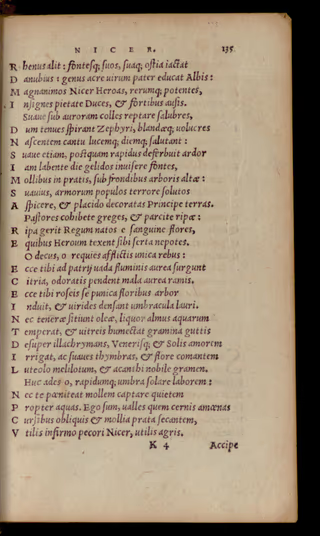
the Rhine nourishes: and boasts of its sources, and its mouths
the Danube: father Elbe rears a fierce race of men:
the Neckar great-souled Heroes, and masters of affairs,
Leaders distinguished by piety, and by brave deeds.
It is sweet just before dawn to roam the healthy hills,
While the gentle Zephyrs blow, and charming birds
Greet the rising light and the day with song:
It is sweet also, after the fierce heat has cooled,
Now as the day declines, to visit the cool springs,
In the soft meadows, beneath the leaves of a tall tree:
It is sweeter to behold peoples freed from the terror of arms,
And lands adorned with a peaceful Prince.
Shepherds, restrain your flocks, and spare the bank:
The bank bears flowers born from the blood of Kings,
From which the descendants of Heroes will weave garlands for themselves.
O glory, O sole rest for afflicted affairs:
Behold, for you by the shallows of your native river rise golden
Citron trees, golden apples hang from fragrant branches.
Behold, for you the pomegranate tree arrays itself with rosy flowers,
And green laurels thicken their shades.
Nor do the tender olive trees thirst, the nourishing liquid of waters
Tempers them, and moistens the grasses with glassy drops,
Weeping from above, and it irrigates the love of Venus and the Sun,
And sweet savory, and the melilot blooming with
Yellowish flower, and the noble herb of acanthus.
O come hither, and relieve your consuming toil with shade:
And let it not displease you to seek soft rest
Beside the waters. I am he, whom you see cleaving the pleasant valleys
With winding courses, and the soft meadows,
The Neckar, useful to the weak flock, useful to the fields.
Accept these gifts too, which the joyful mother earth
yields to you, herbs hitherto unknown to sick mortals,
from which new vigor, and a constantly new glory of the brow
may rise again, and exhausted strength may return to its former state.
Hail, Hero, hail, O Sun added to our lands,
and may you be good to the empire, and assist our tottering affairs.
Nicer had finished; the cities and winding valleys
applauded him: the breezes applauded, the birds applauded,
and the image of ancient virtue entered their minds.
These first fruits to you, Otho, mighty in brave deeds,
I dedicated, and I extolled your sublime name
residing beneath a grassy hill, where with its beautiful stream
the blue Nicer washes the city pleasing to the Muses.
But if the fates preserve for me the leisure which you create,
oh, what praises my songs will sing to you,
which our descendants might sometimes delight to read and celebrate.
ASTRORVM nitidos Aurora fugauerat ignes,
Purpureoq; fores cœli reserauerat ortu,
Cum Nicer egregias urbes, terrasq; iacentes
Collustrans, frugesq; nouas, cœlestia dona,
Lætitiæ sensit dulces sub pectore motus:
Cæruleus Nicer, irriguis qui præsidet undis.
Nec mora, uicina ripæ deiectus in umbra,
Aurea suspiciens formosi lumina Solis
Talia iucundas lætus cantauit ad auras:
Iam tandem Sol dux fati, dux lucis & æui,
Sol qui perpetuo torques uaga sæcula motu,
Expectata diu iam tandem gaudia portas.
Sic equidem uoluebam animo, tristesq; meorum
Solabar casus: nec me sperata fefellit
Sors rerum. prisca sobolem de stirpe parentum
Agnosco, Regum genus, atq; Heroibus ortum:
Cuius ab auspicijs faustæ pulchro ordine luces
Succedunt, terrasq; nouo candore serenant
P urpurei Soles, & amicæ ſplendida Lunæ
S idera: tum mites auræ, Zephyriq; ſalubres,
P urgarunt late corruptas aëris oras.
Vrbibus hic pulſos ciues, & ciuibus urbes
R eddidit, ac læſi placauit numinis iram.
I amq; adeo populos cœlo delapſa reuiſit
I uſticia, humani generis decus, unica cuſtos
I mperij, cui ſancta Fides & fœdera curæ.
H anc circum Pax læta uolans plaudentibus alis
E xultat: Pacis ſequitur comes, optima rerum
L ibertas, longo terris poſt tempore uiſa,
L ibertas fauſtum terris & amabile nomen.
Vos quoq;, quæ ueterũ Heroum ſuper æthera laudes
T ollitis, ac memori tranſcribitis omnia famæ,
P ierides ſaluete, Iouis genus: ocia iam uos
C erta manent, ueterum finem ſperate malorum.
Fortunate Nicer, tu nunc per pinguia terræ
V bera, perq; urbes elatis cornibus ibis,
A gnoſceſq; tuum late increbeſcere nomen,
E t nemora, & tua rura, tuoſq; uireſcere colles.
I nterea molli reſidens in gramine paſtor,
V el paſtor, uel ſecreto uenator in antro,
M ulcebunt dulci labentia flumina cantu:
G audebunt undæ, gaudebunt Naiades udæ:
E t uos o gelidæ nemorum gaudebitis umbræ,
L udentes ubi mane canent, ubi ueſpere Muſæ,
E t manſura ſui longum monumenta per æuum
D ulcia populeis incident carmina truncis.
Innumeris alij ſe tollunt laudibus amnes,
C redo equidem: uarios alto ſub gurgite piſces
Rhenus alit: fonteſq; ſuos, ſuaq; oſtia iactat
Danubius: genus acre uirum pater educat Albis:
Magnanimos Nicer Heroas, rerumq; potentes,
Inſignes pietate Duces, & fortibus auſis.
Suaue ſub auroram colles reptare ſalubres,
Dum tenues ſpirant Zephyri, blandæq; uolucres
Naſcentem cantu lucemq; diemq; ſalutant:
Suaue etiam, poſtquam rapidus deferbuit ardor
Iam labente die gelidos inuiſere fontes,
Mollibus in pratis, ſub frondibus arboris altæ:
Suauius, armorum populos terrore ſolutos
Aſpicere, & placido decoratas Principe terras.
Paſtores cohibete greges, & parcite ripæ:
Ripa gerit Regum natos e ſanguine flores,
E quibus Heroum texent ſibi ſerta nepotes.
O decus, o requies afflictis unica rebus:
Ecce tibi ad patrij uada fluminis aurea ſurgunt
Citria, odoratis pendent mala aurea ramis.
Ecce tibi roſeis ſe punica floribus arbor
Induit, & uirides denſant umbracula lauri.
Nec teneræ ſitiunt oleæ, liquor almus aquarum
Temperat, & uitreis humectat gramina guttis
Deſuper illachrymans, Veneriſq; & Solis amorem
Irrigat, ac ſuaues thymbras, & flore comantem
Luteolo melilotum, & acanthi nobile gramen.
Huc ades o, rapidumq; umbra ſolare laborem:
Nec te pœniteat mollem captare quietem
Propter aquas. Ego ſum, ualles quem cernis amœnas
Curſibus obliquis & mollia prata ſecantem,
Vtilis infirmo pecori Nicer, utilis agris.
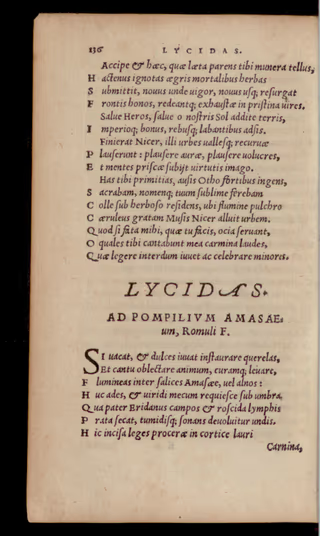
Accipe & hæc, quæ læta parens tibi munera tellus,
Hactenus ignotas ægris mortalibus herbas
Submittit, nouus unde uigor, nouus uſq; reſurgat
Frontis honos, redeantq; exhauſtæ in priſtina uires.
Salue Heros, ſalue o noſtris Sol addite terris,
Imperioq; bonus, rebuſq; labantibus adſis.
Finierat Nicer, illi urbes ualleſq; recuruæ
Plauſerunt: plauſere auræ, plauſere uolucres,
Et mentes priſcæ ſubijt uirtutis imago.
Has tibi primitias, auſis Otho fortibus ingens,
Sacrabam, nomenq; tuum ſublime ferebam
Colle ſub herboſo reſidens, ubi flumine pulchro
Cæruleus gratam Muſis Nicer alluit urbem.
Quod ſi fata mihi, quæ tu facis, ocia ſeruant,
O quales tibi cantabunt mea carmina laudes,
Quæ legere interdum iuuet ac celebrare minores.