

Hover or tap a word to see its match.
Physicians do not seem to agree about onions.
For Dioscorides said that they inflate, and make the head heavy,
And that onions kindle thirst when chewed.
Galen said that they are not good for the bilious,
But he thinks they are very wholesome for the phlegmatic.
Asclepius asserts them to be quite healthy,
Especially for the stomach: and they affirm that they create
A beautiful color, whenever someone has looked upon them.
And whoever has broken his fasts with them
Every day says: that it helps him without pain.
All affirm that, when chewed, they bring on sleep,
And they say that they healthfully soften the bowels.
They say that, when applied, they cure dog bites,
If they have first been ground with honey or vinegar.
Others apply them ground with wine and honey,
And after three days have passed, they remove the poultice.
Dioscorides orders ground salt and onions for a snake's
Bites to be applied: thus he asserts it is helped.
Their juice, mixed with a woman's milk,
Often drives away severe pains when poured into the ear.
This juice, mixed with water and drunk, will help
Those whom a sudden disease causes to forget.
The juice of these, merely drawn into the nostrils,
Compels the head's harmful humors to descend.
Chewed or drunk, they purge delaying menstrua.
And abrasions of the feet, which one is accustomed to or the hardness
Of boots cause, it will cure with their juice,
If you frequently anoint them with the fat of hens.
He who rubs his teeth with this juice in the morning,
They say that he never feels the pain of a tooth.
Eaten with bread, they restrain ulcers of the mouth.
He who consumes them cooked, dipping them in oil,
Soothes the gripes which dysentery gives within.
Frequently rubbing places denuded of hair with ground onions:
You will be able to restore the beauty of the head.
They are beneficial for foul breath: they remove aversions to food.
And Dioscorides bids to apply these crushed on top.
Their juice clears the eyes of dimness.
Mixed with honey, spots: and also combined with vinegar,
It usually cleans them out if they are often rubbed with this.
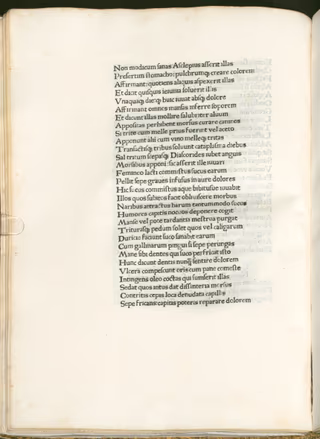
E cepis medici non conſentire videntur
Namꝙ Diaſcorides inflare: caputꝙ grauar̄
Atꝙ ſitim cepas dixit ſuccendere manſas
Felices non eſſe bonas dixit Galienus
Flegmaticis vero multum putat eſſe ſalubres
Non modicum ſanas Aſclepius aſſerit illas
Preſertim ſtomacho: pulchrumqꝫ creare colorem
Affirmant: quotiens aliquis aſpexerit illas
Et dicit quiſquis ieiunia ſoluerit illis
Vnaquaqꝫ die: ꝙ huic iuuat abſqꝫ dolore
Affirmant omnes manſas inferre ſoporem
Et dicunt illas mollire ſalubriter aluum
Appoſitas perhibent morſus curare caninos
Si trite cum melle prius fuerint vel aceto
Apponunt alii cum vino melleqꝫ tritas
Tranſactiſqꝫ tribus ſoluunt cataplaſma diebus
Sal tritum cepaſqꝫ Diaſcorides iubet anguis
Morſibus apponi: ſic aſſerit ille iuuari
Femineo lacti commiſtus ſucus earum
Pellit ſepe graues infuſus in aure dolores
Hic ſucus commiſtus aque bibituſue iuuabit
Illos quos ſubitos facit obliuiſcere morbus
Naribus attractus harum tantummodo ſucus
Humores capitis nocuos deponere cogit
Manſe vel pote tardantia meſtrua purgat
Trituraſqꝫ pedum ſolet quos vel caligarum
Duricie faciunt ſuco ſanabit earum
Cum gallinarum pingui ſi ſepe perungas
Mane ſibi dentes qui ſuco perfricat iſto
Hunc dicunt dentis nunqͣ ſentire dolorem
Vlcera compeſcunt oris cum pane comeſte
Intingens oleo coctas qui ſumſerit illas
Sedat quos intus dat diſſinteria morſus
Contritis cepis loca denudata capillis
Sepe fricans: capitis poteris reparare decorem
Oris fetori proſunt: faſtidia tollunt
Haſqꝫ Diaſcorides iubet ſuperaddere tritas
Illarum ſucus caligine lumina purgat
Ammiſtus melli maculas: quoqꝫ iunctus aceto
Emundare ſolet ſi ſunt hac ſepe fricate