Hover or tap a word to see its match.
Part 1
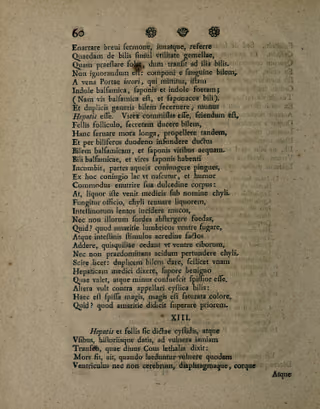
The uses and histories of the liver and of the so-called cystic
gallbladder having been given, I now
pass on to the wounds which the divine Hippocrates of Cos called lethal:
Death occurs, he says, when by some wound there are injured
the stomach, and also the brain, and the diaphragm, and the heart,
And
Hepatis et fellis ſic dictae cyſtidis, atque
Vſibus, hiſtoriisque datis, ad vulnera iamiam
Tranſeo, quae diuus Cous lethalia dixit:
Mors fit, ait, quando laeduntur vulnere quodam
Ventriculus nec non cerebrum, diaphragmaque, corque
Atque
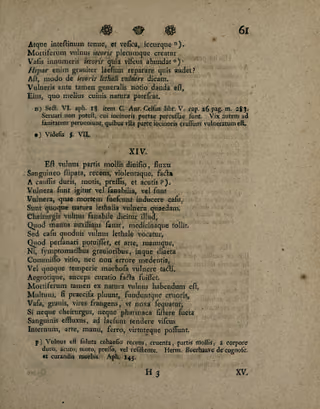
Part 2
And the small intestine, and the bladder, and the liver n).
A mortal wound of the liver is generally produced
Because the viscus of the liver abounds with innumerable vessels o).
For who dares to repair a gravely injured liver?
Yet, I shall speak just now of the lethal wound of the liver.
Beforehand, however, a general notion of a wound must be given,
So that its nature may become better known to anyone.
Atque inteſtinum tenue, et veſica, iecurque n).
Mortiferum vulnus iecoris plerumque creatur
Vaſis innumeris iecoris quia viſcus abundat o).
Hepar enim grauiter laeſum reparare quis audet?
Aſt, modo de iecoris lethali vulnere dicam.
Vulneris ante tamen generalis notio danda eſt,
Eius, quo melius cuiuis natura pateſcat.