Hover or tap a word to see its match.
Part 1
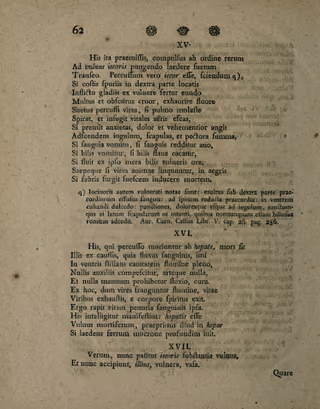
XVII.
Truly, now the substance of the liver suffers a wound,
And now its vessels receive wounds.
Verum, nunc patitur iecoris ſubſtantia vulnus,
Et nunc accipiunt, illius, vulnera, vaſa.
Part 2
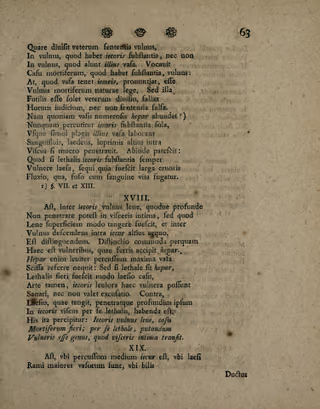
Therefore the opinion of the ancients divided the wound
Into the wound that the substance of the liver holds, and also
Into the wound that its vessels harbor. It called
Mortal by accident the wound that the substance holds:
But that which occupies the vessels of the liver, it pronounces to be
A mortal wound by the law of nature. Yet that
Division of the ancients is wont to be futile, fallacious
Their judgment, and their opinion false.
For since the liver abounds with numerous vessels r)
The substance of the liver is never struck alone,
At the same time its vessels always suffer from blood-flowing
Blows, especially if the injuring point
Has penetrated deeper within the viscus. From this it becomes clear:
That the substance of the liver is always lethal
When injured by a wound, because a copious flow of gore is wont
To follow, by which life is driven away along with the poured-out blood.
Quare diuiſit veterum ſententia vulnus,
In vulnus, quod habet iecoris ſubſtantia, nec non
In vulnus, quod alunt illius vaſa. Vocauit
Caſu mortiferum, quod habet ſubſtantia, vulnus:
At, quod vaſa tenet iecoris, pronuntiat, eſſe
Vulnus mortiferum naturae lege. Sed illa
Futilis eſſe ſolet veterum diuiſio, fallax
Horum iudicium, nec non ſententia falſa.
Nam quoniam vaſis numeroſis hepar abundat ʳ)
Nunquam percutitur iecoris ſubſtantia ſola,
Vſque ſimul plagis illius vaſa laborant
Sanguifluis, laedens, inprimis altius intra
Viſcus ſi mucro penetrauit. Abinde pateſcit:
Quod ſi lethalis iecoris ſubſtantia ſemper
Vulnere laeſa, ſequi quia ſueſcit larga cruoris
Fluxio, qua, fuſo cum ſanguine vita fugatur.