Hover or tap a word to see its match.
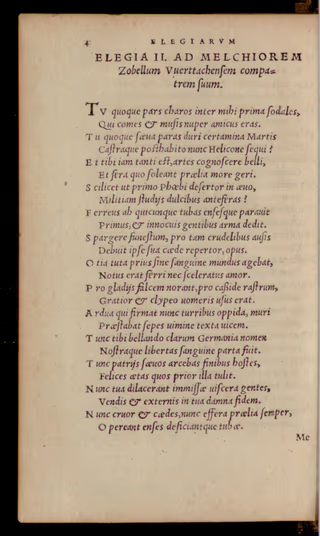
You too, the foremost part among my dear companions,
Who were lately a comrade and friend to the Muses.
Are you too preparing to follow the cruel contests of harsh Mars,
And the camps, having now set Helicon aside?
And is it now worth so much to you to learn the arts of war,
And the manner in which fierce battles are wont to be fought.
Namely, so that, a deserter of Phoebus in your early years,
You prefer military service to sweet studies?
Ah, made of iron was whoever first prepared trumpets and swords,
And gave weapons to innocent nations.
For such cruel daring, the inventor himself ought to have sprinkled
His deadly work with his own slaughter.
Formerly, the world passed safe leisure without blood,
And the wicked love of iron was not known.
Instead of swords they knew the sickle, instead of a helmet, the rake,
And the use of the plowshare was more pleasing than the shield.
A hedge woven from willow shoots provided the function of the wall,
Which now fortifies lofty towns with towers.
Then a famous name in fighting was yours, O Germany,
And our liberty was won by blood.
Then you warded off fierce enemies from the borders of the fatherland;
Happy are those whom that earlier age bore.
Now nations let in tear apart your entrails,
And you sell your loyalty to foreigners to your own ruin.
Now there is blood and slaughter, now fierce battles always;
O let swords perish and trumpets fail.
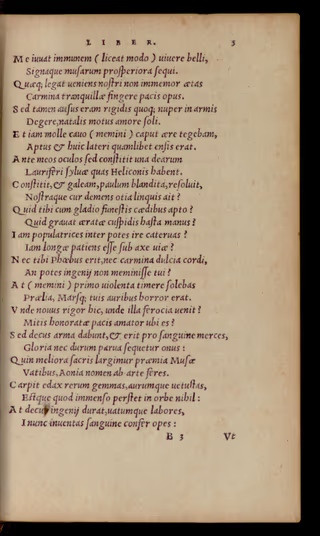
It pleases me to live free from war (if only it be allowed),
And to follow the more favorable standards of the Muses.
And to compose works which the coming age, not unmindful of us, may read,
To fashion poems, the work of tranquil peace.
But nevertheless I had recently dared also to spend time
In harsh arms, moved by love for my native soil.
I even (I remember) used to cover my soft head in hollow bronze,
And a sword of sorts was strapped to this side.
But before my eyes stood one of the goddesses
Whom the woods of laurel-bearing Helicon hold.
She stood, and having coaxed me a little, unfastened my helmet,
And said, “Why, madman, do you abandon our leisure?
What business do you have with a sword fit for deadly slaughter?
Why does a bronze-tipped spear weigh down your hands?
Can you now march among ravaging bands?
Now endure a long march beneath the open sky?
Will neither Phoebus nor sweet songs be dear to your heart,
Or can you forget your own talent?
But (I remember) at first you used to fear violent
Battles, and Mars was a horror to your ears.
Whence came this new harshness, whence that ferocity?
Where are you, the gentle lover of honored peace?
But weapons will yield glory, and there will be a reward for bloodshed,
And no small glory will follow the harsh burden:
Nay, we Muses bestow better rewards upon sacred
Bards, you will derive a name from Aonian art.
The passage of time, devourer of things, consumes gems and gold,
And there is nothing in the vast world that endures:
But the glory of genius endures, and the labors of bards;
Go now, compare wealth acquired through blood:
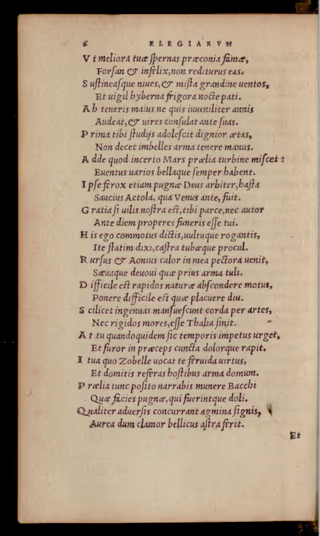
Though you may spurn the better heralds of your fame,
Perhaps, unhappy one, you go never to return.
And you may endure snows, and winds mixed with hail,
And bear to suffer the winter cold while awake at night.
Ah, let no one youthfully dare something too great for his tender years,
And let him first consider his own strength.
Your early age, more worthy, matures in studies;
It does not become unwarlike hands to hold weapons.
Add that Mars mingles battles in an uncertain whirlwind:
And wars always have varying outcomes.
Even the fierce God himself, the arbiter of battle, was wounded
By the Aetolian spear, by which Venus was wounded before.
If our favor is cheap, spare yourself, and do not hasten
To be the author of your own death before its day.
Moved by these words, and the face of the one pleading,
I said at once, "Go far away, camps and trumpets!"
And again the Aonian heat entered my breast,
And I cursed the cruel weapons I had borne before.
It is difficult to conceal the rapid impulses of nature,
It is difficult to lay aside what has pleased for a long time.
Indeed, hearts grow tame through the liberal arts,
Nor does Thalia permit characters to remain rigid.
But you, since the force of the times urges thus,
And madness and grief sweep all things headlong:
Go, Zobel, where your fervent virtue calls you,
And may you bring your weapons home, with the enemy subdued.
Then, when the gift of Bacchus is served, you will narrate the battles:
What the appearance of the fight was, and what the stratagems were;
How the columns clash with opposing standards,
While the war cry strikes the golden stars.
And you will relate the well-known names of leaders and kings,
in order, and all their deeds in their proper places.
And whatever dangers were endured in new lands:
may the Morning Star bring this day on a swift axle.
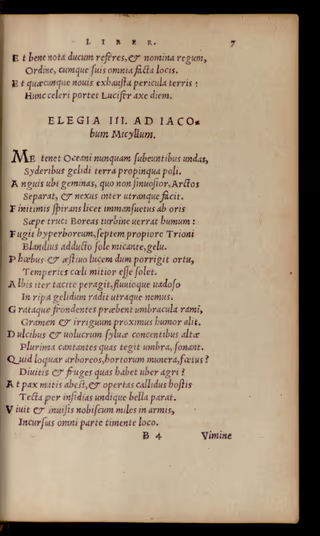
Tv quoque pars charos inter mihi prima ſodales,
Qui comes & muſis nuper amicus eras.
Tu quoque ſæua paras duri certamina Martis
Caſtraque poſthabito nunc Helicone ſequi?
Et tibi iam tanti eſt, artes cognoſcere belli,
Et fera quo ſoleant prælia more geri.
Scilicet ut primo Phœbi deſertor in æuo,
Militiam ſtudijs dulcibus anteferas?
Ferreus ah quicunque tubas enſeſque parauit
Primus, & innocuis gentibus arma dedit.
Spargere funeſtum, pro tam crudelibus auſis
Debuit ipſe ſua cæde repertor, opus.
Otia tuta prius ſine ſanguine mundus agebat,
Notus erat ferri nec ſceleratus amor.
Pro gladijs falcem norant, pro caßide raſtrum,
Gratior & clypeo uomeris uſus erat.
Ardua qui firmat nunc turribus oppida, muri
Præſtabat ſepes uimine texta uicem.
Tunc tibi bellando clarum Germania nomen
Noſtraque libertas ſanguine parta fuit.
Tunc patrijs ſæuos arcebas finibus hoſtes,
Felices ætas quos prior illa tulit.
Nunc tua dilacerant immiſſæ uiſcera gentes,
Vendis & externis in tua damna fidem.
Nunc cruor & cædes, nunc effera prælia ſemper,
O pereant enſes deficiantque tubæ.
Me iuuat immunem (liceat modo) uiuere belli,
Signaque muſarum proſperiora ſequi.
Quæq; legat ueniens noſtri non immemor ætas
Carmina tranquillæ fingere pacis opus.
Sed tamen auſus eram rigidis quoq; nuper in armis
Degere, natalis motus amore ſoli.
Etiam molle cauo (memini) caput ære tegebam,
Aptus & huic lateri quamlibet enſis erat.
Ante meos oculos ſed conſtitit una dearum
Lauriferi ſyluæ quas Heliconis habent.
Conſtitit, & galeam, paulum blandita, reſoluit,
Noſtraque cur demens otia linquis ait?
Quid tibi cum gladio funeſtis cædibus apto?
Quid grauat æratæ cuſpidis haſta manus?
Iam populatrices inter potes ire cateruas?
Iam longæ patiens eſſe ſub axe uiæ?
Nec tibi Phœbus erit, nec carmina dulcia cordi,
An potes ingenij non meminiſſe tui?
At (memini) primo uiolenta timere ſolebas
Prælia, Marſq; tuis auribus horror erat.
Vnde nouus rigor hic, unde illa ferocia uenit?
Mitis honoratæ pacis amator ubi es?
Sed decus arma dabunt, & erit pro ſanguine merces,
Gloria nec durum parua ſequetur onus:
Quin meliora ſacris largimur præmia Muſæ
Vatibus, Aonia nomen ab arte feres.
Carpit edax rerum gemmas, aurumque uetuſtas,
Eſtque quod immenſo perſtet in orbe nihil:
At decus ingenij durat, uatumque labores,
I nunc inuentas ſanguine confer opes:
Vt meliora tuæ ſpernas præconia famæ,
Forſan & infelix, non rediturus eas.
Suſtineaſque niues, & miſta grandine uentos,
Et uigil hyberna frigora nocte pati.
Ah teneris maius ne quis iuueniliter annis
Audeat, & uires conſulat ante ſuas.
Prima tibi ſtudijs adoleſcit dignior ætas,
Non decet imbelles arma tenere manus.
Adde quod incerto Mars prælia turbine miſcet:
Euentus uarios bellaque ſemper habent.
Ipſe ferox etiam pugnæ Deus arbiter, haſta
Saucius Aetola, qua Venus ante, fuit.
Gratia ſi uilis noſtra eſt, tibi parce, nec autor
Ante diem properes funeris eſſe tui.
His ego commotus dictis, uultuque rogantis,
Ite ſtatim dixi, caſtra tubæque procul.
Rurſus & Aonius calor in mea pectora uenit,
Sæuaque deuoui quæ prius arma tuli.
Difficile eſt rapidos naturæ abſcondere motus,
Ponere difficile eſt quæ placuere diu.
Scilicet ingenuas manſueſcunt corda per artes,
Nec rigidos mores, eſſe Thalia ſinit.
At tu quandoquidem ſic temporis impetus urget,
Et furor in præceps cuncta dolorque rapit.
I tua quo Zobelle uocat te feruida uirtus,
Et domitis referas hoſtibus arma domum.
Prælia tunc poſito narrabis munere Bacchi
Quæ facies pugnæ, qui fuerintque doli.
Qualiter aduerſis concurrant agmina ſignis,
Aurea dum clamor bellicus aſtra ferit.
Et bene nota ducum referes, & nomina regum,
Ordine, cumque ſuis omnia facta locis.
Et quæcunque nouis exhauſta pericula terris:
Hunc celeri portet Lucifer axe diem.