Hover or tap a word to see its match.
The annual season of Christ's birth has come,
Worthy to be observed with the pious honor of holy custom.
Whoever is present, attend reverently; depart, gloomy cares,
On this day, all good things are born for us.
Scatter your sacred light with a better star, O Titan,
And pour forth a purer radiance with glowing brilliance.
Let no black clouds sadden the clear ether,
And let the breath of winter's cold lay aside its threats.
Let the venerable temple resound with solemn song,
Offer prayers with a suppliant voice, whoever is present.
I myself shall sing sweet verses; to bring Pierian measures
to the sacred altars is both right and pious.
Only you, you, O Christ, favor this holy work
of song, so that I may declare the child of the chaste virgin.
There was peace, and pacified by a strong soldiery, victorious
Rome held the conquered wealth of the world.
Caesar was giving laws to the peoples, and commanding that a census
be paid, so that he himself might know his own strength.
The race sprung from the seed of great Judah obeys,
notable among the twelve tribes.
Joseph himself also, born from the lineage of the king
descended from Jesse, approaches the walls of old Bethlehem.
And now the virgin follows, heavy with her heavenly burden,
the chaste virgin, soon to be the great mother of God.
They had crossed where the abundant olive clothes the grove
of Carmel, looking out onto the wide sea.
Where lies Tabor, which the Kishon washes with its clear waves,
producing balsam on its fertile hill.
Left on the left is the mountain, sacred by ancient reverence,
which rises to the stars with its twin peak.
And Jericho, moist with streams of flowing water,
saw them turn their footsteps through its fields.
They had come to the heights of Jerusalem, where the Jordan
of Paneas, milder in its placid stream, had borne them.
There the city of Bethlehem, small indeed, but destined
for great fates, drew near to their eyes.
Immediately they greet their native lands with pious voices,
the lands which their aged ancestors once held.
And now as the day was falling, and Phoebus was plunged beneath the sea,
dark night was preparing to take its accustomed path.
Covered with grassy turf and reeds cut from the marsh,
stood the hut of a poor farmer.
The wall was woven with twigs, and the roof was green
with moss; the sparse wickerwork gave passage to the North Wind.
They entered the doorposts of the rustic threshold, since within
the walls of the city, space was lacking in the inns.
Small heaps of stubble and stiff hay,
and leaves made dry from branches, lie about.
With fires lit, rustic diligence warmed them
with gentle aid and meager fare.
And now the damp constellations, in the varied tract of heaven,
were taking their turn almost in the middle of their course.
The highest peaks of the hut shone with the rays of the Moon;
the Moon, with her rosy horns, rode swiftly on her horse.
The leaves of the trees and the mountains were silent far and wide,
while wild beasts refresh their limbs in sweet rest.
And light winds were blowing without a murmur,
and the bird sat mute, hidden in the thickets.
Sleep was soothing the weary breast of Joseph,
as he lay destitute, propped upon cheap straw.
The mindful Virgin sensed that the blessed time was near,
when she would give birth to the divinity and burden of her womb.
Suddenly a holier spirit from heaven stirs her breast,
full of God, with a burning motion within.
And the venerable house shone bright with ethereal fire,
and a flaming splendor flashed from the clear vault.
She conceives chaste prayers, and at the same time, behold, with labor pains
removed, behold, she softly brings forth the sacred burden.
Just as the earth, made fruitful by the Zephyrs, sends forth slightly damp
flowers in early spring, after the sad cold.
The almighty Father gives signs, golden Phoebe shines
more purely, and allows no place for spots.
And the joyful stars diffuse glowing flames,
and you, Peneian waters, flow more gently.
The mother wraps the naked child in a thin covering,
peacefully warming his sacred limbs in her warm bosom.
Soon she placed most of them in the manger on the stiff hay;
the harsh straw wounded his soft side.
Nearby were the Ox, cultivator of the field, and the little Donkey,
the carrier of Joseph, plucking the rustling fodder.
Immediately, on bended knee, they bring their shaggy faces
and mouths right up to the divine body.
And lest the newborn infant feel the evil cold,
they keep off the biting frost with steaming breaths.
Joseph, awakened from sleep, as he sees him
before the cattle, stands and is silent for a short time.
But when he approached, and humbly poured forth praying
words, his pious cheeks grew wet with tears.
Ah, how often did he warm him, embraced in his gentle arms,
and hold his small arms with a trembling hand.
Ah, how often, bending his white head to the cradle,
did the old man pluck kisses from that heavenly mouth.
And as he lay on the ground, his tongue, conscious of the fates,
having received the divine spirit, uttered such sounds:
"Holy boy, at last the promises of the pious prophets
have shown their undoubted truth in deeds.
You have come, the hoped-for salvation, and the redeemer of the world,
O you, often sought by the prayers of your people.
But neither fabrics precious with glowing gems, nor with gold,
nor dyed with Getulian purple, cover you."
Nor do the covered doorposts gleam with Parian marble,
the roof takes them in, barely spacious enough for its own flock.
Yet a blessed star, a guide leading the way,
will bring kings bearing gifts here to your cradle.
And it will mark the path, and lead flames through the air,
the sky was previously lacking this star.
Am I deceived? Or will they leave the Dawn, and the Nabataean realms,
where Phoebus brings the day from the Eastern world.
They will present weights of rich gold, along with myrrh,
and the frankincense which the sun-scorched Arab harvests.
Behold, why does the enemy fight to tear infants from their mothers?
And lay on hands armed with the sword?
The cradles are fouled, drenched in purple blood,
and the laps of the nurses are wet with red slaughter.
We will go, mother, and seek the safe places of the Nile,
the offspring of God must have these hiding places.
Until the barbarian tyrant, devising his snares with skill,
shall be undone by a horrendous death.
Then again, from there, a boy exiled from the Pharian shore,
you will safely return your steps from the Nilotic world.
And you carry out the commands of your divine parent,
and you teach words not devoid of heavenly power.
And now, your course almost finished, your final fates remain
to you, the hour of bloody death already comes.
Ah, little one, why do you wail? As if you knew your wounds,
while you restore by your death what has perished.
The conscious earth itself will also tremble with a rapid rumble,
and a vast chasm will draw in the shaken ground.
Even Titan himself, deprived of his usual light,
will hide his purple horses in mournful darkness.
But you, Holy One, having redeemed the captives by your death,
Will, as a victor, release the ancestors from the infernal prison.
And from the dark seat of the black Styx you will rise again,
When the third day has traversed the sky with its chariot.
Soon you will return to the paternal Olympus, no longer mortal,
And you will grant that human prayers carry weight.
Be favorable, good CHRIST, Savior of the great world;
This name will be a terror to Stygian ears.
Thus he spoke, and tears followed and fell across his face,
Nor could he, weeping, speak any further.
The mother also wept, touched by the sorrow of the warning,
And bore the boy in her bosom, a sweet burden.
And now she whispered endearments with a gentle murmur,
Now she nourished him with the pleasing resource of warm milk.
By chance, at the same time, guardians of the flock in those mountains
Were watching over their enclosed flocks in the silent night.
When a winged youth stood above their heads,
And said, "Let all fear be far away" (for they had shuddered).
"Sent from the ethereal citadel of salvation, a Savior
Is born a man for you under a poor roof.
Go quickly, scatter the rustic cradle with violets;
Go, and bring gifts to the new king."
He spoke, and hanging in the empty air, ethereal assemblies
Sang sweet melodies together.
And they filled the whole sky with wandering flights;
Their single voice was, "Glory be to God most high.
And let the secure earth be full of tranquil peace,
And let the human race cultivate both justice and piety."
The thin air afar, and the fields struck by sweet-sounding voices,
Resound with angelic harmonies.
Terror departs; they obey the commands, and in a lowly hut
They find the boy lying with his mother.
Having worshiped God with suppliant voice, they draw forth
From their bosoms the sweet little gifts of the humble countryside.
Nor can their eyes be sated by his glowing face,
Nor can their very hands keep from touching him.
Hail, holy boy, to you we open our sincere lips;
Holy One, may you graciously be present for your people.
Boy Christ, through whom the door of death is shut tight,
And the way to the heavenly mansions is opened once more:
Grant pardon for our wickedness; we confess we have sinned.
Be present for us in our wretchedness, and bring us your aid.
Drive hunger and diseases far away; grant that we may live for you
With a pure heart for whatever time remains.
And if we have heedlessly committed any wrong, ensure
That the mindful wrath of an offended God does not avenge it hereafter.
May peace and gentle quiet return, and may upheavals cease,
And let the fury of Mars come to an end in our world,
So that we may always sing this better to you, Holy One, year by year,
With no burden of cares delaying the day.
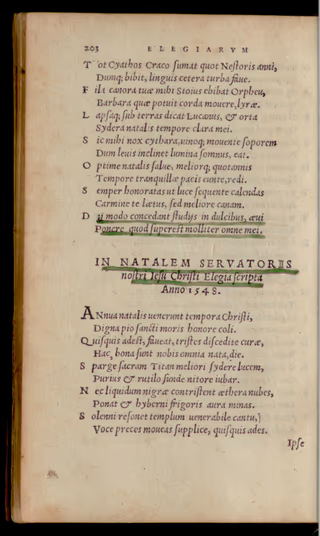
ANnua natalis uenerunt tempora Chriſti,
Digna pio ſancti moris honore coli.
Quiſquis adeſt, faueat, triſtes diſcedite curæ,
Hac, bona ſunt nobis omnia nata, die.
Sparge ſacram Titan meliori ſydere lucem,
Purius & rutilo funde nitore iubar.
Nec liquidum nigræ contriſtent æthera nubes,
Ponat & hyberni frigoris aura minas.
Solenni reſonet templum uenerabile cantu,
Voce preces moueas ſupplice, quiſquis ades.
Ipſe canam dulces numeros, adhibere ſacratis
Pierios aris faſq; piumq; modos.
Tu modo, tu, caſtæ partus ut uirginis edam,
Chriſte faue, ſanctum carminis huius opus.
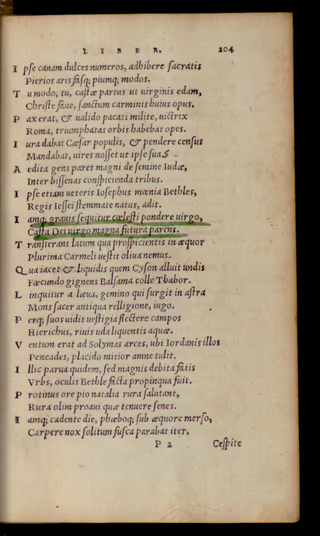
Pax erat, & ualido pacati milite, uictrix
Roma, triumphatas orbis habebat opes.
Iura dabat Cæſar populis, & pendere cenſus
Mandabat, uires noſſet ut ipſe ſuas.
Aedita gens paret magni de ſemine Iudæ,
Inter biſſenas conſpicienda tribus.
Ipſe etiam ueteris Ioſephus mœnia Bethles,
Regis Ieſſei ſtemmate natus, adit.
Iamq; grauis ſequitur cœleſti pondere uirgo,
Caſta Dei uirgo magna futura parens.
Tranſierant latum qua proſpicientis in æquor
Plurima Carmeli ueſtit oliua nemus.
Qua iacet & liquidis quem Cyſon alluit undis
Fæcundo gignens Balſama colle Thabor.
Linquitur a læua, gemino qui ſurgit in aſtra
Mons ſacer antiqua relligione, iugo.
Perq; ſuos uidit ueſtigia flectere campos
Hierichus, riuis uda liquentis aquæ.
Ventum erat ad Solymas arces, ubi Iordanis illos
Peneades, placido mitior amne tulit.
Illic parua quidem, ſed magnis debita fatis
Vrbs, oculis Bethle facta propinqua fuit.
Protinus ore pio natalia rura ſalutant,
Rura olim proaui quæ tenuere ſenes.
Iamq; cadente die, phæboq; ſub æquore merſo,
Carpere nox ſolitum fuſca parabat iter.
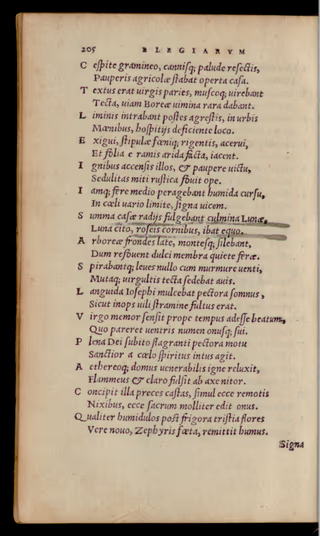
Ceſpite gramineo, canniſq; palude reſectis,
Pauperis agricolæ ſtabat operta caſa.
Textus erat uirgis paries, muſcoq; uirebant
Tecta, uiam Boreæ uimina rara dabant.
Liminis intrabant poſtes agreſtis, in urbis
Mœnibus, hoſpitijs deficiente loco.
Exigui, ſtipulæ fœniq; rigentis, acerui,
Et folia e ramis arida facta, iacent.
Ignibus accenſis illos, & paupere uictu,
Sedulitas miti ruſtica fouit ope.
Iamq; fere medio peragebant humida curſu,
In cœli uario limite, ſigna uicem.
Summa caſæ radijs fulgebant culmina Lunæ,
Luna cito, roſeis cornibus, ibat equo.
Arboreæ frondes late, monteſq; ſilebant,
Dum refouent dulci membra quiete feræ.
Spirabantq; leues nullo cum murmure uenti,
Mutaq; uirgultis tecta ſedebat auis.
Languida Ioſephi mulcebat pectora ſomnus,
Sicut inops uili ſtramine fultus erat.
Virgo memor ſenſit prope tempus adeſſe beatum,
Quo pareret uentris numen onuſq; ſui.
Plena Dei ſubito flagranti pectora motu
Sanctior a cœlo ſpiritus intus agit.
Aethereoq; domus uenerabilis igne reluxit,
Flammeus & claro fulſit ab axe nitor.
Concipit illa preces caſtas, ſimul ecce remotis
Nixibus, ecce ſacrum molliter edit onus.
Qualiter humidulos poſt frigora triſtia flores
Vere nouo, Zephyris fœta, remittit humus.
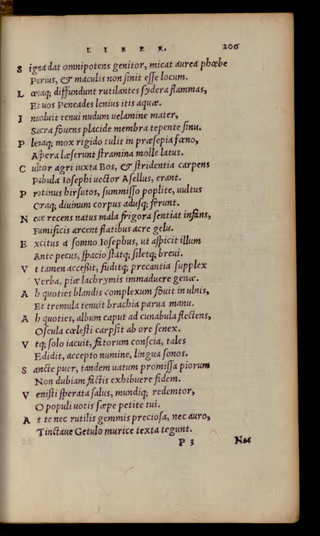
Signa dat omnipotens genitor, micat aurea phœbe
Purius, & maculis non ſinit eſſe locum.
Lætaq; diffundunt rutilantes ſydera flammas,
Et uos Peneades lenius itis aquæ.
Inuoluit tenui nudum uelamine mater,
Sacra fouens placide membra tepente ſinu.
Pleraq; mox rigido tulit in præſepia fœno,
Aſpera læſerunt ſtramina molle latus.
Cultor agri iuxta Bos, & ſtridentia carpens
Pabula Ioſephi uector Aſellus, erant.
Protinus hirſutos, ſummiſſo poplite, uultus
Oraq; diuinum corpus aduſq; ferunt.
Neue recens natus mala frigora ſentiat infans,
Fumificis arcent flatibus acre gelu.
Excitus a ſomno Ioſephus, ut aſpicit illum
Ante pecus, ſpacio ſtatq; ſiletq; breui.
Vt tamen acceſsit, fuditq; precantia ſupplex
Verba, piæ lachrymis immaduere genæ.
Ah quoties blandis complexum fouit in ulnis,
Et tremula tenuit brachia parua manu.
Ah quoties, album caput ad cunabula flectens,
Oſcula cœleſti carpſit ab ore ſenex.
Vtq; ſolo iacuit, fatorum conſcia, tales
Edidit, accepto numine, lingua ſonos.
Sancte puer, tandem uatum promiſſa piorum
Non dubiam factis exhibuere fidem.
Veniſti ſperata ſalus, mundiq; redemtor,
O populi uotis ſæpe petite tui.
At te nec rutilis gemmis precioſa, nec auro,
Tinctaue Getulo murice texta tegunt.
Nec Pario radiant adoperti marmore poſtes,
Tecta ſuo capiunt uix ſatis ampla gregi.
Stella tamen felix, portantes munera reges,
Huc feret ad cunas præuia duxq; tuas.
Et ſignabit iter, flammaſq; per aëra ducet,
Huius egens cœlum ſyderis ante fuit.
Fallor? an Auroram, Nabathæaq; regna relinquent,
Qua uehit Eoo Phœbus ab orbe diem.
Pondera cum Myrris donabunt, diuitis auri,
Et quæ ſole metit Thura peruſtus Arabs.
Ecce quid infantes auellere matribus hoſtis
Pugnat? & armatas inijcit enſe manus?
Purpureo ſquallent perfuſæ ſanguine cunæ,
Nutricumq; madent cæde rubente ſinus.
Ibimus, & Nili genetrix loca tuta petemus,
Has ſoboles latebras debet habere Dei.
Inſidias donec componens arte, ſolutus
Barbarus horrenda morte Tyrannus erit.
Tunc iterum Pharij puer illinc littoris exul,
Niliaco referes ſoſpes ab orbe pedem.
Etiam diuini peragis mandata parentis,
Verba nec ætherijs uiribus orba doces.
Iamq; fere curſu reſtant tibi fata peracto
Vltima, ſanguineæ iam uenit hora necis.
Parue quid ah uagis? tanquam tua uulnera noris,
Dum reparas letho, quæ periere, tuo.
Ipſa tremet rapido quoq; conſcia murmure tellus,
Excuſſamq; trahet uaſtus hiatus humum.
Ipſe etiam ſolito defectus lumine Titan,
Purpureos tenebris triſtibus abdet equos.
At tu ſancte tua captiuos morte redemtos,
Inferno ſolues carcere, uictor auos.
Eque ſtygis nigræ tenebroſa ſede, reſurges
Tertia cum cœlum triuerit axe dies.
Mox patrium repetes, iam non mortalis, olympum,
Et dabis humanas pondus habere preces.
Sis facilis, magni bone CHRISTE ſalutifer orbis,
Hoc nomen Stygijs auribus horror erit.
Sic ait, & fletus cecidere per ora ſecuti,
Nec potuit lachrymans ulteriora loqui.
Admonito flebat genetrix quoq; tacta dolore,
Inq; ſinu puerum dulce gerebat onus.
Et modo blanditias dicebat murmure leni,
Nunc tepidi grata lactis alebat ope.
Forte ſimul pecoris cuſtodes montibus illis,
Seruabant clauſos nocte ſilente greges.
Cum iuuenis ſupra caput illis aſtitit ales,
Et timor (horruerant) ſit procul omnis, ait.
Aetherea miſſus ſeruator ab arce ſalutis,
Vobis ſub tecto paupere, natus homo eſt.
Ite citi, uiolis agreſtes ſpargite cunas,
Ite, ſimul regi munera ferte nouo.
Dixit, & in uacuo pendentes aëre, cœtus
Aetherei dulces concinuere modos.
Impleruntq; uagis diſcurſibus æthera totum,
Gloria ſit ſummo uox erat una Deo.
Plenaq; tranquillæ tellus ſecura quietis,
Et colat humanum iuſq; piumq; genus.
Angelicis longe tenuis concentibus aër,
Ictaq; dulciſonis uocibus arua ſonant.
Terror abit, parent iußis, humiliq; iacentem
Inueniunt puerum cum genetrice caſa.
Depromuntq; ſinu munuſcula dulcia, parui
Ruris, adorato ſupplice uoce Deo.
Nec rutilo poſſunt ſaturari lumina uultu,
Nec ſe, quin tangat, continet ipſa manus.
Sancte puer ſalue, tibi candida ſoluimus ora,
Sancte, uelis populo dexter adeſſe tuo.
CHRISTE puer, per quem præcluſaq; ianua lethi,
Inq; domos ſuperas rurſus aperta uia eſt.
Da ueniam noſtro ſceleri, peccaſſe fatemur,
Sis miſeris præſens, auxiliumq; feras.
Pelle famem morboſq; procul, da pectore caſto
Viuere, quod ſupereſt temporis omne tibi.
Si quid & incauti commiſimus, effice læſi
Ne memor hoc olim uindicet ira Dei.
Pax redeat leniſq; quies, ceſſentq; tumultus,
Martis & in noſtro deſinat orbe furor.
Semper ut hanc melius tibi Sancte canamus ad annum,
Pondere curarum non remorante diem.