Hover or tap a word to see its match.
What secrets have long lain hidden beneath the shadow of night,
Enclosed, concealed by the seal of modest shame,
Carried beneath the covering of the mind seek to grow bright,
Uprooted from the darkness, they desire to be seen in the light,
Hidden things lie open, obscure things shine, and the spark of the mind
Flashes, and a fiery torch kindles the new poet,
Conceived earlier from a tepid and slight ember
It now abundantly emits the ruddy fires of a lamp.
The crop advances into the stalk, and fruitful with a manifold
Row of grains it grows white with hoary awns,
And the grains leap forth, shaken by the flail of study.
The vine swells with clusters, now the mature shoot
Sprouts, and the vintage hangs upon the sterile elm,
The musts flow, pressed out with much labor,
And already fermented, they lie hidden away in their cellars;
Concerning which we must fear excessively and highly,
Lest, what innkeepers do so that they may deceive,
The mixture of watery liquor should badly corrupt these things.
But not to verbose and unsavory innkeepers
But to great and learned men I pour these wines,
Because they befuddle the foolish more, and sharpen the skilled.
The kernel comes forth from the shell, the honeycomb offers
The very sweet gifts of honey, the olive bestows oil,
Mild balsams breathe forth from the cut trunk,
The milky humor distills from the pressed udder,
The trodden grape pours out the placid liquor of unmixed wine,
And from a rough, poorly composed, and little polished
Bark of words the mystical sense breaks forth.
The Goddess, more to be celebrated among the Cirrhaean sisters,
Nourished on the twin-yoked peak of Mount Parnassus,
Her hair bound with laurel, with a fitting pallor of face
And a lean visage confessing a handmaid of Minerva,
Migrating from her Helicon into the deep breast
She crosses uninvited into hidden recesses,
Lest a sluggish laziness put to sleep the fires conceived within
The mind, wishing in a dilatory manner to weave delays
Upon ready and almost prepared things.
Wholly filled with God, full of the Phoebean deity,
She feeds the hunger of the breast with a sacred libation;
She irrigates the dry veins with the river of Helicon;
She kindles torpid hearts with Pierian heat;
She raises up him who is prostrate and has long lain in sluggish torpor,
And rouses various daring to write.
She unlocks the mouth secured by the key of chaste modesty;
And she condemns ruinous silences, which are more accustomed to harm
Frenchmen and deny advancement,
And she breaks the hostile bolts of a mute tongue.
By touching the Phoebean lyre, and stretching the sonorous
Cords of eloquence with the sure governance of the plectrum,
And adapting charming melodies to the resounding strings,
She sings the decrees of nature, and sets forth the laws of health
Through the measures of voices and metrical words,
Which the new page of the vital book traces out:
Which, because it destroys the perverse enemies of nature
And renews fallen life, and protects life,
Dispensing public benefits to human life,
Shines bright with the clear honor of a vital title.
Go forth, happy book. For since your age
Is now more advanced, and you ought to be fledged with thick feathers,
It can be a disgrace to rest in a boyish nest,
And to inhabit the cradles suited for lisping infants:
Go, beware lest you stumble, direct your footsteps with a firm gait,
Since you have to proceed with upright ankles,
And let no purple of shame, which is wont to be the herald of a fault,
Suffuse your tender face.
But if your face should redden, let it not be marked as
The interpreter of a crime: for either the dye will make this redness
The tincture of red lead will cause this, or the form of chaste modesty,
Which is accustomed to lightly paint noble brows.
Since you carry the laws of life, the fortifications of health
In your lap, you sacristan of great Minerva,
About to sprinkle on sick bodies with a humble hyssop
The life-giving waters of Helicon, no stain of envy
Will bring you a repulse, which infects honey
With poison, and makes the liquids of Bacchus harsh with vinegar,
Which ferments the pulp of grain with tares and darkens
With false spots a noble deed done with a good mind,
And encrusts the good, joined in a fitting structure,
And, depreciating words seasoned with the flavor
Of fruitful meaning, pierces them with falsifying obeli,
Or smiling derisively sneers at them with upturned nose.
For although devouring envy pours its toxins on others,
Blackens the white, darkens the bright, attempts
To impose wrinkles on smooth and level things,
Mixing wormwood with sweet and savory things, your page
Can fear none of its bites.
For since, bearing the commandments of a second decalogue,
You are the carrier of the law, the satchel-bearer of the medical art,
The guardian of the Palladium, and the charioteer of the paternal treasure,
Musandinus the summit tempers envy, will place defenses for you,
By whom, as if by a shining sun,
The illustrious fame of Salerno both shines and has shone:
Whose body, if it has been dissolved by death,
The spirit exults, and completely fills the breast
Of the great Maurus: Maurus redeems and repays the loss,
Which the early age suffered and lost in Petrus,
Who, like a dwarf leaning from above on the shoulders
And neck of a giant, perhaps sees further than he,
And adds peaks to the highest mountain.
Oh, would that the author Musandinus were now living!
He would celebrate my verses with worthy honor,
He himself would imprint the sign and mark of favor upon my writings,
He would read my poems with a placid countenance:
And that which had grown in his well-watered gardens,
He himself would perceive to be my vegetable, and by taste he would approve
That it had drawn its flavor from the very salt of his doctrine. —
Let Maurus supply and repair for me the losses of Petrus,
Let the shepherd recognize his sheep, the head its member, the patron his servant,
The teacher his disciple, let its mother recognize her foster-child.
I would wish that Platearius, the teacher of the medical art,
By divine gift were partaking of the vital breezes,
He would rejoice that his writings were bound by metrical feet,
And obeyed my numbers. For such a connection
And the system of metrical linkage restrain the confused
Digressions that run wandering in the field of prose.
Joined to the numbers of feet, constrained by metrical chains,
A series of words is more subject to the mind.
But that which flows lacking law and wanders unbelted,
Is swept away by Lethean waters, is rolled in blind darkness,
And refuses to obey the command of the mind.
Urso will rejoice that you, his fellow citizen, are present,
Vigorous to untie the ambiguous knots of causes,
From whose genius no question recedes undecided,
Who rains down such showers of reasons,
That he resolves them just as well suddenly as when premeditated.
With a good mind let Johannes Castalius receive my
Decrees, whom, while he was passing his boyish years,
I saw as a humble myrtle under the presidency of Musandinus.
I hear now that he contends with the highest laurels,
And has equaled his peaks with the noble cedars.
May Romoaldus, the prelate of medicine, with worthy honor, this,
The books which the Aegidian sanction has produced,
May he consecrate and celebrate it, who, lest he be dissolved by the rays
of the penetrating breeze through the heat while the people marvel,
veils his head and tames the stars with a triple hat:
Whom, celebrated in medicine, Justinian jurisprudence by the favor
of rich eloquence detained for a long time,
but whom the curia of the Roman see
now honors as an author of medicine, and a patron of life.
May he himself favor the new work, nor may he consider it unworthy
that the Parisian Muses resound with medicine.
For where the fountain of logic gushes forth, where the rationale of the art
is more fully cultivated, medicine rejoices to fix its seat
for itself, and does not disdain to be present for its handmaids.
Matthew, who draws his name from the learned Solomon,
who shines with eloquence, who excels in sharpness of mind,
may Solomon receive my poems with a placid countenance,
and recognize himself in them: may he taste his own seasonings,
and suck his own honey, which new vessels offer;
unless Montpellier shone with him as author,
the light of medicine would have long since been eclipsed.
He who brings forth hoary thoughts from an old breast,
Richard the elder, whom art makes to be an old man
more than old age, and compels to grow old better,
for whom a second old age, renewing the body, rising from art,
compensates for the damages of bodily old age;
may he be a placid judge of the work, and a benign censor.
And those whom he cares for to be nourished in the cradle with medicine,
while very early age drinks in the proposed arts,
may he teach the boys to sweat over these little books,
from which the meaning of useful things shines clearly,
and the rationale of metrical connection and the form of speaking.
May he read these my writings and turn them on the moisture of his tongue,
Let them seal [this] in the secret place of the mind under a mindful key,
The youth to be introduced to the medical arts,
And let them know that this book is rather to be read by them,
Than the trifles and the wanton loves of Naso.
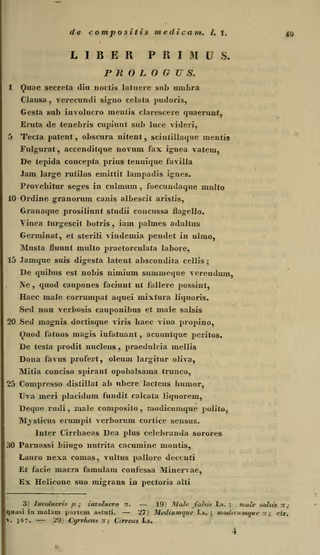
Quae secreta diu noctis latuere sub umbra
Clausa, verecundi signo celata pudoris,
Gesta sub involucro mentis clarescere quaerunt,
Eruta de tenebris cupiunt sub luce videri,
Tecta patent, obscura nitent, scintillaque mentis
Fulgurat, accenditque novum fax ignea vatem,
De tepida concepta prius tenuique favilla
Jam large rutilos emittit lampadis ignes.
Provehitur seges in culmum, foecundaque multo
Ordine granorum canis albescit aristis,
Granaque prosiliunt studii concussa flagello.
Vinea turgescit botris, iam palmes adultus
Germinat, et sterili vindemia pendet in ulmo,
Musta fluunt multo praetorculata labore,
Jamque suis digesta latent abscondita cellis;
De quibus est nobis nimium summeque verendum,
Ne, quod caupones faciunt ut fallere possint,
Haec male corrumpat aquei mixtura liquoris.
Sed non verbosis cauponibus et male salsis
Sed magnis doctisque viris haec vina propino,
Quod fatuos magis infatuant, acuuntque peritos.
De testa prodit nucleus, praedulcia mellis
Dona favus profert, oleum largitur oliva,
Mitia conciso spirant opobalsama trunco,
Compresso distillat ab ubere lacteus humor,
Uva meri placidum fundit calcata liquorem,
Deque rudi, male composito, modicumque polito,
Mysticus erumpit verborum cortice sensus.
Inter Cirrhaeas Dea plus celebranda sorores
Parnassi biiugo nutrita cacumine montis,
Lauro nexa comas, vultus pallore decenti
Et facie macra famulam confessa Minervae,
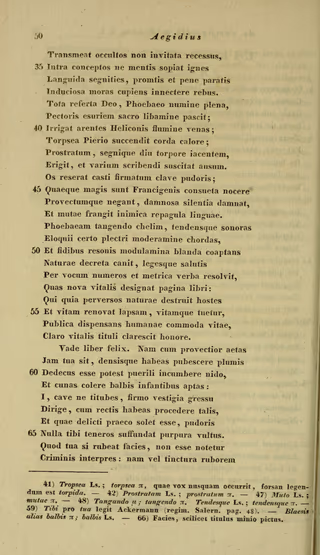
Ex Helicone suo migrans in pectoris alti
Transmeat occultos non invitata recessus,
Intra conceptos ne mentis sopiat ignes
Languida segnities, promtis et pene paratis
Induciosa moras cupiens innectere rebus.
Tota referta Deo, Phoebaeo numine plena,
Pectoris esuriem sacro libamine pascit;
Irrigat arentes Heliconis flumine venas;
Torpsea Pierio succendit corda calore;
Prostratum, segnique diu torpore iacentem,
Erigit, et varium scribendi suscitat ausum.
Os reserat casti firmatum clave pudoris;
Quaeque magis sunt Francigenis consueta nocere
Provectumque negant, damnosa silentia damnat,
Et mutae frangit inimica repagula linguae.
Phoebaeam tangendo chelim, tendensque sonoras
Eloquii certo plectri moderamine chordas,
Et fidibus resonis modulamina blanda coaptans
Naturae decreta canit, legesque salutis
Per vocum numeros et metrica verba resolvit,
Quas nova vitalis designat pagina libri:
Qui quia perversos naturae destruit hostes
Et vitam renovat lapsam, vitamque tuetur,
Publica dispensans humanae commoda vitae,
Claro vitalis tituli clarescit honore.
Vade liber felix. Nam cum provectior aetas
Jam tua sit, densisque habeas pubescere plumis
Dedecus esse potest puerili incumbere nido,
Et cunas colere balbis infantibus aptas:
I, cave ne titubes, firmo vestigia gressu
Dirige, cum rectis habeas procedere talis,
Et quae delicti praeco solet esse, pudoris
Nulla tibi teneros suffundat purpura vultus.
Quod tua si rubeat facies, non esse notetur
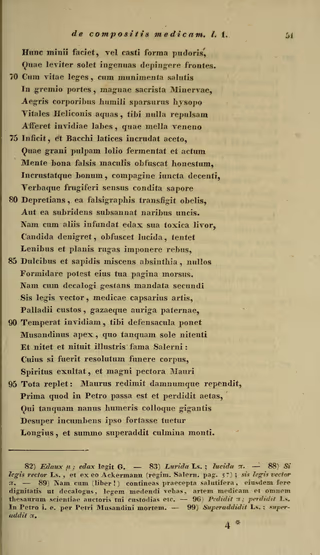
Criminis interpres: nam vel tinctura ruborem
Hunc minii faciet, vel casti forma pudoris,
Quae leviter solet ingenuas depingere frontes.
Cum vitae leges, cum munimenta salutis
In gremio portes, magnae sacrista Minervae,
Aegris corporibus humili sparsurus hysopo
Vitales Heliconis aquas, tibi nulla repulsam
Afferet invidiae labes, quae mella veneno
Inficit, et Bacchi latices incrudat aceto,
Quae grani pulpam lolio fermentat et actum
Mente bona falsis maculis obfuscat honestum,
Incrustatque bonum, compagine iuncta decenti,
Verbaque frugiferi sensus condita sapore
Depretians, ea falsigraphis transfigit obelis,
Aut ea subridens subsannat naribus uncis.
Nam cum aliis infundat edax sua toxica livor,
Candida denigret, obfuscet lucida, tentet
Lenibus et planis rugas imponere rebus,
Dulcibus et sapidis miscens absinthia, nullos
Formidare potest eius tua pagina morsus.
Nam cum decalogi gestans mandata secundi
Sis legis vector, medicae capsarius artis,
Palladii custos, gazaeque auriga paternae,
Temperat invidiam, tibi defensacula ponet
Musandinus apex, quo tanquam sole nitenti
Et nitet et nituit illustris fama Salerni:
Cuius si fuerit resolutum funere corpus,
Spiritus exultat, et magni pectora Mauri
Tota replet: Maurus redimit damnumque rependit,
Prima quod in Petro passa est et perdidit aetas,
Qui tanquam nanus humeris colloque gigantis
Desuper incumbens ipso fortasse tuetur
Longius, et summo superaddit culmina monti.
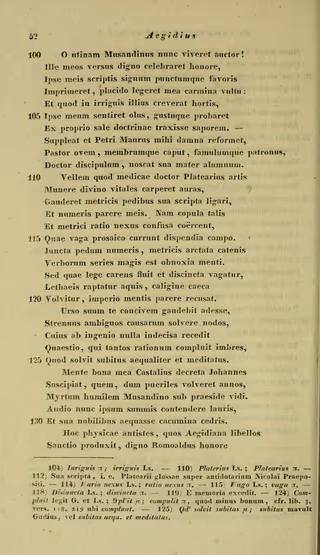
O utinam Musandinus nunc viveret auctor!
Ille meos versus digno celebraret honore,
Ipse meis scriptis signum punctumque favoris
Imprimeret, placido legeret mea carmina vultu:
Et quod in irriguis illius creverat hortis,
Ipse meum sentiret olus, gustuque probaret
Ex proprio sale doctrinae traxisse saporem. —
Suppleat et Petri Maurus mihi damna reformet,
Pastor ovem, membrumque caput, famulumque patronus,
Doctor discipulum, noscat sua mater alumnum.
Vellem quod medicae doctor Platearius artis
Munere divino vitales carperet auras,
Gauderet metricis pedibus sua scripta ligari,
Et numeris parere meis. Nam copula talis
Et metrici ratio nexus confusa coërcent,
Quae vaga prosaico currunt dispendia campo.
Juncta pedum numeris, metricis arctata catenis
Verborum series magis est obnoxia menti.
Sed quae lege carens fluit et discincta vagatur,
Lethaeis raptatur aquis, caligine caeca
Volvitur, imperio mentis parere recusat.
Urso suum te concivem gaudebit adesse,
Strenuus ambiguos causarum solvere nodos,
Cuius ab ingenio nulla indecisa recedit
Quaestio, qui tantos rationum compluit imbres,
Quod solvit subitus aequaliter et meditatus.
Mente bona mea Castalius decreta Johannes
Suscipiat, quem, dum pueriles volveret annos,
Myrtum humilem Musandino sub praeside vidi.
Audio nunc ipsum summis contendere lauris,
Et sua nobilibus aequasse cacumina cedris.
Hoc physicae antistes, quos Aegidiana libellos
Sanctio produxit, digno Romoaldus honore
Consecret et celebret, qui ne penetrabilis aurae
Solvatur radiis populo mirante per aestum
Obnubit caput et triplici domat astra galero:
In physica celebrem quem Justiniana favore
Divitis eloquii prudentia tempore longo
Detinuit, sed eum Romanae curia sedis
Nunc colit autorem physicae, vitaeque patronum.
Ipse novo faveat operi, nec Parisianas
Aestimet indignum physicam resonare Camoenas.
Nam logices ubi fons scaturit, ubi plenius artis
Excolitur ratio, sibi physica figere sedem
Gaudet, et ancillis non dedignatur adesse.
Qui trahit a docto nomen Salomone Mathaeus
Qui nitet eloquio, qui mentis acumine pollet,
Suscipiat placido Salomon mea carmina vultu,
Et se noscat in his: sua condimenta saporet,
Melque suum sugat, quod vasa novella propinant;
Quo Pessulanus nisi Mons autore niteret,
Jamdudum physicae lux eclipsata fuisset.
Qui vetulo canos profert de pectore sensus
Ricardus senior, quem plus aetate senili
Ars facit esse senem, meliusque senescere cogit,
Cui renovans corpus surgens ex arte senectus
Altera corporeae compensat damna senectae;
Sit iudex operis placidus, censorque benignus.
Et quos in cunis medicamine curat alendos,
Propositas artes dum primula combibit aetas,
Edoceat pueros his insudare libellis,
Ex quibus utilium claret sententia rerum,
Et metrici ratio nexus et forma loquendi.
Haec mea scripta legat et linguae verset in udo,
Mentis in arcano memori sub clave sigillet
In medicas artes introducenda iuventus,
Huncque librum potius sibi noverit esse legendum,
Quam nugas et lascivos Nasonis amores.